


Listen to the article
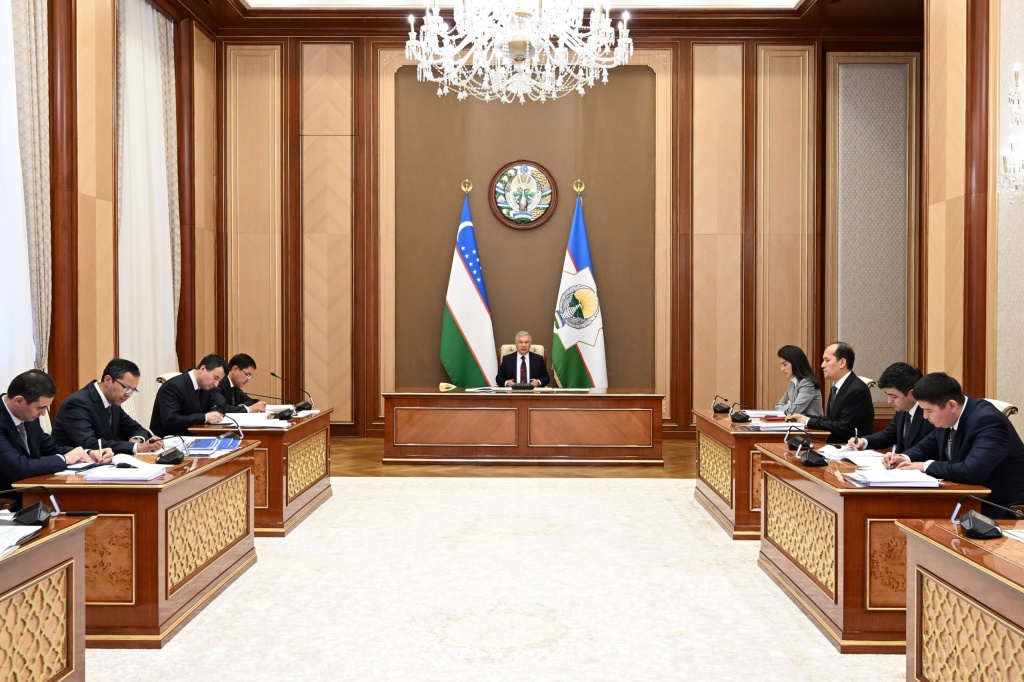
President Shavkat Mirziyoyev has chaired a meeting on macroeconomic forecasts and economic development priorities for 2027, at which planners presented projections showing gross domestic product reaching $232 billion and foreign direct investment hitting $65 billion in that year.
The figures form part of a sequenced set of targets. By the end of 2026, the economy is expected to have grown by at least 8 percent, with GDP exceeding $200 billion and per-capita income reaching $5,200. The longer horizon is more ambitious: $300 billion in GDP by 2030 and per-capita income of $10,000 within the following decade.
A new development model from 2027
To sustain annual growth of at least 7 percent from 2027 onward, the meeting endorsed a transition to what officials described as a new economic model. Its core elements are the creation of high-value-added goods, higher labour productivity, expanded export capacity and the creation of well-paid jobs. Modern industrial policy is to serve as the foundation, with an emphasis on attracting advanced technologies, integrating domestic enterprises into international production chains and diversifying the export base.
Specific sectoral strategies are being developed for chemicals and petrochemicals, mechanical engineering, electrical engineering, textiles and pharmaceuticals. In each priority sector, the plan calls for attracting at least two or three major international investors or well-known brand companies during 2027 alone. The meeting also envisaged the creation of modern industrial zones, deeper localisation of production and an upgrade of the technological capacity of existing enterprises.
Emerging industries and frontier technologies
Alongside the established industrial sectors, the meeting identified a set of newer fields for targeted development: semiconductor technologies, robotics, biotechnology, high-technology components and batteries for electric vehicles. Officials were instructed to design additional mechanisms to attract international brands to these areas, support research and development, and build competitive domestic producers.
Trade, inflation and structural reform
On the external side, non-gold exports are projected to reach nearly $40 billion in 2027. Inflation is to be brought down to 6 percent that year and further reduced to 5 percent in 2028 and 2029.
The meeting also identified several structural priorities running alongside the industrial push: transformation of state-owned enterprises and banks, accelerated privatisation, modernisation of energy and transport infrastructure, development of human capital, and completion of Uzbekistan’s accession to the World Trade Organisation.
Responsible officials were instructed to draw up concrete plans for attracting the $65 billion in foreign investment, broken down by sector and by region.