



Listen to the article
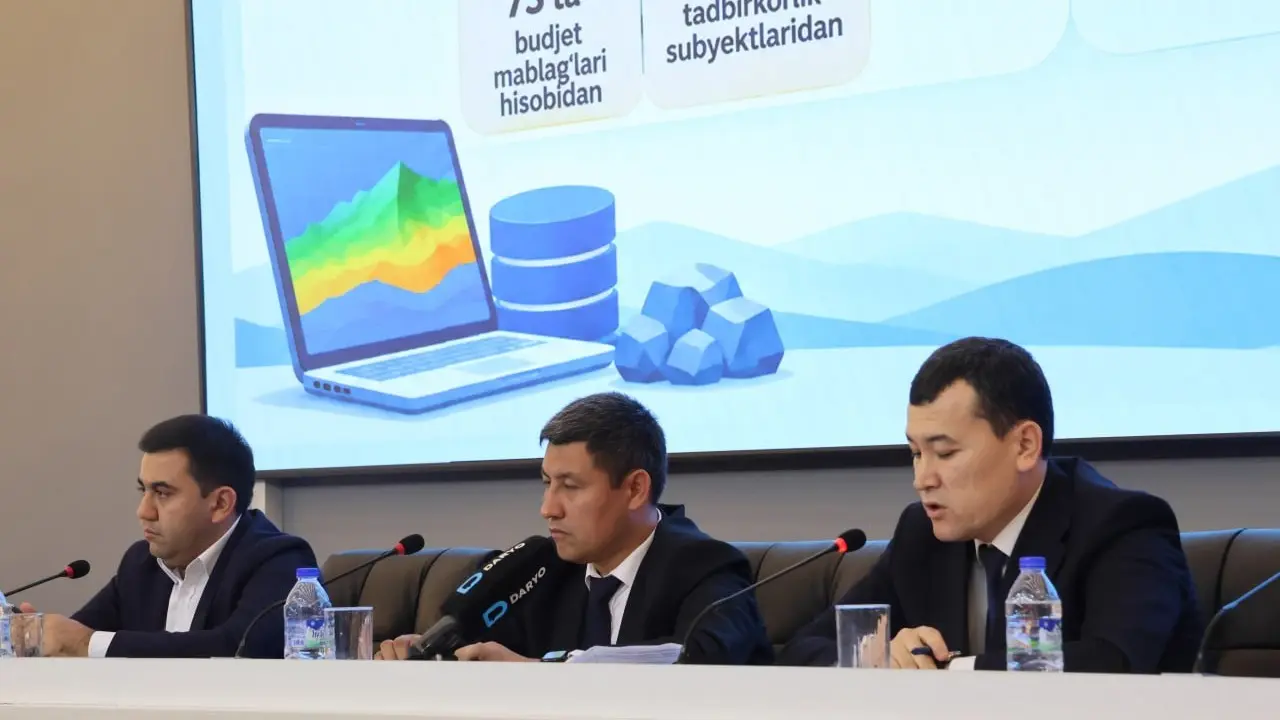
More than twenty entrepreneurs operating quarries and extraction sites across Uzbekistan have had their subsoil-use permits revoked since the start of the year after inspectors found they had dug beyond their licensed boundaries or exceeded permitted depths, officials from the Ministry of Mining Industry and Geology and the Centre for Subsoil Use disclosed at a press conference on 7 November.
Winning a concession at auction does not entitle a permit-holder to extract material outside the designated plot, officials stressed. Any operator who strays beyond the approved perimeter or drills deeper than the licensed level faces automatic revocation, after which the site is offered to other bidders. Officials acknowledged that non-compliance after winning usage rights is a recurring problem.
Remote Monitoring and On-Site Inspection
The Centre for Subsoil Use conducts remote surveillance of active sites, while physical inspections are carried out by a separate inspectorate. Revocations are triggered by formal findings and recommendations from those inspectors; case materials are also referred to the relevant authorities and to the courts.
Between January and October 2026, the centre sent 1,859 warning letters through its Risk Analysis information system as part of routine compliance monitoring of permit conditions.
Blast Damage, Ecological Violations and Auction Results
Blasting operations at extraction sites have in some cases caused damage to nearby residential buildings. Officials said the inspectorate investigates such incidents and, on the basis of its findings, requires the permit-holder to compensate affected residents.
Ecological violations linked to the extraction of sand, gravel and other non-metallic materials fall under the joint oversight of environmental and mining-geology regulators; their recommendations can also trigger permit cancellation.
Over the same ten-month period, 169 of the 303 deposits and prospective plots put to auction were sold for a combined 446 billion soums, and 432 subsoil-use permits were formally registered.
Earlier reporting had established that illegal extraction activity had caused an estimated 106 billion soums in damage, of which nearly 60 billion soums had been recovered.