


Listen to the article
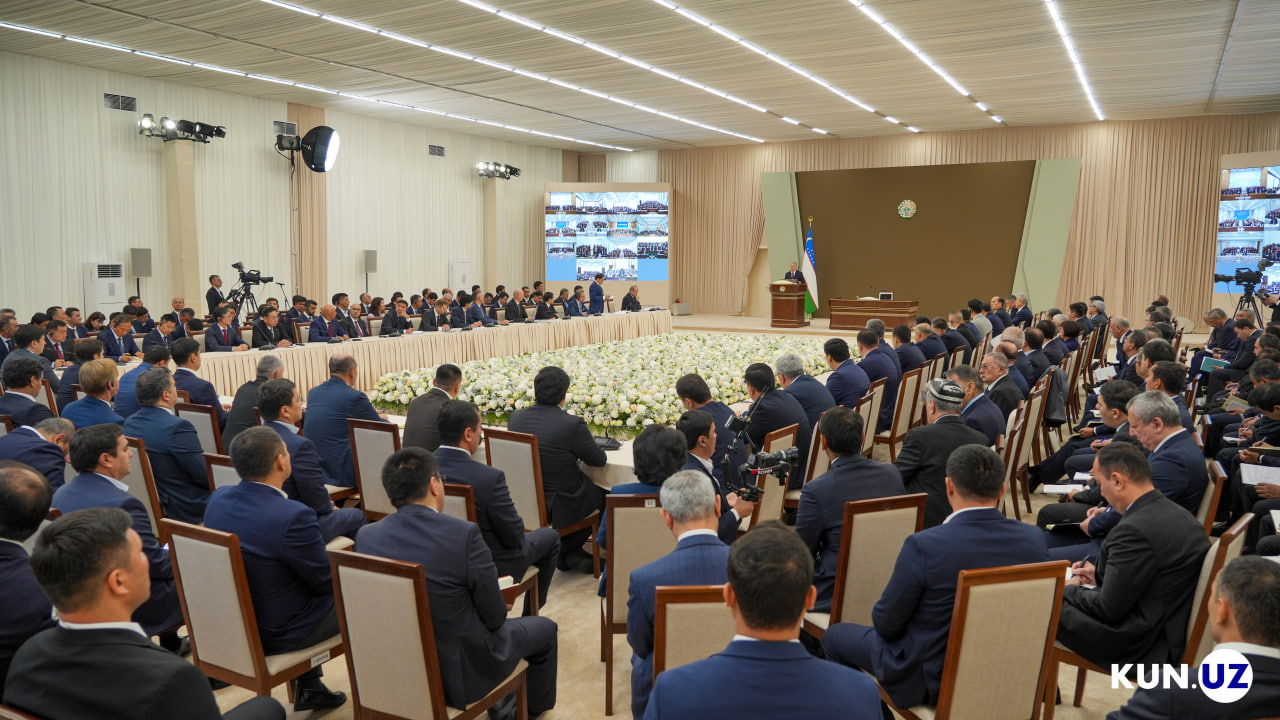
Uzbekistan is overhauling the way it selects suppliers in state procurement, moving away from a system that automatically favours the lowest purchase price toward one that weighs the full cost of owning and operating a product over its entire service life. The change was announced on 9 November at a meeting between President Shavkat Mirziyoyev and representatives of the electrical-engineering industry, entrepreneurs and investors, with details released by presidential press secretary Sherzod Asadov.
The shift matters at scale. State bodies purchase roughly 10 trillion soums’ worth of electrical-engineering products every year under public procurement rules, making the sector one of the largest single channels through which government spending reaches domestic manufacturers.
Why the Cheapest Bid Can Cost More
The case for change was illustrated at the meeting with a concrete example drawn from a monitoring purchase. Two 40-kilowatt transformers were compared: an imported unit and a domestically produced one. The imported transformer was 400,000 soums cheaper to buy outright. But its electricity consumption ran 10 percent higher, and its maintenance costs over its operational life were four times greater than those of the local product. Under the old rules, the cheaper import would have won the contract automatically.
The new approach, described at the meeting as a life cost methodology, will require procurement decisions to account for electricity consumption, repair costs, servicing and all other operational expenditure alongside the initial purchase price. The aim is to prevent a nominally cheaper import from generating larger long-term costs for the state.
A Single Platform and Three-Year Forward Plans
Two structural changes accompany the pricing reform. Previously, businesses tracking state orders were forced to monitor four or five separate platforms simultaneously. A unified system consolidating all state orders onto a single platform has now been introduced.
From 1 January 2027, state bodies will also be required to publish three-year procurement plans in advance. The measure is designed to give manufacturers enough lead time to assess future demand, expand production capacity, acquire new equipment and attract investors before contracts are tendered — rather than scrambling to respond after orders appear.
The meeting also addressed the financing of domestic electrical-engineering firms. Five companies were cited as examples of successful engagement with international capital: Artikul Aziya and Maxsopper in Tashkent city, Texno Cable Group and Vades Group in Tashkent region, and Andijon Kabel in Andijan. Together, those enterprises have raised a combined 80 million dollars from the European Bank for Reconstruction and Development for their projects. Expanding such partnerships between local manufacturers and international financial institutions was identified as a priority at the meeting.