


Listen to the article
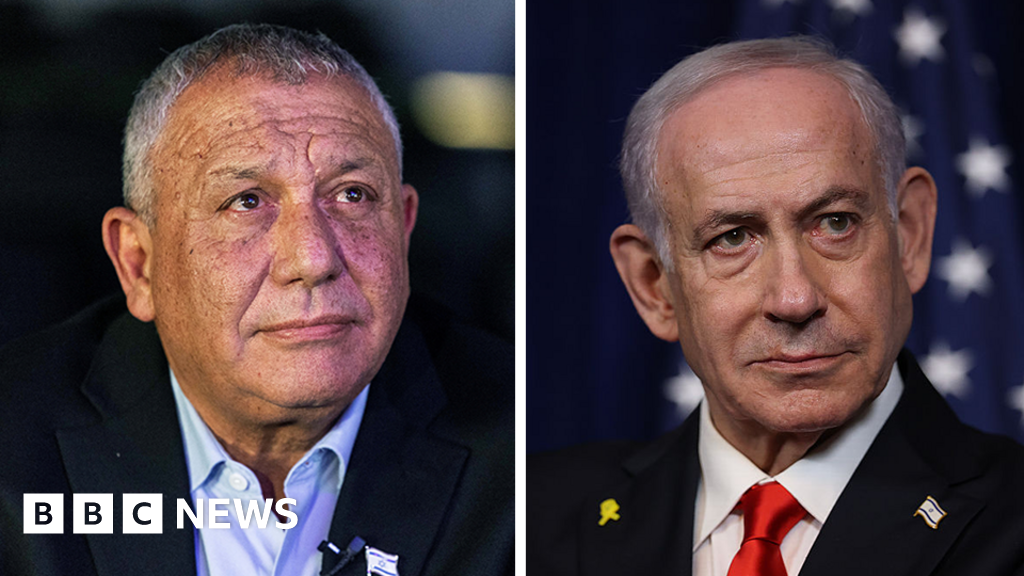
Israel is holding its first general election since the Hamas-led attacks of 7 October 2023, with incumbent Prime Minister Benjamin Netanyahu facing his most serious electoral challenge in years from Gadi Eisenkot, a former chief of the Israel Defense Forces who resigned from Netanyahu’s own war cabinet in 2024.
Polling published on Friday shows the two men in a tight race, though neither their respective blocs nor any combination of opposition parties appears on course to secure the 61 seats needed for a majority in the 120-seat Knesset. That arithmetic raises the prospect of weeks or months of coalition negotiations — and potentially a new election — before a government can be formed.
Who is Eisenkot and what does he stand for?
Eisenkot founded his Yashar Party only last year, giving him the profile of a relative political newcomer despite decades at the top of the Israeli military. His candidacy carries a personal dimension that has resonated with many voters: he lost a son, a soldier, in the early months of the Gaza war. He served in Netanyahu’s war cabinet before resigning over what he described as the prime minister’s mishandling of the conflict, and has built his campaign around demands for accountability over the security failures that allowed the 7 October attacks to occur.
Other opposition figures include former prime minister Naftali Bennett, Avigdor Lieberman and left-leaning former general Yair Golan. Despite their ideological differences, all could potentially work with Eisenkot to unseat Netanyahu.
Netanyahu’s coalition and the far right
Netanyahu’s current government is described as the most right-wing in Israel’s history. To retain power, he would likely need to maintain the support of far-right coalition partners, some of whom have called for Israel to annex the West Bank and for the forced displacement of Palestinians from Gaza — a position also voiced by some members of Netanyahu’s own Likud party. Netanyahu has again campaigned as “Mr Security,” pointing to what he characterises as strategic victories in Israel’s wars since 2023.
The issues driving voters
Security dominates the campaign, with the 7 October attacks — in which nearly 1,200 people were killed and 251 taken hostage into Gaza — casting a long shadow. Military conscription is also a flashpoint: ultra-Orthodox Jewish men engaged in full-time religious study have historically been exempt from service, but the policy has grown increasingly divisive since the outbreak of war. Netanyahu’s government is still pursuing judicial reforms that triggered mass protests before 7 October; critics argue the plans would undermine the independence of the courts. Rising food and housing costs have added a domestic economic dimension to the contest.
Arab parties, representing a community that makes up roughly one-fifth of Israel’s population, are fielding two blocs and could in theory act as kingmakers. In practice, all but one of the leading Jewish parties have ruled out working with them.
What the election means for Palestinians
A year after a ceasefire in Gaza, Israel continues near-daily strikes on the territory, saying it is targeting Hamas operatives, and maintains control of more than half of it. More than 74,000 people have been killed in Israeli attacks on Gaza since October 2023, according to the Hamas-run health ministry, whose figures the United Nations considers reliable. In the occupied West Bank, UN records show settler attacks are at an all-time high, while Israeli settlements — illegal under international law — are rapidly expanding.
On Gaza policy, Eisenkot does not differ sharply from Netanyahu. He has pledged to end Hamas rule within 18 months, through a US-led peace plan or, if necessary, military force. On the West Bank, he supports Israeli settlements in general but opposes the E1 settlement project, which critics say would effectively split the territory in two. He has also spoken of creating conditions for Palestinian “autonomy or a state-minus” under ultimate Israeli security control, and has said he would crack down on extremist settlers. Netanyahu’s camp favours continued rapid settlement expansion. None of the leading Jewish parties is campaigning on a two-state solution, and many have explicitly rejected it.
How results will unfold
Exit polls will be published by Israeli broadcasters at 22:00 local time (20:00 GMT) on election day. Preliminary results are expected the following day, with official results scheduled for 4 November. President Isaac Herzog will then consult party leaders before inviting whichever figure he judges most capable of forming a government to attempt to do so — a process that can take more than a month. If that attempt fails, a second and potentially a third leader may be asked to try. Should all attempts fail, new elections would be called, with Netanyahu remaining as interim prime minister in the meantime. Between 2019 and 2022, Israel held five separate elections as parties repeatedly failed to form a stable coalition.