


Listen to the article
Two more Russian regions are moving to restrict the range of jobs available to foreign workers on labour patents, adding energy utilities, freight transport and several service sectors to lists that already bar migrants from healthcare, education and taxi driving.
Saratov Oblast Governor Roman Busargin has signed a decree extending the region’s prohibited-occupation list with effect from 1 January 2027. The new restrictions, which will remain in force until the end of that year, cover the generation and supply of electricity, gas and steam; air conditioning; water supply, purification and distribution; wastewater collection and treatment; and road freight haulage and transport-logistics services.
Those additions come on top of bans already in place in Saratov Oblast, which had previously closed courier services, food service, taxis, urban and suburban passenger transport, education, healthcare, social services and parts of public administration to migrant workers holding patents.
Khanty-Mansiysk Autonomous Okrug is pursuing a parallel expansion of its own restricted list, also timed for 1 January 2027. Under those planned measures, migrants will be barred from working in bakeries, warehouses, parcel-collection and order-pickup points, and in the culture and sports sectors.
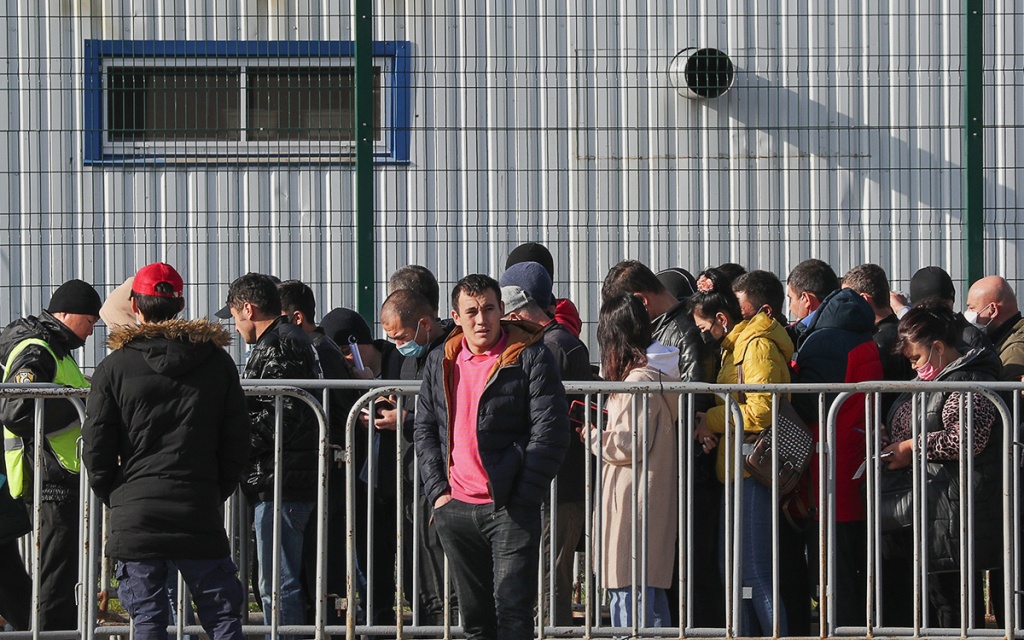
The moves reflect a broader pattern across Russian regions of using regional executive authority to limit the occupational scope of labour migrants, who typically work under a patent system that requires them to pay a monthly advance tax in exchange for the right to be employed by individuals or companies in a given region. Migrants already excluded from a sector in one region may still work in that sector elsewhere in Russia, as the restrictions are set at the regional rather than federal level.
The timing of both decrees — taking effect simultaneously at the start of 2027 — suggests coordinated implementation rather than independent regional initiatives, though the source text does not indicate any federal directive linking the two announcements.
Central Asian nationals, including Uzbek citizens, make up a substantial share of Russia’s patent-holding migrant workforce and are directly affected by such regional restrictions. Earlier this year Russia also moved to bar migrants from taxi work across eight regions.