


Listen to the article
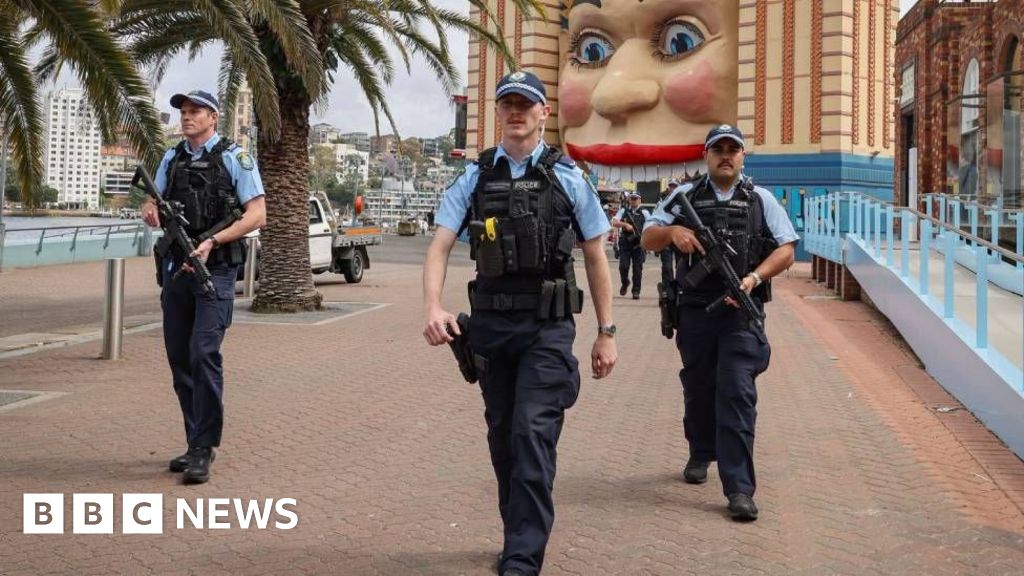
Heavily armed police officers carrying long-arm rifles have begun patrolling Sydney’s streets and major public venues, in the most visible security shift Australia has seen since a gunman and his father opened fire on a Hanukkah celebration at Bondi Beach last December, killing 15 people including a 10-year-old girl.
New South Wales Police formally launched the Armed Response Command (ARC) on Sunday, describing it as a unit of specially trained officers who will be “highly visible across Sydney, driving specialist vehicles and carrying rifles.” The command will eventually consist of 250 officers deployed to busy tourist precincts, sports matches and places of worship, with a mandate to “prevent, deter and rapidly respond to serious threats, including active armed offender incidents,” police said in a statement.
“Its role is built on a simple principle — preserving life,” Detective Superintendent Andrew Evans said.
The 14 December attack at Bondi Beach was Australia’s deadliest mass shooting in nearly three decades. One of the alleged gunmen, Naveed Akram, has been charged with 78 offences, including 15 counts of murder, 40 counts of attempted murder and one count of committing a terrorist act. His father, Sajid Akram, 50, who also fired into the crowd, was shot dead by police at the scene.
The attack placed intense pressure on Prime Minister Anthony Albanese’s government and triggered sweeping gun law reforms alongside a crackdown on hate speech.
Mixed public reaction
The sight of officers with military-grade weapons has unsettled some Sydney residents. One person told ABC News the presence was “unnerving,” adding: “They are just everywhere. Those guns are huge.” Another told the same broadcaster that the armed officers made her feel safe.
Jewish community organisations have broadly welcomed the deployment. “No Australian wants to see officers with military weapons on our streets, but the sight of body bags is far worse,” said Alex Ryvchin, co-chief executive of the Executive Council of Australian Jewry.
Amnesty International Australia struck a different tone, expressing concern about what it called the “militarisation of policing” and calling on the state government to guarantee that ARC will not be used against peaceful protests. “Any expansion of police powers and capabilities must be accompanied by clear, publicly accessible rules, robust independent oversight and accountability,” said the organisation’s Andrew Witheford.
New South Wales Police Minister Yasmin Catley defended the measures in an interview with the ABC. “Our world changed forever. That’s just the truth of it, right across this country. And I said it at the time, we will never be the same again,” she said.
The ARC’s launch marks a significant departure from Australia’s policing tradition, where routine street patrols by officers carrying rifles have been rare and widely considered out of keeping with the country’s civic culture. Whether the unit’s permanent presence reshapes that culture — or recedes once the immediate threat perception fades — remains an open question that civil liberties groups say must be answered with binding oversight rules before the command reaches full strength.