



Listen to the article
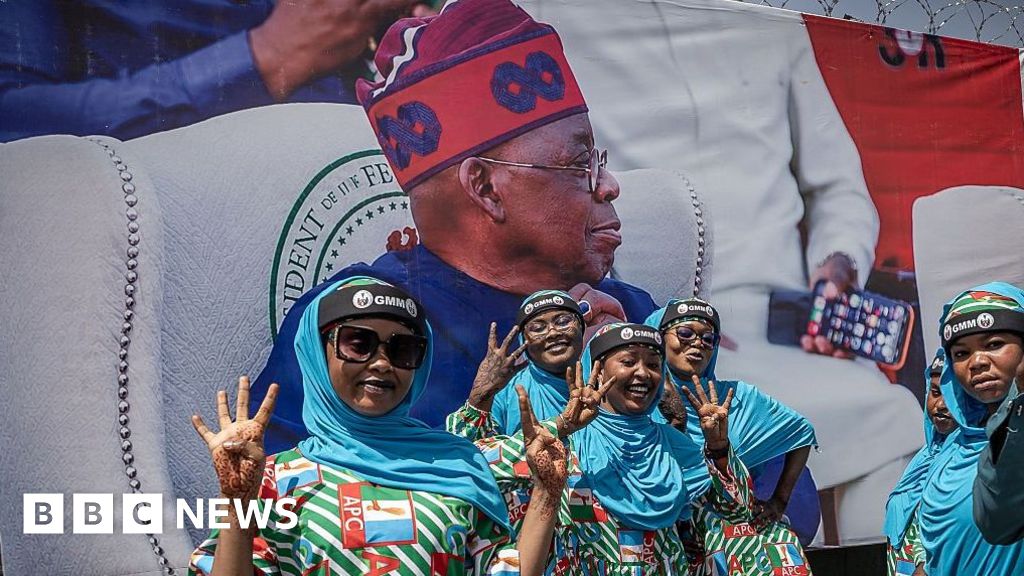
Nigerian President Bola Ahmed Tinubu launched his re-election manifesto on 10 November, setting targets of 6% annual economic growth by 2031, the recruitment of 78,000 additional security personnel and the construction of 200,000 affordable homes, as his All Progressives Congress (APC) party seeks to rebuild public trust ahead of a general election scheduled for January 2027.
The document, titled From Reform to Prosperity, frames Tinubu’s first-term economic overhaul — including the removal of fuel subsidies, the unification of official and parallel foreign exchange rates, and a package of tax reforms — as the foundation for a second term. The president has also promised to halve youth unemployment if re-elected.
Reforms praised abroad, painful at home
The reforms drew praise from the World Bank and the International Monetary Fund. Nigeria’s headline inflation fell to 14% in September 2026, according to the National Bureau of Statistics, down from a peak of 34% in 2024, and the gap between official and parallel exchange rates has narrowed. Tinubu has said the subsidy removal freed more than one trillion naira — roughly $740 million — in government resources within the first two months alone.
Yet the relief has not reached most households. Analysis by Nigeria’s International Centre for Investigative Reporting found that the price of imported rice rose 184% between May 2023, when Tinubu took office, and October 2025, with beans, garri and bread recording similarly steep increases. “Fuel prices went up, and everything that Nigerians consume skyrocketed,” said Joshua Osiyemi, who heads Tracka, a project of the BudgIT Foundation, a non-profit that works to make government financial data publicly accessible. His organisation’s survey found that most Nigerian families say they cannot survive on 10,000 naira — about $7.40 — a day.
One indicator offered a tentative sign of easing: SBM Intelligence, a security risk consultancy, found that the cost of preparing a pot of jollof rice fell 11.5% between June and September 2026, the sharpest decline recorded in the ten years it has tracked its Jollof Index. Even so, Ikenna Okonkwo, head of research at SBM Intelligence, cautioned that the broader picture remained difficult. “Nigerians spend more and more of their income on basics,” he said.
Security pledges face scepticism
The manifesto proposes recruiting 28,000 additional military personnel and 50,000 police officers to address insecurity, particularly in the north, where jihadist groups, kidnap gangs and herder-farmer conflict have disrupted farming communities. Osiyemi said many farmers remain reluctant to return to their fields, uncertain whether they will come home safely. Okonkwo was direct about the limits of a recruitment-centred approach: “The security situation, especially in the north, is more complex than a matter of just recruiting more soldiers.”
Peter Obi, the Nigeria Democratic Congress presidential candidate who came third in 2023 and drew strong support from younger voters, also unveiled his 2027 Governance Agenda on 10 November under the slogan “A New Nigeria is Possible”, placing national unity and security at the top of his priorities. Former Vice-President Atiku Abubakar, another leading challenger, has criticised Tinubu’s subsidy removal and pledged to restore it. “My position stands! I will restore subsidy to make life easier and affordable for Nigerians,” Atiku wrote on X. Osiyemi questioned the fiscal room for such a reversal, noting that Nigeria’s 2026 budget of 68.32 trillion naira already allocates 15.8 trillion naira to debt servicing.
Power and housing gaps dwarf the promises
The manifesto commits to increasing available electricity generation towards 10,000 megawatts. Nigeria’s installed generation capacity stood at 13,625MW at the end of 2024, according to the Nigerian Electricity Regulatory Commission, but the country generated an average of just 4,223MW during the year — a gap attributed to ageing infrastructure, gas supply constraints and chronic underinvestment. Okonkwo noted that the manifesto does not specify where the capital for the electricity push would come from. A tariff dilemma compounds the problem: raising prices enough to attract private investors risks public backlash, while keeping them low deters the investment needed to expand capacity.
On housing, the pledge of 200,000 affordable homes represents a fraction of the need. A technical committee established by the housing ministry put Nigeria’s housing deficit at 14.9 million units in 2025.
The electoral arithmetic
Tinubu won the 2023 presidential election with 8.79 million votes, benefiting in part from a divided opposition. Okonkwo argued that structural factors still favour the incumbent. “The APC are in a stronger position being the incumbent party and the momentum that some of the opposition candidates had in 2023 has faded,” he said, adding that regional and ethnic loyalties continue to shape voting patterns. “It will play out like it did in 2023.”
Osiyemi offered a measured assessment of the manifesto itself. “Some of the items seem bloated, but if they can be committed to it, I want to believe that quite a number of these items are very much achievable,” he said. For Okonkwo, the deeper challenge is less programmatic than political: “The big thing, if the APC wins, which they have to do and is a tall order, is to regain the trust of Nigerians.”