


Listen to the article
Ukraine’s defence ministry says it has found no evidence that restrictions on the Starlink and Starshield satellite networks have been lifted, contradicting statements by US President Donald Trump that tech billionaire Elon Musk had already reversed the limits.
Sources within the ministry told the BBC that drones were still recording connection losses when travelling at speeds above 161 km/h (100 mph), hampering both attack drone operations and the co-ordination of defensive manoeuvres. “There is currently no confirmation that these restrictions have been lifted,” the sources said, adding that the military was continuously monitoring performance on both networks.
Trump, speaking to reporters on Friday, said he had not personally spoken to Musk about the issue but had heard it was fixed. “If there is a problem, I will get it straightened out,” he said. “I might have to speak to him, but I have not. I’ve heard it was fixed, but if it’s not, I’ll speak to him.” Trump also said he did not believe Musk held too much power.
The dispute over connectivity emerged last week when Kyiv reported that uplink speeds to the low-Earth-orbit satellites had been throttled, preventing drones from maintaining a signal above 100 mph. Trump had initially denied ordering any restriction, before saying on Thursday that Musk had “put it back.” Musk, for his part, denied being responsible for the slowdown and suggested the Pentagon could be the source of the problem, noting that Starshield — the more secure, military-grade variant of the network — is controlled by the US military. The White House has repeatedly denied deliberately placing limits on the service in Ukraine.
Soldiers describe the stakes
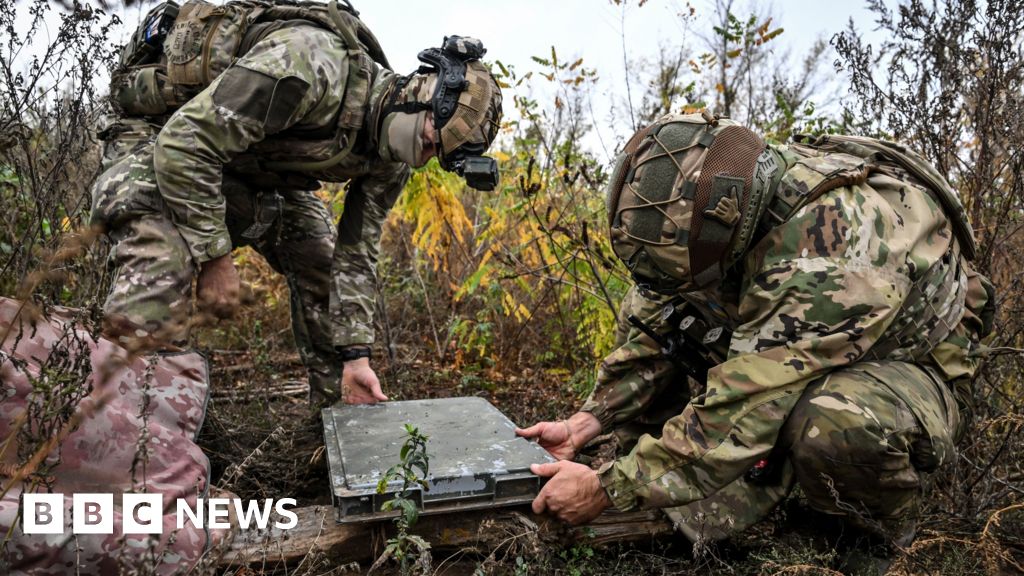
One Ukrainian soldier told the BBC there was “simply no alternative” to Starshield, recounting that earlier in the week his unit had experienced connectivity dropouts while travelling by car at just 80 km/h. “God forbid they shut it off completely — it would be an absolute catastrophe,” he said. “We need a backup option for securing communications and internet.”
A second soldier said her unit had reverted to communication methods used before Starlink was available, but stressed the network’s speed remained critical. “Even one or two seconds is critical when we can transfer data and orders faster. You can really feel that advantage on the battlefield,” she said.
Ukraine relies on both the civilian Starlink service and the more secure Starshield system, which uses roughly 10,000 satellites to provide connectivity across remote terrain and front-line positions. Starshield enables drone operators to view targets in real time and operate interceptor drones. Russia is not authorised to use Starlink, meaning Ukrainian long-range missile strikes deep into Russian territory — such as those targeting oil refineries — are conducted without the network.
Diplomatic pressure mounts
British Prime Minister Andy Burnham raised the issue directly with Trump in a call on Friday evening. Downing Street said Burnham “underlined the importance for Ukraine to have full access to Starlink so they can continue to defend themselves against Russia’s full-scale invasion.”
The connectivity dispute has unfolded against a backdrop of broader diplomatic friction between Washington and Kyiv. Ukrainian President Volodymyr Zelensky said on Thursday — before Trump’s comments — that speeds had still not been fully restored, and that he was awaiting a response from US Secretary of State Marco Rubio, who had promised to provide information within roughly 48 hours.
The Wall Street Journal reported that Trump had told Musk he was frustrated the system remained capped, and that performance had moved closer to normal following that conversation.
The row over Starlink coincides with a public dispute between Trump and Zelensky over Ukrainian strikes on Russian oil infrastructure. Trump has argued the strikes have pushed global fuel prices higher, while Zelensky has described them as essential to cutting off a primary revenue source for Moscow’s war effort. Trump has also waived some sanctions on Russia and agreed a deal to import Russian diesel, moves criticised by Ukraine and European allies. Zelensky said Washington had threatened to withdraw intelligence sharing if the strikes continued — a claim Trump denied.