



Listen to the article
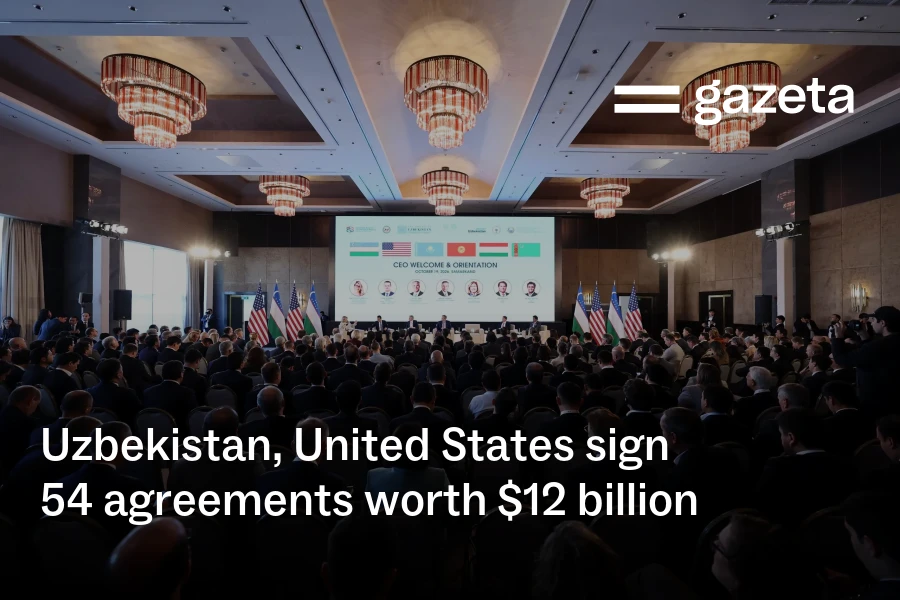
Uzbekistan and the United States signed 54 agreements valued at a combined $12 billion during a visit by a US delegation to Tashkent on Monday, the press service of the Ministry of Investment, Industry and Trade announced. The deals span trade, investment and technological cooperation across industry, transport, energy infrastructure, critical minerals, finance, digital technologies, agriculture, healthcare and education.
In the transport sector, GE Aerospace will supply engines for new aircraft destined for Uzbekistan Airways, while Wabtec — the rail and industrial technology company — will support the localisation of railway equipment and component manufacturing inside the country.
Four major Wall Street institutions feature prominently in the financial agreements. Franklin Templeton, Oppenheimer & Co., Citigroup and BlackRock signed deals aimed at helping Uzbek companies access international capital markets, attract institutional investors and secure financing for infrastructure projects. The involvement of firms of that scale signals an effort by Tashkent to deepen its integration with global financial networks rather than rely solely on bilateral state lending.
The mining and critical minerals cluster drew some of the most strategically significant signatories. ReElement Technologies, Traxys and Trafigura concluded agreements covering the exploration and development of mineral deposits, technological cooperation and mineral supply arrangements. The ministry said the deals also include provisions to build Uzbekistan’s domestic expertise in critical minerals — a sector that has attracted growing Western interest as governments seek to diversify supply chains away from China.
Elsewhere, cooperation with Amazon Leo will focus on developing satellite communications infrastructure. GE HealthCare will support the introduction of modern medical technologies, and Valmont Industries — known for irrigation and infrastructure equipment — will work to improve agricultural efficiency.
The agreements were concluded alongside a business forum that drew representatives of more than 400 companies: over 100 from the United States, roughly 100 from other Central Asian countries and 200 Uzbek enterprises, according to the ministry.