


Listen to the article
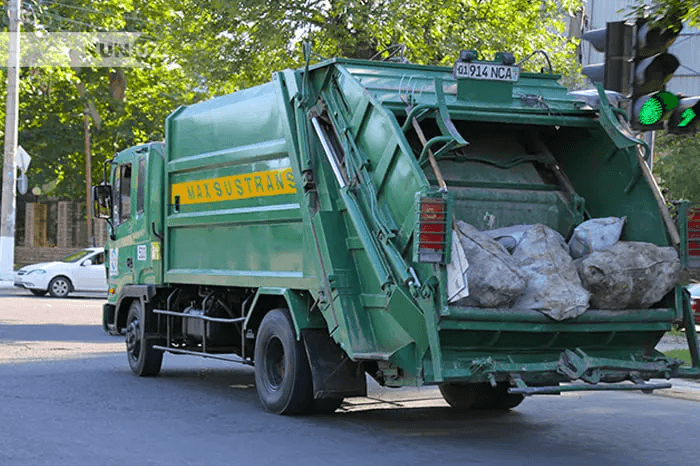
Uzbekistan’s parliament has formally demanded that the head of the Waste Management and Circular Economy Development Agency explain why residents continue to be billed for rubbish collection that never took place, and why landfill reclamation projects are running behind schedule.
The issue was raised at a parliamentary session on 13 October by Odiljon Mamadaliev, a member of the Legislative Chamber’s Committee on Ecology and Environmental Protection. Citing a report by the National Committee on Ecology and Climate Change, Mamadaliev said 48.4 percent of all complaints from individuals and legal entities concerned household waste collection and removal. Of those, 18.1 percent related specifically to charges levied for services that had not been provided.
The parliamentary committee proposed sending a formal inquiry to Sharifbek Khasanov, director of the agency, asking what concrete steps it is taking to improve waste management, develop the circular economy and fix the payment system. The Legislative Chamber approved the proposal.
A rule that did not stop the complaints
Uzbekistan introduced a regulation on 1 January 2026 requiring that residents pay for solid household waste collection only when the service has actually been delivered. Despite that change, complaints about unjustified debts kept rising. According to the Committee for Competition Development and Consumer Protection, more than 850 complaints had been filed by 12 February 2026 — a pace that, if sustained, would have exceeded the 1,141 complaints handled across the whole of 2025.
Mamadaliev also flagged delays in landfill reclamation projects that were scheduled for completion this year. Some existing landfills, he said, still fail to meet environmental standards, sanitary regulations and fire safety requirements.
Investment alongside the shortcomings
The MP acknowledged progress in parallel with the problems. In 2025, UZS 386.5 billion was invested in developing the solid household waste management system, and coverage of collection and removal services reached 63 percent of the population. Waste-to-energy projects are under way in seven regions, with a combined value of approximately $933 million; a further $1.6 billion in projects is planned for a second phase.
The parliamentary committee’s decision to escalate the matter to a formal agency inquiry signals that lawmakers regard the gap between investment figures and service quality on the ground as a governance failure requiring direct accountability, not merely further spending.