


Listen to the article
The United States has issued a direct warning to Madagascar against deepening its military relationship with Russia, with a senior American commander arguing that similar arrangements in West Africa have worsened rather than resolved security crises.
Lieutenant General John Brennan, deputy head of US Africa Command, told reporters in an online briefing that Madagascar’s position in the Indian Ocean made it of exceptional importance to global trade and maritime routes. He said Washington was alarmed by what he described as Russia’s ambition to “proliferate” the so-called Sahel model elsewhere on the continent.
“Madagascar sits in a location that is extremely important, as is Mozambique, and we don’t want to see those models be applied in those two locations,” Brennan said.
The Sahel precedent
The Sahel model Brennan referenced centres on Mali, Burkina Faso and Niger — three countries now under military rule that severed ties with Western partners and turned to Russia for military support in their fight against jihadist groups. Despite that pivot, militant attacks have continued in all three countries, a fact Brennan cited as evidence that the arrangement had not delivered the security gains their governments had promised their populations.
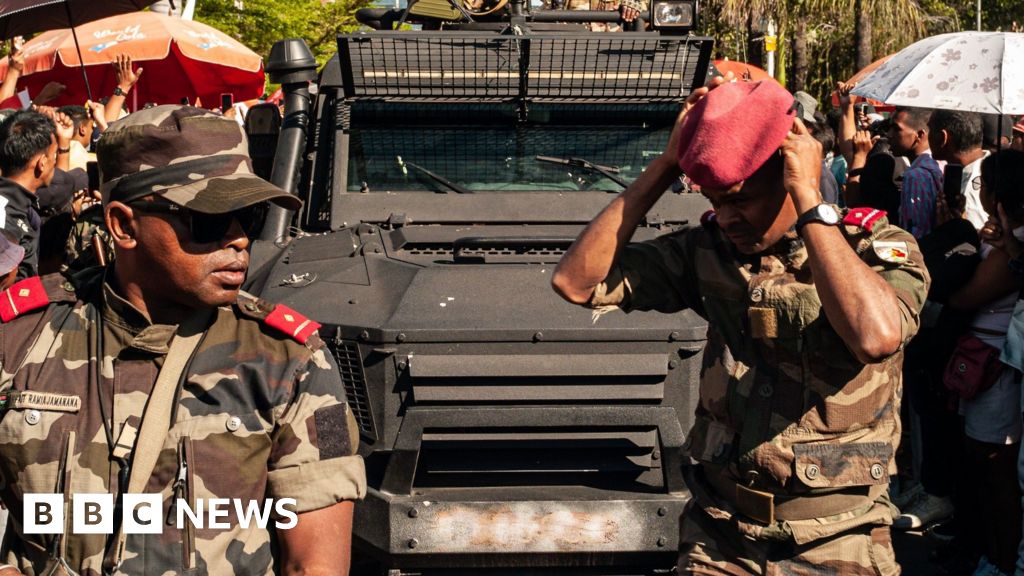
Russia has expanded its military cooperation with Madagascar since the military seized power there in 2025, supplying weapons and deploying military instructors. Brennan said the United States was concerned about Moscow’s broader intent to extend that model across Africa.
Mozambique Channel in focus
Brennan also raised concerns about security in the Mozambique Channel, the waterway separating Madagascar and Mozambique from mainland Africa that serves as a significant corridor for international shipping. He said it was vital to prevent Islamic State-linked militants operating in northern Mozambique, as well as other hostile actors, from threatening maritime activity in the area.
Citing recent piracy-related incidents along the coast, he said militant groups in northern Mozambique were adapting their tactics and developing greater maritime capabilities, a trend he described as a direct threat to the channel’s stability.
While acknowledging that US partners were “free to partner with whom they wish,” Brennan urged them to weigh the potential risks carefully before committing to deeper ties with Moscow.
Antananarivo’s posture
Madagascar has not publicly responded to Brennan’s remarks. However, President Michaël Randrianirina has recently reiterated his support for stronger ties between Russia and African countries. At a Russia-Africa summit held last month, Madagascar and Russia signed several cooperation agreements covering defence, tourism and trade.
In February, a few months after taking power in a military coup, Randrianirina travelled to Moscow — the first official visit to Russia by a Malagasy leader in nearly 50 years. The trip signalled a clear reorientation of the island nation’s foreign and security policy away from its traditional Western partners.
Brennan’s public warning marks one of the most explicit statements yet from a senior US military official about the strategic stakes Washington sees in Madagascar’s alignment choices, framing the island not merely as a bilateral concern but as a potential node in a broader contest over African security partnerships.