


Listen to the article
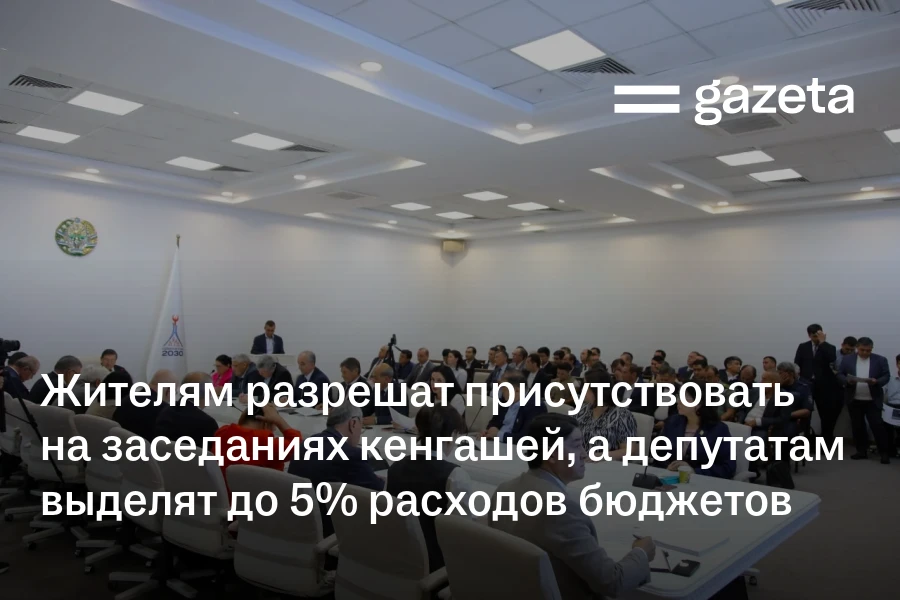
President Shavkat Mirziyoyev signed a decree on 16 November granting local deputies direct influence over a slice of municipal spending, requiring executive officials to appear in person before elected councils, and opening regional assembly sessions to citizen observers for the first time from January 2027.
The decree, titled “On Additional Measures to Strengthen the Guarantees of the Activities of Representative Bodies of State Power at the Local Level,” marks the most detailed expansion of kengash authority in recent years, building on a February 2024 decree on local governance effectiveness and a June 2025 concept document that set a target of a “strong kengash, accountable and proactive khokim” as the guiding principle for local government reform through 2030.
Deputies to Control Up to 5% of Local Budgets
Starting with the formation of local budgets for 2028, between three and five percent of expenditure will be reserved for initiatives proposed directly by deputies of local kengashes. The precise share will depend on the category of the territory. Deputies will be required to submit their budget proposals at least one month before the annual budget request process begins, giving elected representatives a formal channel to direct spending toward the specific needs of their constituencies.
The Ministry of Economy and Finance has been instructed to draft the necessary legislative amendments and submit them to the Cabinet of Ministers within one month.
Mandatory Accountability and New Disciplinary Powers
Executive officials will no longer be able to delegate their reporting obligations: the decree requires heads of local executive bodies to present reports in person and to attend kengash sessions personally when matters relating to their work are on the agenda. At least once per quarter, the first item on a kengash session’s agenda must address problems in the council’s electoral districts, with khokims, their deputies and other relevant officials expected to participate in those discussions as a rule.
An annex to the decree sets out a schedule of reports to be heard at full sessions and at meetings of standing commissions, covering territorial divisions responsible for education, employment, agriculture, water management, transport, construction and social protection, among others.
Kengashes will also gain the right to submit formal representations to higher authorities recommending that an official be found unfit for their post or subjected to disciplinary action if that official has failed to carry out tasks set by kengash decisions within the required timeframe, or has not submitted required reports. Those representations will be binding for consideration by superior bodies, though the decree does not provide for automatic dismissal at a kengash’s request.
Public Access and Legal Safeguards
From 1 January 2027, citizens will be permitted to attend sessions of the Jokargy Kenes of Karakalpakstan, regional kengashes and the Tashkent city kengash as observers, without the right to intervene in proceedings. The Senate of the Oliy Majlis has been recommended to approve the rules governing public attendance within two months.
From 1 December 2026, draft documents adopted by district and city kengashes will be subject to legal review by centres providing legal services.
The decree also addresses the position of deputies who hold jobs in state or private organisations alongside their council duties. The Ministry of Employment and Poverty Reduction is to issue standing instructions to employers prohibiting interference with deputies’ fulfilment of their duties — including attendance at sessions, standing commission meetings, party group meetings, voter meetings and citizen receptions. Prosecutors have been tasked with strengthening oversight of cases where employers obstruct deputies or refuse to release them from work while preserving their jobs and average wages, with liability measures to follow for offending officials.
The Ministry of Justice has two months to prepare procedures governing deputies’ right of unimpeded access to enterprises, institutions and organisations within their territory, with the scope of that right to vary according to the level of the kengash.