


Listen to the article
Three of Uzbekistan’s most powerful oversight bodies have agreed a joint programme to combat corruption and misappropriation in public procurement, following a direct instruction from President Shavkat Mirziyoyev issued during a regional visit earlier this year.
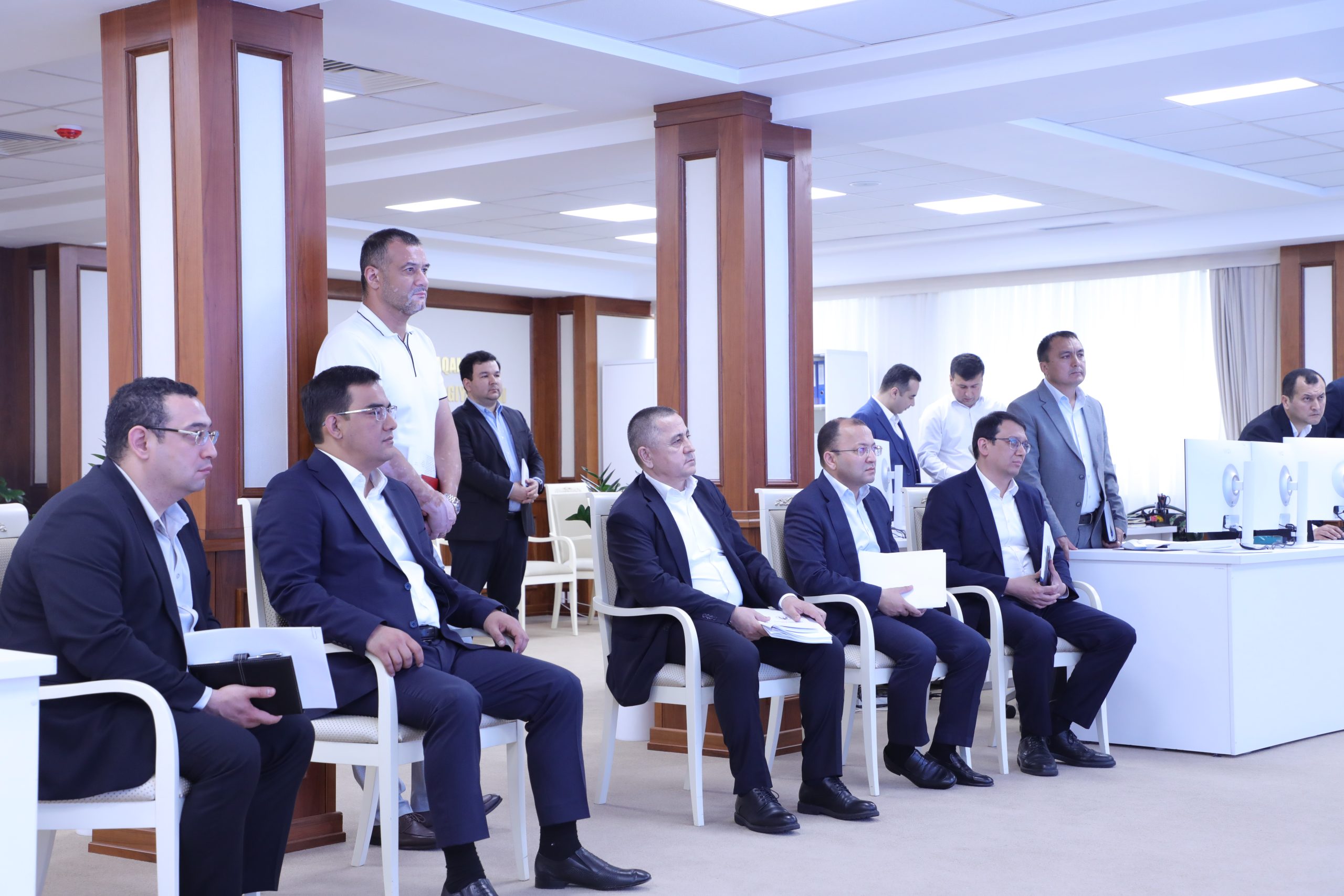
The Accounts Chamber, the Agency for Industrial Cooperation and State Procurement, and the Presidential Administration’s Compliance Service met at the Accounts Chamber building to translate that instruction into concrete commitments. The meeting was chaired by M. Abdullayev, First Deputy Chairman of the Accounts Chamber, and attended by Agency Director B. Khaydаrov and U. Aripov, head of a division within the Presidential Administration’s Compliance Service.
The directive originated on 13 February 2026, when President Mirziyoyev visited the Ohangaron district of Tashkent region. During that trip he tasked the Presidential Administration’s Compliance Service and the Accounts Chamber with providing practical assistance to the procurement agency and deepening cooperation to prevent corruption and embezzlement in state purchasing.
What the Agencies Agreed
The talks covered a broad set of systemic reforms. The parties agreed to work toward integrating the dedicated public-procurement information portal with the data systems of ministries and agencies, so that procurement officials can draw on authoritative government data in real time. They also agreed to build a system for collecting and processing large volumes of data from multiple sources and conducting risk analyses — a step aimed at detecting suspicious patterns before contracts are awarded rather than after money has been spent.
A recurring theme was reducing human discretion, which officials identified as a primary vector for corruption. The agencies committed to automating the evaluation of bids in tenders and competitive auctions to minimise the scope for subjective — or manipulated — scoring. Alongside that, they agreed to establish a monitoring system specifically covering procurement by corporate state customers, a category that has historically received less scrutiny than direct budget-funded purchases.
Two further commitments addressed legal loopholes. The parties agreed to audit and then work to repeal legislative provisions that currently permit direct-contract awards without competitive procedures — a mechanism widely associated with procurement fraud. They also agreed to make the execution of contracts concluded under public-procurement rules publicly accessible, so that civil society and journalists can track whether goods and services are actually delivered.
Finally, the agencies agreed to establish a structured training programme for officials within state-customer organisations who are responsible for procurement decisions.
Digital Tools and Next Steps
The Accounts Chamber demonstrated the capabilities of its Remote Audit information system, which was designed to improve the efficiency of public procurement and to detect and prevent violations of procurement legislation. The parties discussed applying international best practice in risk management, open data and artificial intelligence to Uzbekistan’s procurement environment.
By the close of the meeting, the three bodies had been tasked with drafting and approving a joint decision on cooperation and an accompanying action plan. The documents are intended to underpin joint projects covering digital modernisation of procurement, training seminars for state customers, and expanded practical assistance from the oversight bodies to the agency.