


Listen to the article
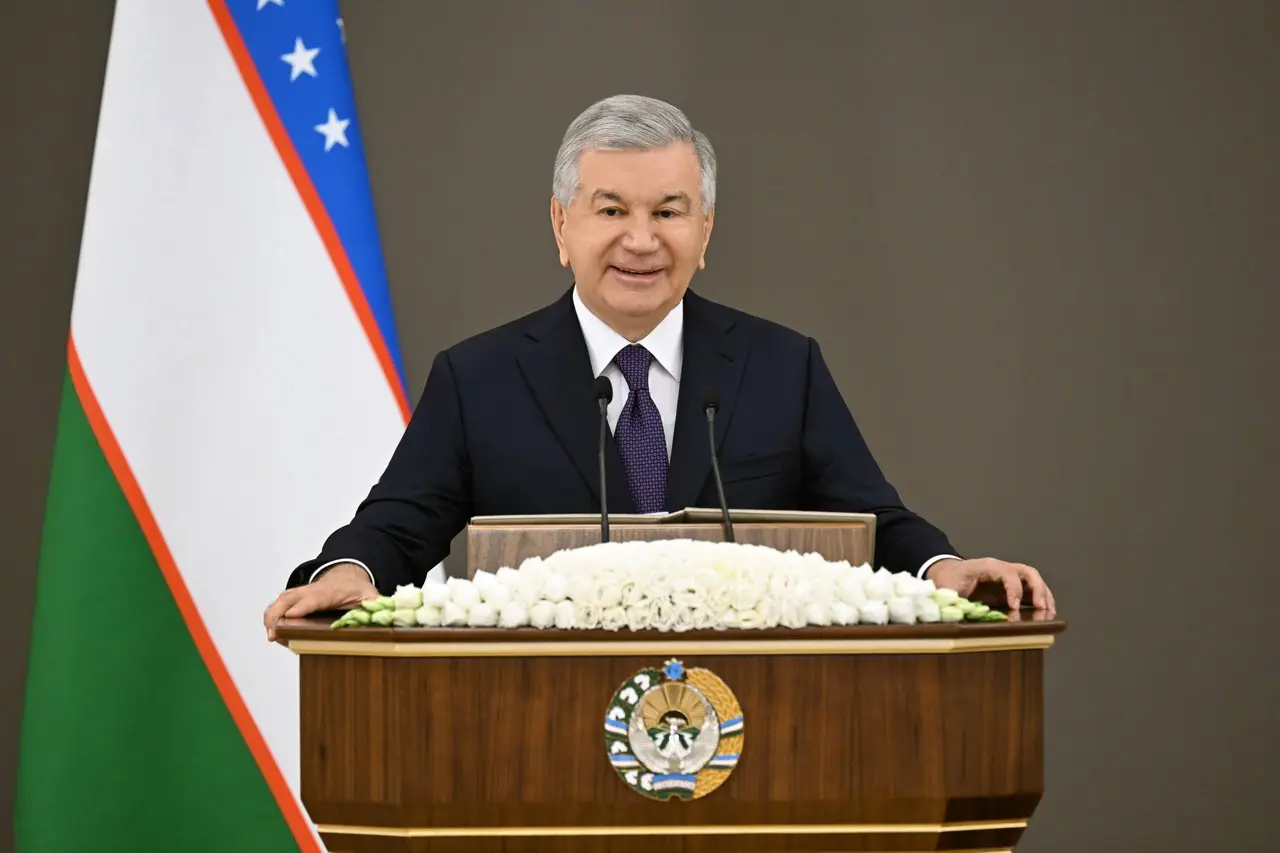
A 100-kilometre stretch of Uzbekistan’s A-380 highway running through Qashqadaryo region is set for a $350 million reconstruction, President Shavkat Mirziyoyev announced on 22 October at a government meeting on the region’s social and economic development. The project, to be carried out with Asian Development Bank financing, would transform one of the country’s most important international road corridors — and one of its most neglected.
The A-380, formally designated the Guzar–Bukhara–Nukus–Beyneu route, stretches roughly 1,204 kilometres and links Uzbekistan’s southern provinces with Kazakhstan, providing onward access toward the Caucasus, Turkey, Europe, Afghanistan and South Asia. The Guzar–Mubarek segment in Qashqadaryo is described in ADB project documents as one of the last major sections of the highway that has not undergone full modernisation.
What the project involves
ADB documentation, first published in November 2024 and updated in September 2026, sets out plans to upgrade approximately 105.4 kilometres of road, including a 5.4-kilometre Qarshi bypass, to a four-lane cement-concrete highway designed to withstand extreme weather. Intelligent transport systems are also planned. The bank’s project card lists a proposed loan of $359.4 million; no financing approval has yet been recorded in the published documentation, and the project retains a proposed status.
Mirziyoyev directed responsible agencies to complete a feasibility study by the end of 2026 and begin construction in January 2027. The Qarshi bypass will be extended by 5.5 kilometres and connected to the main highway. Separately, two modern road overpasses costing a combined 250 billion soums are planned to eliminate bottlenecks at level crossings on the Qarshi–Pomuk and Guzar–Beyneu roads, where passing trains currently cause traffic jams.
The ADB frames the project under the Central Asia Regional Economic Cooperation (CAREC) programme. Its documents note that the road surface is subject to extreme heat, flooding and freeze-thaw cycles that accelerate deterioration, raise maintenance costs and can disrupt freight movement — factors that have shaped the decision to use cement-concrete paving and to build climate resilience into the design. Four pilot sections are earmarked for additional road-safety measures, a response to data cited by the bank showing that 9,226 road accidents occurred in Uzbekistan in 2025, killing 2,188 people and injuring 8,901. Deficiencies in road signs, safety barriers, lane markings and pedestrian protection are identified as contributing factors.
Environmental and social risks flagged
The ADB has provisionally rated the project’s environmental and social risks as substantial. Between kilometre 68 and kilometre 130, the alignment passes through or near a protected area and a zone of biodiversity significance. A proposed 9-kilometre Qasan bypass may require land acquisition and could affect local residents. The bank has also said it intends to review documentation on land already acquired for the Qarshi bypass. Final route alignments, the full scale of impacts on communities and the environment, and the mitigation measures required will be determined after further studies.
Water supply commitments alongside the road work
The president used the same meeting to address what he called one of Qashqadaryo’s most pressing problems: access to clean drinking water. One trillion soums allocated in 2026 has been directed toward completing 747 kilometres of water supply and sewerage networks and 43 infrastructure facilities within two months, a programme intended to bring clean water to 200,000 residents.
A further 100 billion soums has been released to begin a pipeline project running from the Hissorak reservoir to Qarshi city and the Kamashi, Guzar and Qarshi districts. An additional $210 million is to be mobilised for a project that would supply drinking water to 350,000 people. A third scheme — the reconstruction of the Talimardjon–Mubarek water supply system — targets improved service for 700,000 residents across the Nishan, Qasbi, Mirishkor, Mubarek and Qarshi districts; its feasibility study is due by 1 April 2027, with $150 million earmarked for implementation.