



Listen to the article
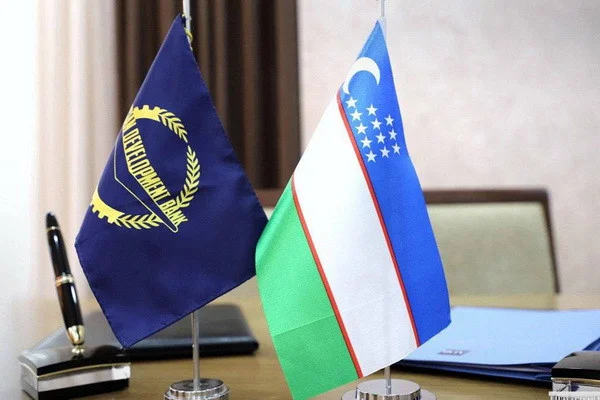
Uzbekistan is drafting a national strategy for microelectronics and semiconductor industry development covering 2027 to 2036, with the Asian Development Bank providing $1.2 million in technical assistance to support the effort, the Ministry of Economy and Finance announced.
Of that total, $1 million is earmarked directly for preparing the strategy document. The remaining $200,000 will fund international consultants and a workforce development programme running alongside the policy work.
A tender to select an international consulting firm closed on 15 October 2026, drawing submissions from five companies based in the United States, Singapore, Malaysia and Uzbekistan. The lead international consultant appointed is Glenn Quiro, an American specialist who spent 17 of his more than 25 years in the semiconductor industry at Intel, where he focused on the physics and engineering of microelectronic and semiconductor devices. The local counterpart is Oybek Abdulxayev, a PhD holder with more than 15 years of experience in semiconductor and electronics physics.
Training pipeline takes shape
The workforce component is already moving. From a pool of 300 candidates, 50 were selected for courses in integrated circuit design. Of those, 20 have been identified for preparatory scholarship programmes in Malaysia, while a separate cohort of 20 candidates and educators is being sent for two months to Sungsil and Hoseo universities in South Korea. Placements at fabless semiconductor companies are also planned.
In parallel, India’s National Institute of Electronics and Information Technology, known as NIELIT, is partnering with Tashkent’s ToshTech technical university to run a free introductory programme in VLSI design and semiconductor technology for 100 participants — undergraduates, postgraduates, lecturers, researchers and engineers. The curriculum covers two tracks: IC design, and assembly, packaging and testing, commonly referred to in the industry as APT.
Civil servants brought into the fold
The initiative extends into government. In 2025, a training seminar reached 43 senior officials from 19 ministries and agencies. In 2026, a Strategic Workshop Lab drew more than 50 officials and senior staff from over 30 ministries, agencies and organisations, and a further workshop on 30 September 2026 gathered more than 30 officials from more than 10 bodies. Across both years, nearly 130 civil servants have received instruction covering semiconductor value chains, education policy, public administration and strategic decision-making.
Uzbekistan has no established domestic semiconductor manufacturing base, and the strategy is intended to chart a path toward building one over the coming decade. The involvement of consultants with deep industry backgrounds, combined with training partnerships spanning South Korea, Malaysia and India, signals an intent to absorb international expertise rather than develop the sector in isolation.