



Listen to the article
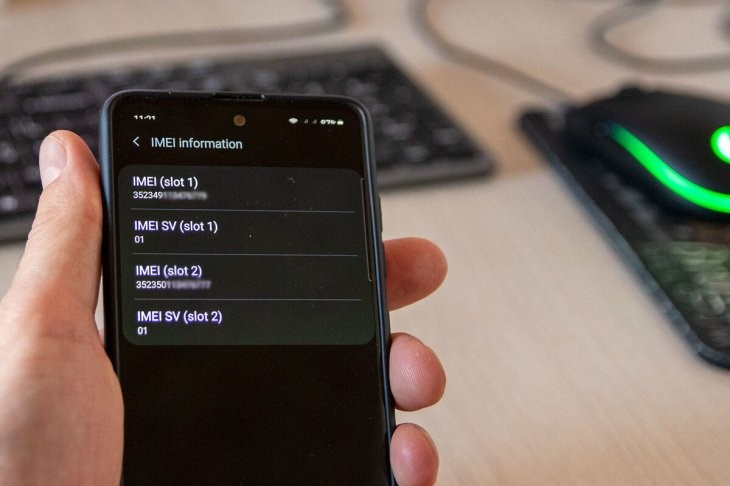
For three days in early November, customs inspectors at Tashkent’s international airport stopped clearing mobile phones. The reason, officials later acknowledged at a press conference, was straightforward: inspectors had encountered cases where IMEI codes listed in shipping documents did not match the physical devices, and they lacked both the technical tools and the training to verify the identifiers themselves. Rather than release handsets they could not authenticate, they impounded them. The standoff became public on 10 November when social-media posts began circulating — some claiming that payments could speed up the release of detained devices, an allegation the Customs Committee flatly denied.
Clearance resumed only after specialists from UZIMEI, the state operator of Uzbekistan’s device-identification system, were brought in to assist inspectors on-site. The committee said it had begun releasing the detained handsets, describing the total as running into the hundreds without giving a precise figure. It also apologised to citizens for the disruption.
The episode carried administrative consequences. According to the Customs Committee, 29 customs officers were subjected to disciplinary proceedings and a further 67 received formal preventive counselling.
Who is supposed to check IMEI codes?
Farhod Olimjonov, head of a Customs Committee department, cited a Cabinet of Ministers resolution dated 17 September 2019 to explain the division of responsibilities. Under that framework, verifying, registering, cross-referencing and identifying IMEI codes is the duty of the system operator — UZIMEI — not customs inspectors. Customs officers are responsible for checking product characteristics that affect the calculation of duties and taxes.
The committee does have its own automated tool: if a declaration lists one phone model but the IMEI corresponds to a different device, the information system flags the discrepancy for the inspector. Officials said this mechanism was activated for commercial imports around July 2025 and is scheduled to apply to devices carried by private individuals from February 2026. But the existence of an automated alert, officials conceded, did not equip inspectors to conduct hands-on technical examination of hardware. The committee also acknowledged shortcomings in coordination with UZIMEI, despite the two agencies having begun integrating their information systems in late 2024.
How IMEI manipulation works — and what it is not
A significant portion of the press conference addressed specific fraud schemes. One method described involves using the IMEI codes of inexpensive models to clear more expensive smartphones through customs, understating the declared value of the goods. Officials cited two illustrative cases: a consignment of one thousand telephone circuit boards was accompanied by roughly two thousand IMEI codes registered to Redmi, Samsung and Apple models; in a separate instance, eighty wireless earphones were declared with 3,200 smartphone identifiers.
Officials were careful to note, however, that IMEI substitution and grey-market importing are distinct phenomena. A device bought from an unofficial supplier is not automatically counterfeit, unsafe or illegally imported. The manipulation of device identifiers is a specific customs offence; purchasing a phone outside official distribution channels is a separate matter that carries different legal and practical implications for the buyer.
What buyers actually pay
The press conference clarified three separate charges that can apply when a mobile phone enters Uzbekistan. Travellers bringing in goods above the duty-free threshold — set at one thousand dollars for air passengers under applicable conditions — pay a unified customs charge of 30 percent on the excess value. Separately, registering a device’s IMEI in the national system costs 88,000 soums if done within 30 days of import, rising to 110,000 soums after that deadline; dual-SIM phones carry two IMEI codes and are charged accordingly, meaning 176,000 or 220,000 soums. Commercial importers face standard import duties and VAT under separate rules.
The unified customs charge for personal imports is set to fall from 30 percent to 20 percent of customs value — with a floor of two dollars per kilogram — from 1 January 2027, under Presidential Decree No. 174 signed on 27 August 2026. That reduction applies only to the unified personal-import charge; the IMEI registration fee is unaffected.
Import volumes and the WTO tariff question
The Customs Committee reported that 4.1 million mobile devices were officially imported into Uzbekistan in the first ten months of 2026, generating two trillion soums in customs revenue. Apple devices alone accounted for 452,000 units and 756.6 billion soums in budget receipts, according to the committee’s own figures. Officials noted these numbers reflect customs data and may not be directly comparable with foreign-trade statistics published by the National Statistics Committee, which recorded approximately 3.21 million mobile phones worth $370.8 million imported in January–September 2025.
On the question of tariffs, Olimjonov confirmed that Uzbekistan has agreed to a zero import duty on mobile devices as part of its World Trade Organisation accession negotiations, down from the current five percent rate. VAT at twelve percent would remain. He estimated the budgetary cost of the reduction at 300–400 billion soums and suggested retail prices could fall by close to five percent. He added that the UZIMEI registration fee has not been raised in WTO accession talks, meaning any future tariff elimination would not automatically reduce the total cost of registering a device.
Official distributors and the limits of their argument
A representative of Samsung Electronics Uzbekistan spoke at the press conference, citing doubled official Samsung imports since mandatory customs declaration of phones was introduced and highlighting warranty services and anti-counterfeiting markings as advantages of authorised channels. The committee’s account of the event noted that Samsung is a commercial participant with a direct interest in rules that favour official distribution; its testimony reflects that position rather than an independent assessment of market conditions. The genuine consumer benefit of in-country warranty coverage is real, but it does not, by itself, establish that all informal imports are unlawful or harmful.
The three-day clearance halt ultimately illustrated a structural problem: a crackdown on IMEI fraud exposed the absence of clear protocols for what inspectors should do when they suspect a mismatch but cannot resolve it independently. Citizens whose phones were impounded had no clear legal basis explained to them for the detention, and officials at the press conference did not cite a specific provision authorising the temporary-storage measure. The episode involved at least three state systems — customs, UZIMEI and the broader import-registration framework — whose coordination had been assumed but not tested under operational pressure.