



Listen to the article
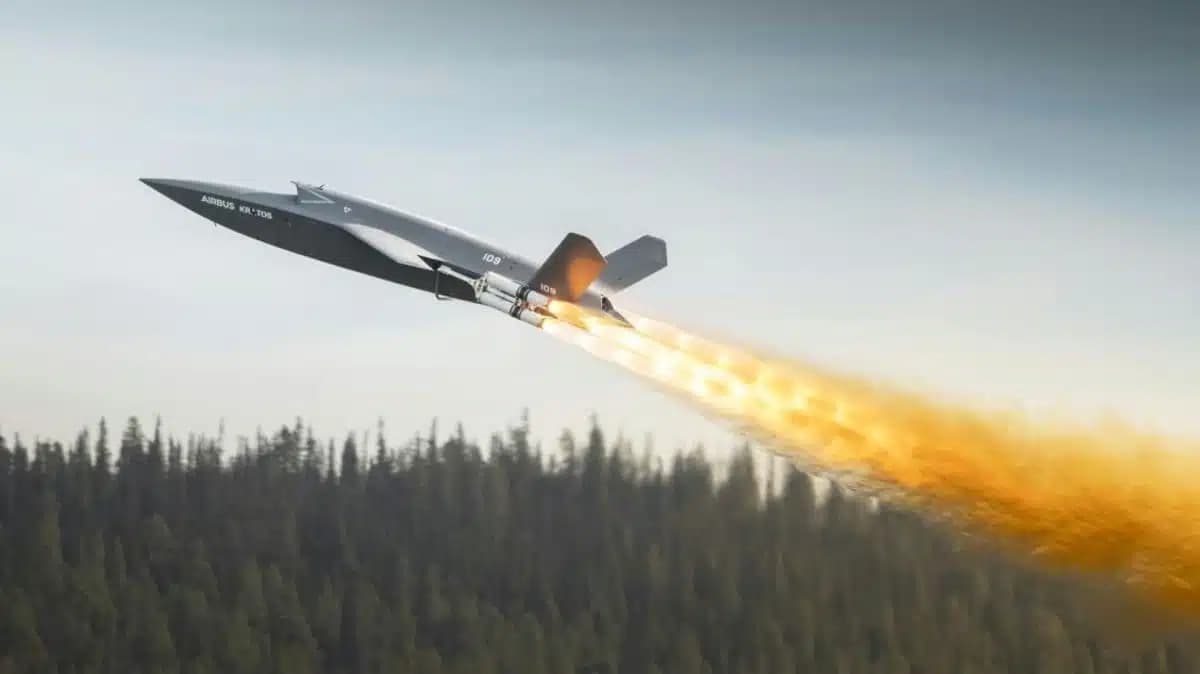
Airbus and Kratos have completed the first flight of the U740 Valkyrie unmanned combat aircraft, launching the drone from an undisclosed test range in Northern Europe using a rocket booster. The aircraft performed manoeuvres at varying altitudes and reached a top speed of 960 kilometres per hour, Airbus announced on 12 October.
The test also verified the ability to alter the drone’s assigned mission parameters while it was already airborne — a capability considered operationally significant for rapidly evolving combat scenarios. Airbus said all designated objectives for the flight were met.
A European variant of an American platform
The U740 is being developed as a European derivative of the XQ-58A Valkyrie, the relatively low-cost unmanned combat platform originally designed by Kratos for the United States Air Force. Rather than building an entirely new aircraft, Airbus has adapted the existing Kratos airframe to integrate its own control architecture, shortening the development timeline. Germany is the programme’s primary customer and is aiming to receive a combat-ready system by 2029.
The next development phase calls for installing Airbus’s MARS mission-management system aboard the aircraft. According to the company, MARS is intended to give European operators sovereign control over the drone’s software and the execution of combat tasks — a consideration that has grown in importance as European governments seek to reduce dependence on non-European technology in sensitive defence systems.
Under the planned architecture, MARS would allow drones to navigate autonomously and coordinate their movements when operating as part of a group, while keeping humans in the decision loop for the most consequential choices.
Rocket launch reduces dependence on runways
One of the U740’s defining features is its rocket-assisted take-off, which reduces the aircraft’s reliance on conventional runways. The original Valkyrie design was primarily intended to recover by parachute; newer variants, including the U740, add the option of a conventional runway landing after a rocket-boosted launch.
The combination is potentially valuable for the German Air Force in a high-threat environment. If fixed airfields were placed at risk by enemy strikes, the ability to disperse aircraft and operate drones from locations without full aerodrome infrastructure could help sustain air operations. The War Zone, which first reported the test details, noted that Airbus disclosed the results on 12 October.