



Listen to the article
The Armenian cabinet approved a bill on July 16 to formalise the country’s participation in the Trump Route for International Peace and Prosperity — known as TRIPP — a transit corridor envisioned as a central node in the emerging Middle Corridor trade network linking Asia to Europe.
The bill affirms the development guidelines set out in a framework agreement signed by US and Armenian officials, including the ownership structure under which the United States would hold a 74 percent stake in TRIPP and Armenia would retain the remainder. Armenian Foreign Minister Ararat Mirzoyan, presenting the bill to cabinet before the vote, said it contained no new provisions and was fully consistent with the US-Armenian framework agreement signed in January, as well as the provisional Armenian-Azerbaijani peace deal concluded at the White House in August 2025, of which TRIPP is considered the centrepiece.
The bill now faces a legal review by Armenia’s Constitutional Court. If it clears that hurdle, it will proceed to parliament for a vote — a process that could take weeks or months depending on the court’s schedule and the legislative calendar.
Two More Agreements Required Before Ground Can Break
Even a successful parliamentary vote would not immediately unlock construction. Mirzoyan noted that two further agreements must be negotiated and signed before building can begin: a shareholders’ agreement and a charter for the TRIPP Development Co., the freshly created entity that will hold a 49-year lease to build and operate the route.
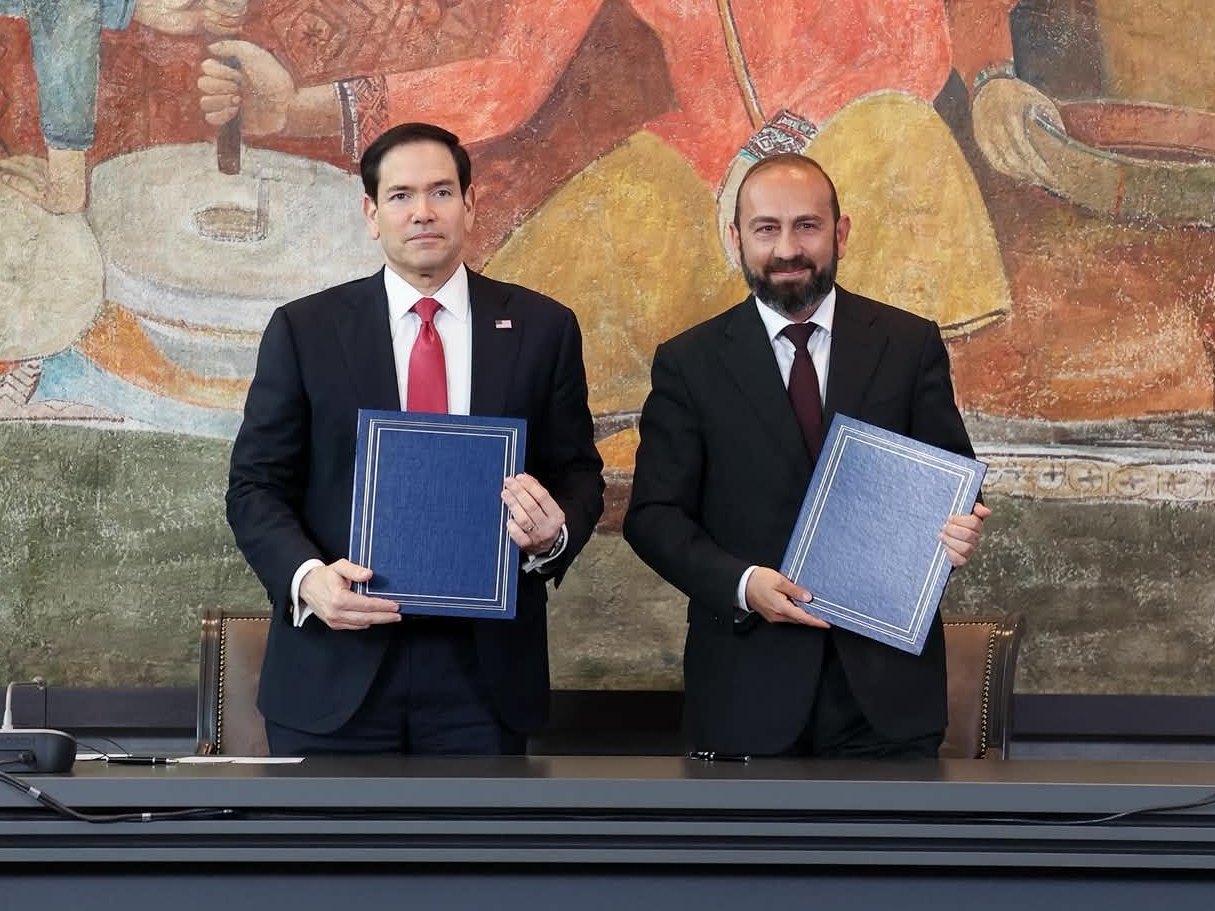
The framework agreement itself was signed in June, following a visit to Yerevan by US Secretary of State Marco Rubio in late May, during which Rubio and Mirzoyan were photographed holding copies of the document.
US Names Fund Head With Donor Ties to Trump
Separately, the US State Department announced the appointment of Konstantin Sokolov, a Chicago-based private equity investor, to lead a $200 million US government enterprise fund intended to support development of the Middle Corridor network, including TRIPP.
According to a report by the Guardian, Sokolov was born in St. Petersburg, Russia, and emigrated to the United States in the early 1990s. The Guardian also reported that he was among donors who contributed to a Trump project to build a ballroom in the East Wing of the White House, and noted that a number of ballroom donors have subsequently received government advisory roles or official appointments. The State Department did not address those circumstances in its announcement, as reported by Eurasianet.
The $200 million fund is designed to promote broader Middle Corridor development, of which TRIPP forms the most politically prominent component. The corridor is intended to reduce freight dependence on Russian territory by routing goods through the South Caucasus and Central Asia.