



Listen to the article
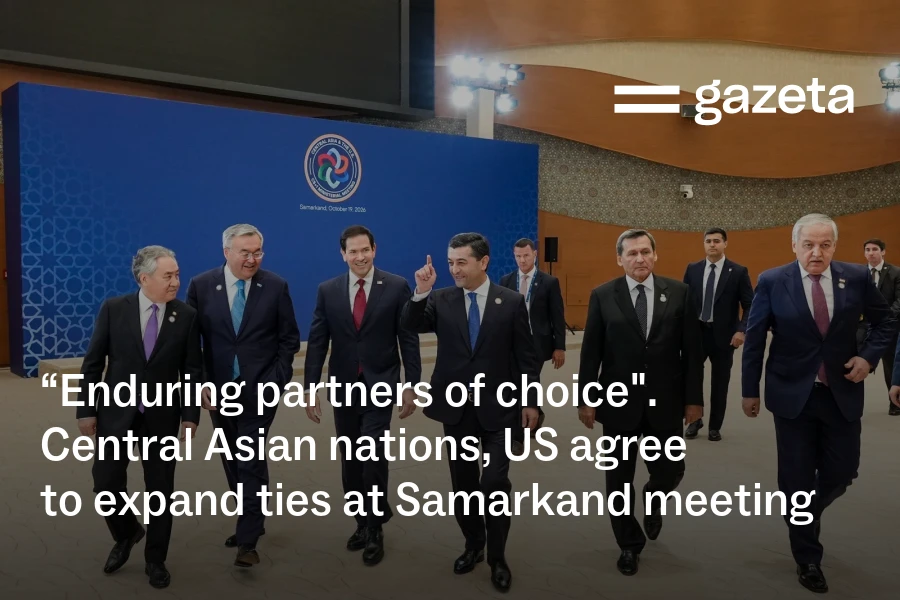
The United States and the five Central Asian republics have pledged to deepen cooperation across trade, energy, security and cultural heritage, following a C5+1 foreign ministers’ meeting held in Samarkand on Monday. Secretary of State Marco Rubio met his counterparts from Uzbekistan, Kazakhstan, Kyrgyzstan, Tajikistan and Turkmenistan, and the gathering produced a joint statement describing the parties as “enduring partners of choice.”
The meeting marked more than a decade since the C5+1 format was inaugurated. “More than 10 years ago, in 2015, the first C5+1 ministerial meeting took place, marking an important step in the development of a diplomatic platform grounded in our shared respect for the sovereignty, independence, and territorial integrity of all nations,” the statement said, adding that the signatories looked forward to “many more generations of enduring partnership.”
Trade corridors and digital links
On economic connectivity, the ministers said they were creating “new and modern transportation links” along the Trans-Caspian Trade Route and investing in infrastructure to ease commerce. Digital connectivity featured prominently, with the statement citing English-language training and education as tools for “bridging geographical divides” between C5+1 populations.
The joint document expressed ambitions for Central Asia to return “to the center of the global economy,” pointing to intraregional trade expansion, harmonised customs procedures and stronger industrial cooperation as the means to build “a competitive regional market connected with the United States.”
The statement also introduced a business-focused counterpart framework. “A thriving B5+1 platform will continue to create new mutually beneficial commercial opportunities for American companies operating in Central Asia,” it said, while also envisioning expanded openings for Central Asian enterprises to invest and operate within the US market. The ministers cited secure technology, American technological excellence and the region’s growing tech sectors as foundations for fostering e-commerce and entrepreneurship.
Minerals, energy and geological data
Energy and natural resources received detailed attention. The statement said strengthening US-Central Asian energy cooperation would help develop “integrated, high-value supply chains that yield sustained economic growth and energy resilience.” Each country was described as holding a “unique collection of untapped natural resources,” with the parties committing to combine their strengths as a “collective, powerful driver of regional energy sector development.”
In a notable passage, the ministers said they intended to exchange expertise and best practices on managing geological data — declaring that “data is gold” — and envisioned expanded mineral extraction and processing opportunities. They also called for developing value-added products within the region and creating pathways to international markets for those goods.
Security: terrorism, trafficking and cyber threats
The security section of the statement covered a broad range of threats. The ministers agreed to place particular importance on countering terrorism and transnational organised crime and on enhancing border security. Cooperation was also pledged against illegal immigration, human trafficking, illicit drug trafficking and arms trafficking.
Cybersecurity was framed as a modern priority. “A modern approach that focuses on mitigating threats of the digital era, including through enhanced C5+1 cyber security cooperation, will strengthen our ability to successfully counter cyber threats and cybercrime,” the statement said.
On nuclear matters, the parties welcomed longstanding cooperation in securing nuclear materials and said they would deepen practical work on nuclear security, safeguards, the physical protection of nuclear material and the peaceful use of nuclear energy, building on the existing Central Asian Nuclear-Weapon-Free Zone.
Cultural heritage and professional exchanges
The statement closed with a commitment to preserve the cultural legacies of all C5+1 countries. The ministers said they would pursue greater cooperation between law enforcement and cultural institutions, expand professional and educational exchanges, use new technologies to protect antiquities and integrate heritage protection with law enforcement efforts. The goal, the document stated, was to “professionalize a talented workforce ready to lead on the global stage.”