



Listen to the article
Uzbekistan’s Chamber of Accounts has unveiled a new module within its Masofaviy audit information system designed to assess funding needs and track expenditures at preschool education institutions in real time, marking a significant step toward closing the gap between budget allocations and actual spending at the sector’s most granular level.
The tool works by integrating the information systems of the Ministry of Economy and Finance, the Ministry of Education and Science, and utility service providers into a single data-exchange framework. For each preschool institution, the system calculates how much funding is required, how much has been allocated, and how much has actually been spent — allowing auditors and planners to flag potential shortfalls or risks of overspending before they become entrenched in the budget cycle.
Who Was in the Room
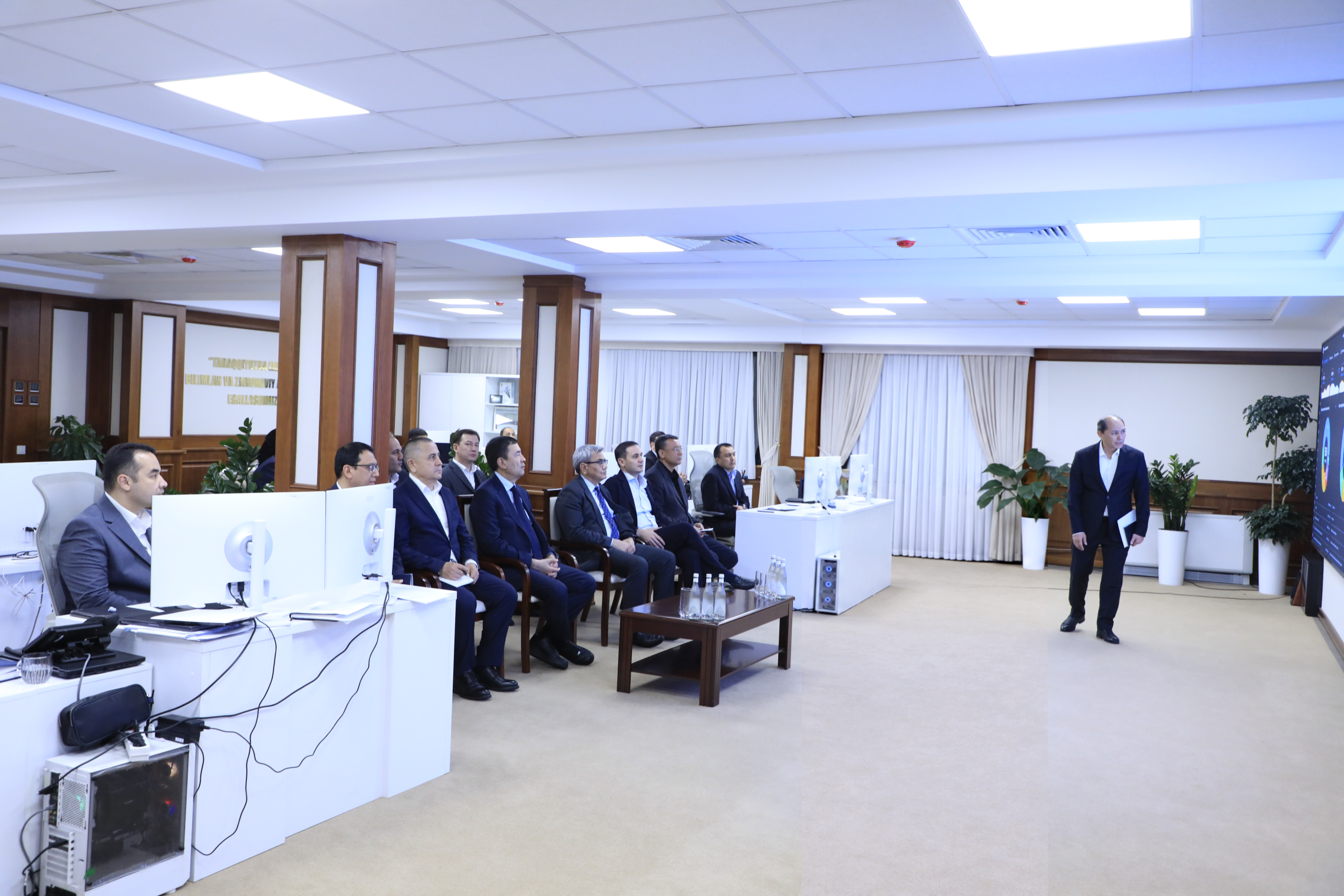
The presentation, held at the Chamber of Accounts on 2 November 2026, was attended by Obid Hakimov, Erkinjon Turdimov — First Deputy Prime Minister and Minister of Education and Science — and the leadership of the Chamber of Accounts. Participants discussed how the system could improve both the efficiency of education financing and the accuracy of future budget planning.
The ministries were given the opportunity to run a pilot of the system. It was agreed that a roadmap for further development would be drawn up once pilot results are available, suggesting the tool is still in a formative stage rather than fully operational across the sector.
Why It Matters
Preschool education has been a persistent pressure point in Uzbekistan’s public finances, where rapid expansion of enrolment has repeatedly outpaced the state’s capacity to plan and distribute funding with precision. A system that compares need, allocation and actual expenditure at the institutional level — and does so continuously rather than through periodic audits — could give budget planners earlier warning of where money is running short or being misapplied. The integration of utility provider data is particularly notable: energy and water costs are among the most volatile line items in any school’s operating budget, and their inclusion suggests the tool is designed to capture the full cost picture rather than headline grant figures alone.
Whether the pilot translates into a mandatory planning instrument across all preschool institutions will depend on the roadmap that emerges from the trial, the terms of which have not yet been disclosed.