


Listen to the article
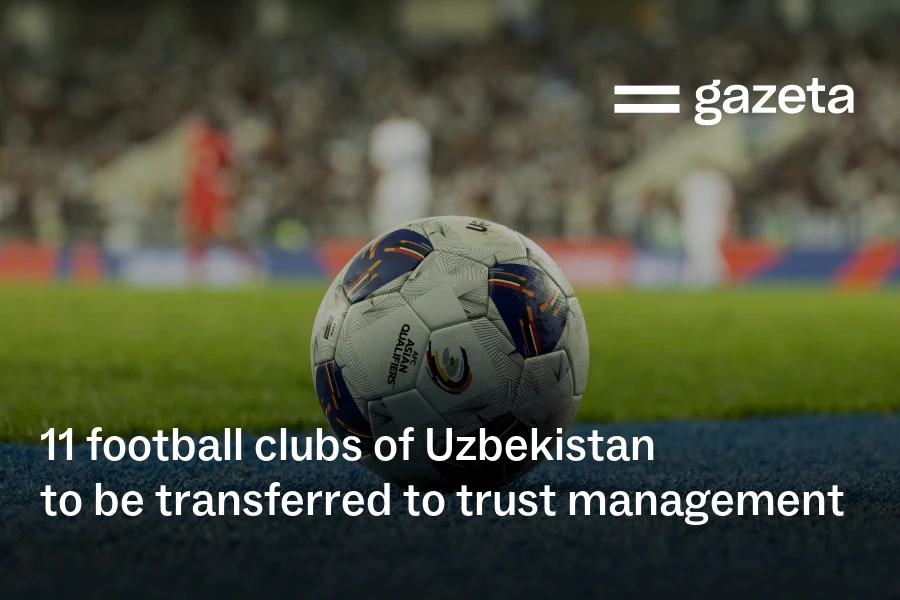
Uzbekistan’s Football Association (UFA) will launch a tender to place eleven professional football clubs under private trust management, naming Bunyodkor, Bukhara, Dinamo, Qizilqum, Navbahor, Nasaf, Neftchi, Lokomotiv, Mash’al, AGMK and Pakhtakor as the clubs involved.
Under the terms of the tender, a club may be handed to an entrepreneur or a group of entrepreneurs willing to provide annual sponsorship funding equal to at least 20 percent of the club’s total annual expenses. The arrangement was mandated by a presidential resolution dated 24 March on improving sports financing mechanisms and expanding private-sector participation in the sector.
Tax relief and cheap credit
Entrepreneurs who take on a club will be permitted to reduce their taxable corporate income by the amount of sponsorship assistance they direct to the club, though the deduction may not exceed 10 percent of taxable profit. Players at the clubs will be exempt from personal income tax entirely, and their social tax rate will be set at one percent.
Trust managers will also be able to borrow from commercial banks to acquire clubs or to construct, reconstruct or carry out major repairs on sports facilities. Those loans will run for five years with a one-year grace period at an annual interest rate of 14 percent. Liquid collateral and a viable business plan will be required; buildings, structures and land plots on a club’s balance sheet may not be used as security.
An additional incentive offers entrepreneurs a 50 percent discount on advertising their products and services on the central and regional channels of Uzbekistan’s National Television and Radio Company during sports broadcasts.
Transitional state funding still in place
The trust management drive runs alongside a parallel, time-limited injection of direct state budget support. Starting from the 2026 season, each of the 16 Super League clubs is receiving 35 billion soums from the state — the first time such direct budget funding has been provided. That figure is scheduled to fall to 30 billion soums in 2027 and 25 billion soums in 2028. The government has stated its intention to cease financing professional football entirely by 2030, shifting clubs to market-based mechanisms.
The push to bring private capital into Uzbek football is not new. A presidential resolution as far back as March 2023 envisaged the outright sale of clubs held on the balance sheets of government agencies. Tashkent’s Pakhtakor was put up for auction in January 2024 along with a 24.1-hectare land plot, but the privatisation was subsequently suspended. The trust management model now being tendered represents a different approach, preserving state ownership of assets while delegating operational and financial responsibility to private hands.