



Listen to the article
For decades, Uzbek schoolchildren were marched into cotton fields each autumn and told they were serving the nation. The harvest was celebrated as patriotic duty; the labour was framed as honour. Behind that propaganda lay a system of coercion, falsified statistics and, ultimately, one of the largest criminal investigations in Soviet history — one that would destroy tens of thousands of lives while leaving the architects of the original fraud largely untouched.
A Colony of White Gold
The roots of Uzbekistan’s cotton dependency stretch back to the nineteenth century, when Russia’s expanding textile industry needed a domestic alternative to American supplies. General-Governor Konstantin von Kaufman oversaw the introduction of American Upland cotton varieties into Turkestan, distributing seeds and cultivation guides to local farmers. The experiment succeeded, and Tsarist planners quickly recast the region not merely as a cotton-growing territory but as the empire’s primary raw-material base for its textile sector.
The 1917 revolution changed the political order but not the agricultural logic. Soviet planners deepened the specialisation, expanding irrigated acreage, building new canals and directing collective farms almost exclusively toward cotton. To prepare fields for mechanical harvesting, aircraft sprayed defoliants — chemical agents that strip leaves from the cotton plant — across vast areas. Adults and children alike continued working in those chemically treated fields; in some cases children were handed plastic containers and made to apply the chemicals directly to plants.
The ecological cost was catastrophic and foreseeable. To irrigate new desert cotton fields, Soviet engineers diverted the Amu Darya and Syr Darya rivers away from the Aral Sea. Warnings about the consequences were raised and ignored. The Aral Sea shrank steadily, eventually becoming one of the twentieth century’s most visible environmental disasters. Cotton production targets remained the overriding priority.
The Arithmetic of Impossibility
By the 1950s Uzbekistan was producing roughly 300,000 tonnes of cotton annually. By the mid-1980s that figure had reached three million tonnes. Each record harvest prompted Moscow to demand still more. Sharof Rashidov, the republic’s long-serving first secretary, reportedly appealed to Moscow on several occasions to reduce the quotas, recognising that the volumes being demanded could not realistically be grown. When honest production fell short, some officials chose a different path: they began reporting cotton that had never been picked. Accounts were falsified, figures inflated, and bribery spread through the system.
The investigation that would expose — and then grotesquely distort — this fraud had its origins in the early 1970s, when KGB chief Yuri Andropov grew suspicious of rail wagons travelling from Uzbekistan to Serpukhov. Those inquiries were suppressed while Rashidov remained in favour with General Secretary Leonid Brezhnev. When Brezhnev died in 1982 and Andropov succeeded him, the political protection evaporated.
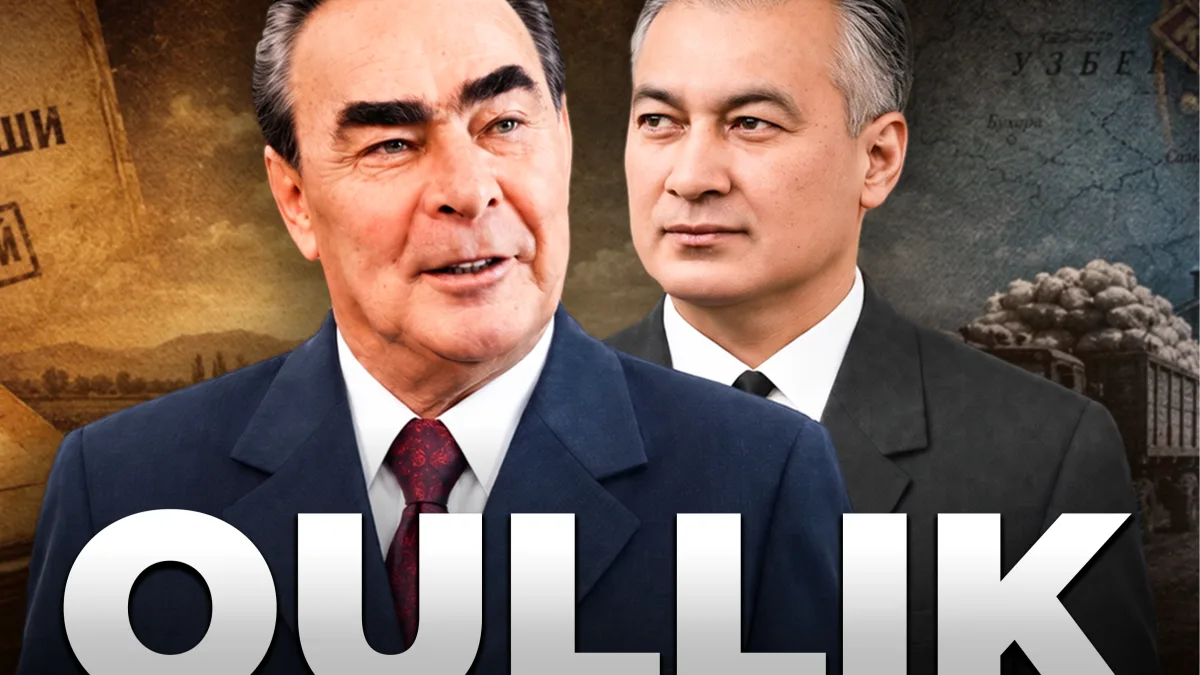
In 1983, with Rashidov himself dying as the investigation intensified, Moscow launched what became known as the Cotton Affair — Paxta ishi in Uzbek, or the Uzbek Affair in broader Soviet parlance. Andropov’s personal antipathy toward Rashidov, and his desire to dismantle the Brezhnev-era patronage networks, shaped the investigation from the outset. Distrusting local prosecutors, Moscow dispatched its own team, led by investigator Telman Gdlyan and his senior colleague Nikolay Ivanov.
Five Years of Organised Pressure
Gdlyan and Ivanov worked in Uzbekistan for five years, beginning in Bukhara. The head of the regional interior directorate, General Norov, his two deputies — Colonel Rakhimov and Lieutenant Colonel Muling — and then a succession of generals, colonels and other senior interior ministry officials were arrested on what would later be characterised as fabricated charges. The investigation spread across the republic.
Approximately 40,000 people were subjected to interrogation. More than 4,500 were imprisoned. Investigators used psychological and physical pressure to extract confessions, threatened to arrest relatives, and in some cases did exactly that. In the case of one official, Mirzaakhmad Musakhanov, his children were detained. In the case of a district party committee secretary, O. Rajabov, 54 relatives, acquaintances and neighbours were drawn into proceedings.
Investigators also ran what amounted to an extortion scheme. Families were told that paying money would secure a relative’s release. Relatives borrowed from neighbours and gathered gold jewellery intended for weddings, bringing it to the investigators. The prisoners were not freed. Instead, the money and jewellery were used as evidence against them. According to a subsequent legal review, Gdlyan and Ivanov kept the bulk of what was collected; the remainder was displayed on Soviet television as proof of Uzbek corruption, cementing an image of the republic as a nest of bribery and theft.
At least two officials — Vahobjon Usmonov, the former minister of the cotton-processing industry, and Akhat Muzaffarov, head of the Bukhara regional economic crimes unit — were sentenced to death. Three other death sentences were commuted to twenty-year prison terms. Many of those convicted served their sentences in penal institutions in Siberia.
Abdusamad Polvonzoda, a jurist who served as first deputy chairman of the Supreme Court and later as deputy chairman of the government commission reviewing the affair, wrote in the journal Vodiynoma: “It must be said that falsification of figures occurred not only in Uzbekistan but in all Soviet republics. The state itself compelled people to falsify, and then that same state repressed them for it.”
Rehabilitation Without Accountability
By 1989 pressure for review had grown strong enough that Uzbekistan began re-examining the Cotton Affair convictions. In June 1990 a new commission was formed under First Deputy Prime Minister Ismoil Jurabekov, with Polvonzoda as his deputy. The commission worked through nearly 40,000 criminal case files page by page. It faced institutional resistance, including attempts to dissolve it, but continued its work. By 1991, on the basis of protests signed by Polvonzoda, approximately 3,500 people had been formally exonerated, with the process continuing.
On 30 August 1991 — one day before Uzbekistan declared independence — USSR Prosecutor General Nikolay Trubin closed the criminal case against Gdlyan and Ivanov on the grounds that their actions did not constitute a criminal offence. Despite demands from Polvonzoda and other deputies that the two investigators be held accountable, no charges were ever brought. The men who had orchestrated five years of coerced confessions, extortion and wrongful imprisonment walked free as the Soviet Union collapsed around them.
The Cotton Affair thus ended as it had begun: with Uzbekistan bearing the consequences of a system it had not designed, and with those who weaponised that system facing no legal reckoning. The falsification of cotton figures was real, rooted in impossible quotas imposed from Moscow. The investigation that followed was, in the assessment of Uzbekistan’s own subsequent legal review, itself a form of organised injustice — one that the Soviet state never formally acknowledged.