


Listen to the article
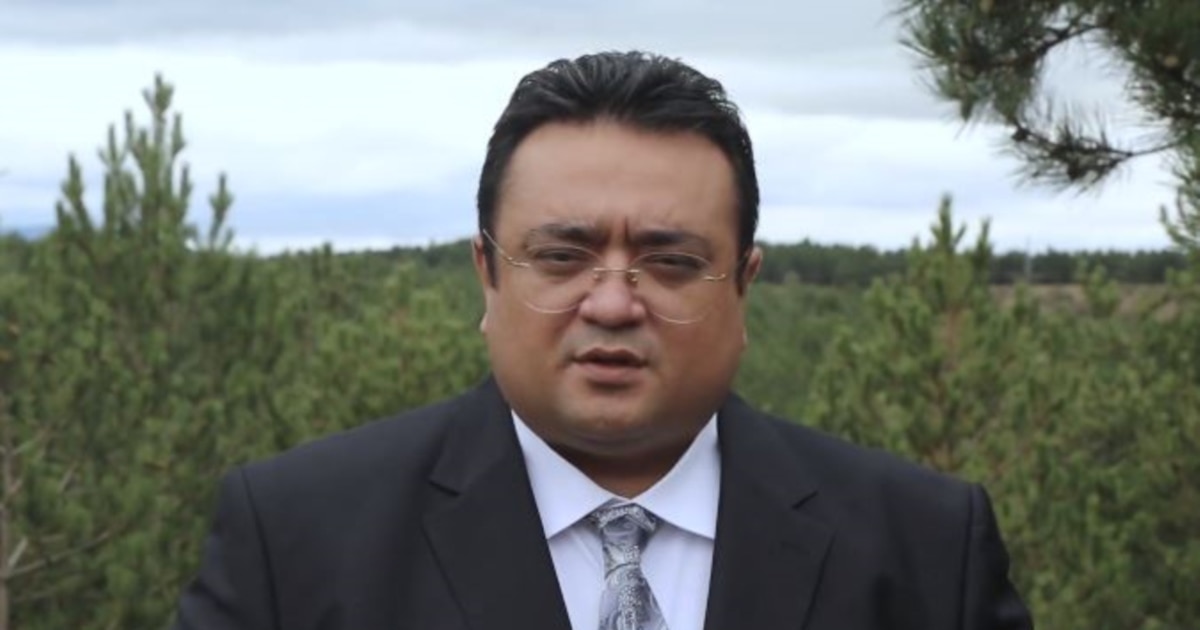
A Uzbek military court sentenced blogger Said-Abdulaziz Yusupov to ten years in prison on 20 November 2026, finding him guilty of attacking the constitutional order of the Republic of Uzbekistan and of aggravated defamation. The trial, which opened on 16 November, lasted five days and was conducted entirely behind closed doors, leaving the public without access to the evidence presented or the defence’s arguments.
Yusupov, 44, ran the social-media channels known as “Oq va Qora” (Black and White) and had featured in investigations by Radio Free Europe/Radio Liberty’s Uzbek service, Ozodlik, into an informal power structure in Tashkent referred to colloquially as “the Office.” Ozodlik reported that sources familiar with the proceedings said he was convicted under Article 159, Part 3(a) of the Criminal Code — attacking the constitutional order, in circumstances involving repetition or commission by a dangerous recidivist — and under Article 139, Part 3(a) and (g), covering defamation that falsely accuses a person of a serious or especially serious crime, and defamation motivated by self-interest or other base motives.
Nadejda Atayeva, head of the Association for Human Rights in Central Asia, confirmed the sentence and its grounds. “On 20 November 2026, the Military Court of Uzbekistan sentenced Said-Abdulaziz Yusupov to ten years’ deprivation of liberty. He was found guilty of attacking the constitutional order and of defamation under aggravating circumstances,” she said. Atayeva added that in the first half of 2026 Yusupov had been exploring the possibility of seeking asylum in a European country, and that shortly before the verdict he had written to BBC journalists, human rights defenders and international organisations. “A person facing a long prison term seeking help from rights defenders is natural,” she said. “Yusupov also has the right to hope for a fair trial.”
The “Office” Allegations
Ozodlik sources alleged that Yusupov headed the media wing of “the Office,” an informal Tashkent-based structure that the outlet investigated in a series it called “The Fall of the Office.” According to those sources, the charges against him include involvement in a video series titled “The Masked Man,” through which he allegedly attempted to discredit the current leadership of the Presidential Administration. Ozodlik said it does not hold copies of or links to those videos and cannot independently verify when, on which platform, or by whom they were published.
Atayeva described the alleged role Yusupov played: “My interlocutors use ‘the Office’ to refer to an informal structure believed to have operated inside Uzbekistan. In their account, Yusupov coordinated the activities of a group of bloggers and journalists, set topics and assigned articles to specific authors.” Sources cited by Ozodlik further alleged that the Office used bloggers to spread compromising material against officials and businesspeople who refused to comply with its demands, and that those who could not be silenced with money were targeted through paid smear campaigns.
Blogger Bobomurod Abdullayev, who said he had been called as a witness by military prosecutors on 20 October, described what Yusupov had told him directly: “He said to me: ‘Such-and-such blogger works for us,’ ‘Such-and-such is on our side.’ He told me this many times. According to him, they tried to buy off the voices of critics. If someone refused and kept criticising, they hired others to discredit the critic.” Abdullayev denied a post on a Facebook page attributed to Yusupov that accused him of filing a complaint against Yusupov with the Military Prosecutor’s Office. “That is a completely defamatory post. I participated as a witness — nothing more,” he said.
A Third Conviction
This is Yusupov’s third criminal conviction. In 2019 he was arrested on fraud charges, with prosecutors alleging he had posed as a senior State Security Service officer to obtain large sums of money from people. He had managed a public foundation supporting independent print media and news agencies from December 2017 until his arrest in May 2019. After more than a year in a State Security Service detention facility, he was released on 8 July 2020. The then-first deputy chairman of the Supreme Court, Ikrom Muslimov, stated in 2020 that Yusupov had been convicted twice: once receiving a custodial sentence, and once — in the fraud case — receiving a non-custodial punishment after the damage was fully repaid, though he was not acquitted.
Sources cited by Ozodlik alleged that Yusupov’s early release from that earlier detention was facilitated by Otabek Umarov, the youngest son-in-law of President Shavkat Mirziyoyev. Yusupov had publicly praised Umarov in terms that circulated widely online, describing him as a “hero” who had done for Uzbek youth what the entire Interior Ministry had failed to do. Neither Uzbekistan’s official bodies nor Umarov have commented on the Office allegations since Ozodlik’s investigation was published nearly two years ago.
Atayeva also raised concerns about what she described as a pro-Russian propaganda dimension to Yusupov’s activities. “I know people who rate his persuasive abilities highly. Those who spoke with him say Yusupov convinced his interlocutors that Russian influence in Uzbekistan was inevitable and urged them to support Russia’s aggression against Ukraine. I consider this aspect of his activity propaganda, and I see a resemblance to the approach of the Rossiya Segodnya agency,” she said. She added that some bloggers and journalists had, on Yusupov’s recommendation, travelled to Moscow to attend training sessions on information work, though who organised those trips and what participants were taught remains unclear.
The full details of the verdict — including the specific evidence on which the charges rest — remain unknown because of the closed proceedings. Uzbekistan’s official bodies have issued no statement on the case. Ozodlik said it is continuing to seek official comment and answers to outstanding questions about the trial.