


Listen to the article
Saida Mirziyoyeva, Head of the Presidential Administration of Uzbekistan, conducted a concentrated series of high-level meetings in London last week, using the successful listing of the Uzbekistan National Investment Fund (UzNIF) on the London Stock Exchange as a platform to deepen ties with British political figures and global financial executives.
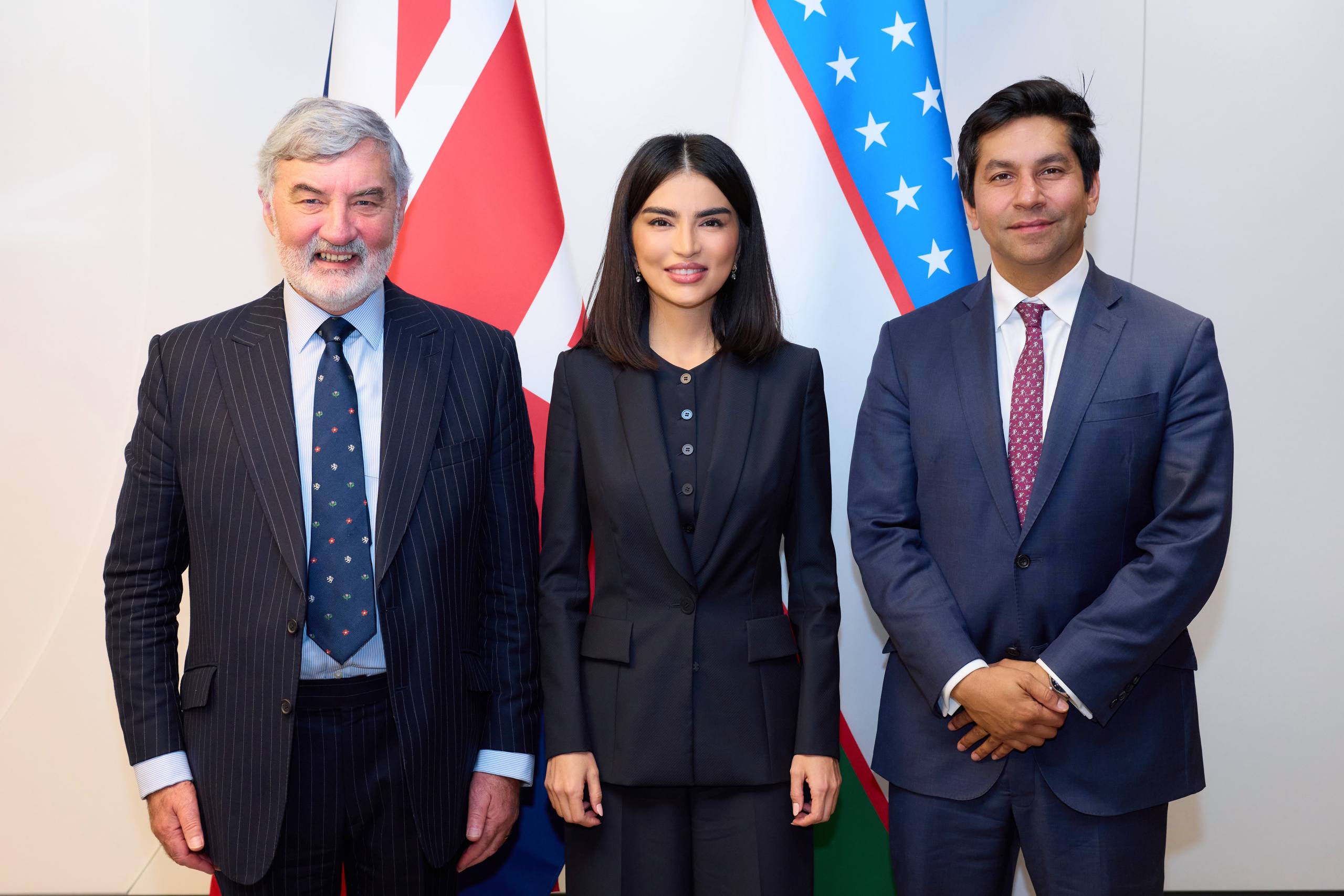
Her first engagements were with Varun Chandra, the British Prime Minister’s Investment Advisor, and Lord John Alderdice, the UK Trade Envoy to Central Asia and Azerbaijan. Both officials told Mirziyoyeva that UzNIF’s entry into international capital markets had generated a measurable and sustained rise in interest among British business circles in Uzbekistan as an investment destination.
Franklin Templeton sees an ‘outstanding’ trading debut
Mirziyoyeva then sat down with Jenny Johnson, Chief Executive Officer of Franklin Templeton, one of the world’s largest asset management companies. Their talks ranged across capital market development in Uzbekistan, upgrades to its financial regulatory framework, integration with international clearing systems, and progress toward establishing the Tashkent International Financial Centre. The two sides agreed to expand strategic cooperation across all of those areas.
According to Mirziyoyeva’s account of the meeting, Johnson praised the pace at which Uzbekistan had completed what she described as a highly complex IPO preparation process, and said the subsequent trading performance of UzNIF shares had delivered outstanding results.
LSE chief maps out green finance and training agenda
The final meeting of the London visit was with Julia Hoggett, Chief Executive Officer of the London Stock Exchange. Hoggett and Mirziyoyeva reviewed the operational performance of UzNIF’s LSE debut before turning to a forward-looking agenda that included sustainable finance, ESG standards, the issuance of green bonds, and training programmes designed to prepare more Uzbek enterprises for global market operations.
The cluster of meetings signals that Tashkent intends to treat the UzNIF listing not as a one-off transaction but as an opening move in a broader push to anchor Uzbekistan’s financial sector to international standards and institutions. The involvement of the LSE chief and one of the world’s largest active asset managers in those conversations lends the ambition a degree of institutional weight that earlier reform announcements have sometimes lacked.