



Listen to the article
A private nursery in the Khatyrchi district of Navoiy region crammed 33 children into a single Damas microvan — a vehicle designed for far fewer passengers — in the latest in a string of dangerous child-transport violations that have now claimed at least one young life and injured dozens more across Uzbekistan.
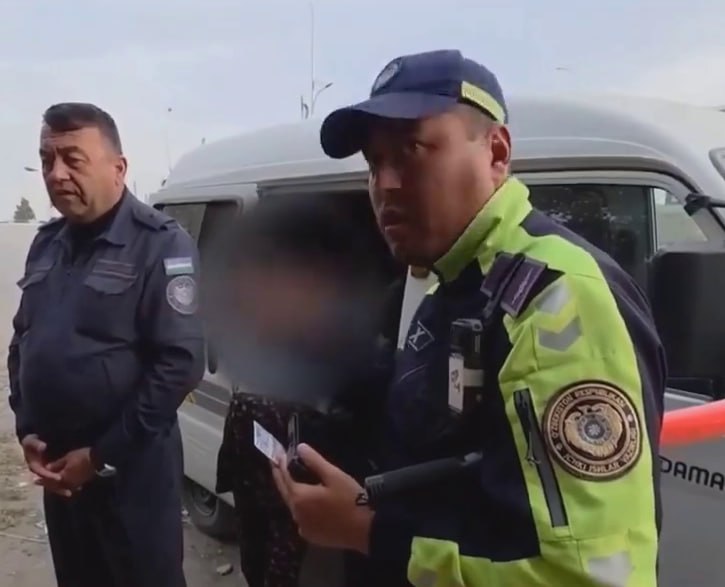
What makes the Khatyrchi case particularly striking is that neither the driver nor the nursery director was a first-time offender. Traffic police in Navoiy region published video footage showing that both had already been sanctioned for the same violation and had signed written explanations acknowledging the breach. They continued the practice regardless. In a separate episode captured during the same operation, officers found two children aged four or five sitting in the front seat of another Damas.
A Pattern Across Regions
The incident is not isolated. In September, traffic inspectors in Jizzakh region stopped two Damas vans, each carrying 28 nursery children — 56 in total across the two vehicles. In Navoiy region, a separate crash involving a family nursery director who was transporting 14 children in a Matiz ended with the woman dying in hospital and all the child passengers injured and hospitalised.
The most serious recorded outcome came in Andijan region, where a court convicted a woman in July after she had been driving 21 children in a Chevrolet Tracker when the vehicle was involved in a crash in February. Eight children were injured; a six-year-old girl died in hospital four days later. The driver received three years of restricted liberty and a two-year ban from operating a vehicle.
Enforcement Numbers That Raise Questions
The Interior Ministry acknowledged the scale of the problem at a meeting in May, reporting that 598 violations related to the transport of minors had been recorded since the start of the year. Between 1 and 12 May alone, inspectors found 170 cases of overcrowded child transport, with 3,872 children involved — an average of roughly 23 per incident.
Authorities have responded with roadside checks, awareness sessions with drivers, and outreach in mahallas and nurseries. Proposals discussed at the May meeting included mandatory licensing for child transport, fitting vehicles with GPS trackers and cameras, building a digital monitoring platform, and toughening penalties for both drivers and nursery managers who organise such trips. Those measures were presented as proposals under consideration rather than adopted rules.
The Khatyrchi case illustrates the gap between those proposals and current reality. When the same individuals repeat a violation after being sanctioned and warned, the question of whether administrative penalties and preventive conversations carry sufficient deterrent force becomes unavoidable — particularly when the consequences of a crash, as the Andijan and Navoiy fatalities show, can be fatal.