


Listen to the article
The Trump administration’s efforts to restart diplomacy with North Korea have stalled completely, with Pyongyang refusing to respond to outreach through diplomatic channels and returning a personal letter from President Donald Trump to Kim Jong Un without opening it, the Wall Street Journal reported on Saturday.
According to the Journal, American officials first attempted to reach Kim through conventional diplomatic routes and received no reply. Trump then decided to send a personal letter. To deliver it, US representatives positioned themselves near the North Korean mission to the United Nations in New York and handed the letter directly to a North Korean diplomat as he passed by. The envoy later returned the letter, still unsealed, to an American counterpart during a UN session.
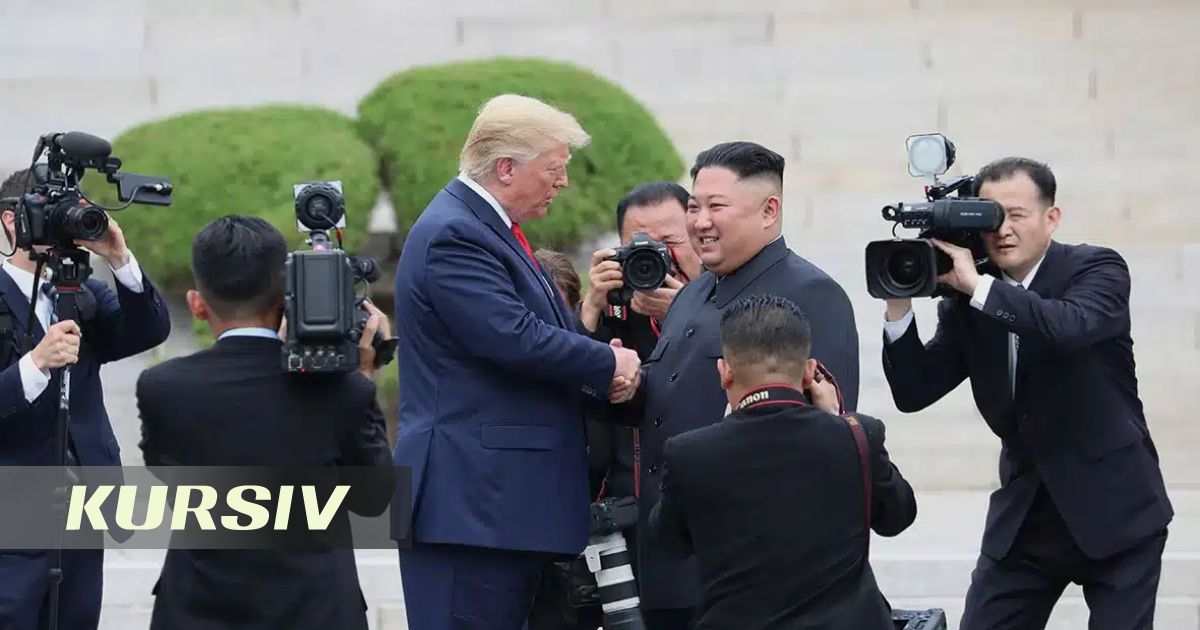
The episode illustrates how thoroughly the relationship has deteriorated since Trump’s third and final meeting with Kim — at the demilitarised zone between the two Koreas — in 2019. The two leaders had previously met in Singapore in 2018 and in Hanoi in 2019, but those summits produced no agreement on denuclearisation, with the two sides unable to bridge differences over the conditions under which North Korea might surrender its weapons programme.
A shifting American calculus
The Journal reported that Washington has been internally debating a significant change in its negotiating posture. Options under discussion include formally ending the Korean War, which concluded in 1953 with an armistice rather than a peace treaty; dropping the demand for complete denuclearisation as a precondition for talks; seeking instead to cap North Korean nuclear and missile testing; and opening liaison offices to establish a baseline of diplomatic contact.
The shift would represent a fundamental departure from the longstanding US position that North Korea must commit to full, verifiable denuclearisation before receiving meaningful concessions. In practice, Washington would be acknowledging the nuclear programme as a permanent feature of the security landscape and trying to constrain rather than eliminate it.
Kim Jong Un, for his part, has shown no interest in relinquishing his arsenal. He has demanded that the United States formally recognise North Korea’s nuclear status and accept a framework of peaceful coexistence — terms Washington has not agreed to.
A larger and more capable arsenal
The diplomatic impasse has unfolded as North Korea’s nuclear capabilities have expanded substantially. The Journal estimated that the country’s stockpile of nuclear warheads has grown from roughly 20 to 30 at the time of the last Trump-Kim summit to approximately 60 today. Pyongyang has also developed solid-fuel intercontinental ballistic missiles capable of reaching the continental United States, a significant advance over the liquid-fuel systems that dominated its arsenal in 2019.
The administration’s position is further weakened by an institutional gap: the post of US Special Representative for North Korea remains vacant, leaving no senior official dedicated to managing the relationship.
Victor Cha, a former National Security Council official, told the Journal that Washington has largely stopped paying attention to the North Korea problem. He argued that the United States should reframe its approach around arms control — seeking verifiable limits on the programme — rather than insisting on full disarmament as the only acceptable outcome.
The Journal’s sources said the Trump administration currently lacks a clear strategy for dealing with Pyongyang, and the returned letter has left the two governments with no active channel of communication.