



Listen to the article
The State Assets Management Agency has confirmed the revocation of oil-field licenses held by Sanoat Energetika Guruhi (Saneg) and the termination of the company’s $100 million agreement to purchase the Fergana Oil Refinery, marking a sweeping reversal of one of the country’s most significant private-sector energy arrangements. The decisions, disclosed publicly at an October 8 press conference, follow Saneg’s failure to develop licensed deposits, meet contractual payment schedules, and pay wages to tens of thousands of employees.
Sohibjon Murodov, director of the State Assets Management Agency, told reporters that the affected oil deposits had not been developed and that licensing conditions had not been met. He did not specify how many licenses had been canceled, which fields were affected, or when the cancellations took effect. The Ministry of Mining Industry and Geology is now preparing measures for those fields.
Saneg — formerly known as Jizzakh Petroleum — was, at the time of the refinery sale announcement in 2022, reported to account for approximately 80% of domestic oil production and to hold development rights to 103 oil and gas fields. The scale of the current license revocations relative to that portfolio has not been disclosed by officials.
How the Refinery Deal Collapsed
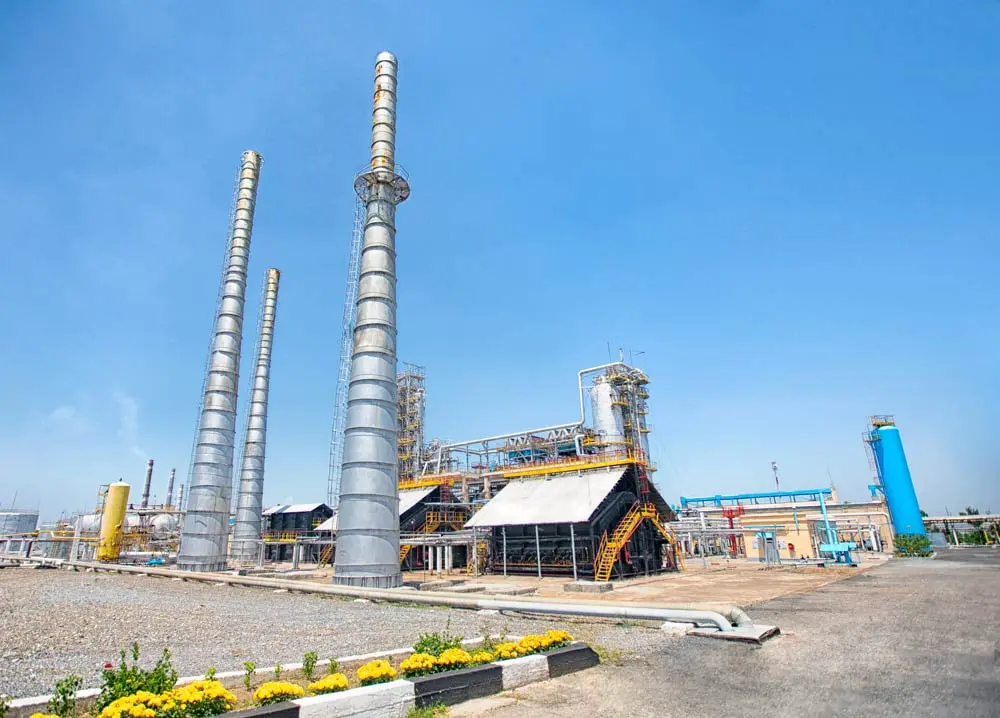
The government transferred management of the Fergana Oil Refinery to Saneg, then operating as Jizzakh Petroleum, in 2020. In May 2022, it announced the formal $100 million sale, accompanied by a separate commitment from the company to invest $380 million in modernisation. The refinery had not undergone major modernisation or reconstruction for two decades, and reporting at the time described persistent shortages of raw materials.
Despite the announced sale, the state still held 58.5% of the refinery as recently as May 2026, while Saneg owned 41.5%. By June, the State Assets Management Agency had become its sole owner, according to registry information reported by Interfax.
Murodov said financial difficulties in Saneg’s other projects had prevented the company from making purchase payments on time. The contract permitted termination if payments fell three months overdue. The agency said it consulted international legal advisers and formally notified Saneg before ending the agreement. Saneg had previously maintained, according to Interfax’s June report, that it had fulfilled its payment and investment obligations. The amount of the overdue payments has not been made public, nor has the extent of modernisation work completed before the contract was ended.
A Broader Financial Crisis Across Linked Companies
The refinery dispute is one dimension of a wider financial crisis. In January, the government intervened to address acute problems at Saneg, oilfield services company Eriell, and engineering contractor Enter Engineering. Uzbek reporting has linked all three businesses to businessman Bakhtiyor Fozilov.
A government resolution dated January 22 recorded combined unpaid wages of approximately $131 million owed to 38,700 employees across the three companies, according to reporting by Spot in March. The resolution ordered the sale of non-core assets to prioritise wage repayments, with proceeds to be deposited in a dedicated bank account and distributed under the oversight of a government working group. The measures also covered outstanding tax liabilities and loans from unaffiliated banks.
Assets listed for disposal included eight hotels at the Silk Road Samarkand tourism complex, company offices, and a medical centre in Tashkent. The resolution also restricted the companies from independently selling, transferring, or pledging assets. Officials were instructed to seek new investors for unfinished strategic projects, including the modernisation of the Fergana refinery itself.
Licensing History and the Question of How Saneg Obtained the Fields
Asked at the October 8 press conference why Saneg had originally received development rights without competitive auctions, Murodov explained that under the system in place at the time, the first applicant could obtain a license after paying prescribed fees. Competitive auctions for hydrocarbon licenses were introduced only in 2023–2024. Murodov stressed that the deposits themselves had remained state property throughout.
Conflicting Accounts of Refinery Performance
Official accounts of the refinery’s current operating status diverge in ways that have not been explained. On October 5, President Shavkat Mirziyoyev reviewed efforts to improve the facility’s finances and production. His administration reported that repairs had increased diesel output by 30%, bitumen by 60%, and aviation fuel output to five times its previous level, though no comparison period or absolute volumes were given. The presidential statement set a target of raising capacity utilisation from 40% to 65% by year-end.
Three days later, Murodov told the same press conference that utilisation was already approaching 100%. Neither account explains the discrepancy, and no clarification has been issued by either the presidential administration or the agency.
Murodov said an international audit is underway to establish the refinery’s liabilities and determine how its debts will be repaid or restructured. A further privatisation is not currently planned. Four years after the original sale agreement, the government is once again directly overseeing efforts to secure raw-material supplies, increase production, and address the facility’s accumulated debts.