



Listen to the article
President Shavkat Mirziyoyev has directed officials to press ahead with a sweeping infrastructure programme in Kashkadarya region, anchored by a $350 million reconstruction of a 100-kilometre stretch of the A-380 highway and a set of water supply projects intended to reach roughly 1.25 million residents who currently lack reliable access to clean drinking water.
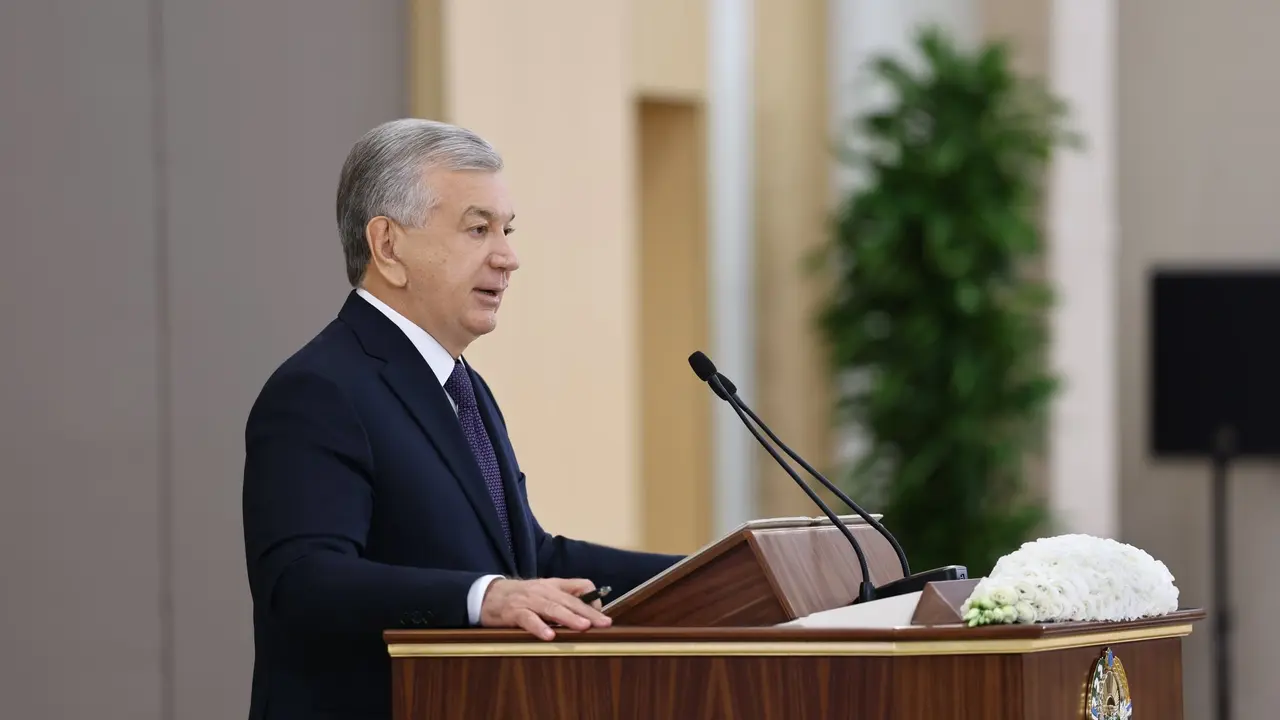
The commitments emerged from a presidential meeting on the socio-economic development of Kashkadarya, at which Mirziyoyev identified drinking water access as the region’s most urgent problem and issued instructions to accelerate delivery across several parallel schemes.
Water networks under pressure to deliver
The government has already allocated UZS 1 trillion — approximately $83.8 million — this year to upgrade water supply and sewage systems across the region. Officials have been given two months to complete 747 kilometres of water and sewage networks and 43 associated facilities, work that is expected to connect 200,000 residents to clean water once finished.
A larger and more complex undertaking involves extending a new supply network from the Hisorak reservoir to the city of Karshi and the districts of Kamashi, Guzar and Karshi. An initial UZS 100 billion (just over $8.3 million) has been allocated to launch the project, but Mirziyoyev instructed officials at the meeting to secure an additional $210 million to carry it through to completion. The finished network is projected to serve around 350,000 residents.
A third water initiative targets the Tolimarjon–Muborak supply system, whose reconstruction is designed to improve drinking water access for a further 700,000 people across five districts: Nishon, Kasbi, Mirishkor, Muborak and Karshi. Officials have been tasked with completing technical and economic feasibility studies by 1 April, and the government plans to attract $150 million in external financing for the work.
Roads and rail crossings
On transport, the centrepiece is the A-380 highway reconstruction, to be carried out in cooperation with the Asian Development Bank. The 100-kilometre section running through Kashkadarya carries a price tag of $350 million, making it by far the largest single item in the package announced at the meeting.
Separately, officials have been instructed to complete feasibility studies by the end of this year for a 5.5-kilometre extension of the bypass road around Qarshi that would connect it to the A-380. Construction is scheduled to begin in January.
The meeting also addressed chronic congestion at railway crossings on the Karshi–Pomuq and G’uzor–Beynau roads, where vehicles face significant delays whenever trains pass. Two modern overpasses will be built at the affected locations at a combined estimated cost of UZS 250 billion, equivalent to around $21 million.
Taken together, the projects represent a substantial public and externally financed commitment to a region where infrastructure gaps have long constrained both daily life and economic activity. The scale of financing still to be secured — particularly the $210 million for the Hisorak network and $150 million for the Tolimarjon–Muborak system — means delivery timelines will depend heavily on how quickly those funds can be arranged.