


Listen to the article
Since February 2022, when sweeping international sanctions effectively barred Russian athletes from competing under their own flag at major tournaments, Uzbekistan has emerged as one of the most active destinations for elite competitors seeking a new sporting nationality. The country has granted passports to a growing roster of Russian athletes across at least six disciplines, a policy that has delivered measurable results on the international stage but is drawing scrutiny over its long-term costs to domestic sport.
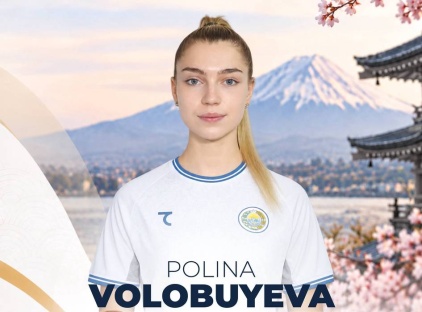
Russian media estimates, cited by Tashkent Times, put the total number of athletes who changed sporting nationality between February 2022 and July 2024 at more than 350, with a significant share moving to Central Asian states. Uzbekistan’s share of that cohort now includes Olympic rowing silver medalist Hanna Prakatsen, junior European swimming champion Ilya Sibirtsev, tennis players Kamilla Rakhimova, Polina Kudermetova and Maria Timofeeva, figure skaters Ekaterina Geynish and Dmitry Chigirev, and fencer Polina Volobueva — a Kursk-born foil specialist who has already represented Uzbekistan at recent Asian championships. No official government tally of naturalized athletes or the associated costs has been published.
The logic of instant competitiveness
For sports administrators, the appeal of the policy is straightforward. Athletes naturalized at the elite level arrive fully trained, requiring no years of academy investment to reach international standard. In the context of Asian and World Championships, where a single medal can carry significant diplomatic and reputational weight, importing a world-class competitor is a reliable shortcut to the podium. Uzbekistan has positioned itself as a dominant sporting nation in Central Asia, and a medal tally that includes Olympic-level talent reinforces that image regardless of where the athletes were born or developed.
The strategy also responds to a specific geopolitical window. Russian athletes barred from international competition under their own flag face a stark choice: sit out major tournaments or find an alternative nationality. For many, Uzbekistan offers a credible competitive environment, a functioning sports infrastructure, and proximity — cultural and geographic — to their home country. The arrangement suits both parties in the short term.
The bottleneck for homegrown athletes
Critics of the policy argue that the short-term gains come at a structural cost that is not visible in medal tallies. National team rosters are finite. When a naturalized athlete occupies a top position, they displace a domestic competitor who has spent years progressing through local academies and regional clubs. That displacement is not merely administrative: it sends a signal to the next generation of Uzbek athletes that the path to international selection can be bypassed by an overnight passport issuance, regardless of years of domestic effort.
The psychological dimension compounds the structural one. Young athletes who see their route to Olympic or Asian Games selection blocked by imported veterans face a motivation problem that no coaching programme can easily address. In disciplines where Uzbekistan has historically invested in grassroots development — combat sports and weightlifting in particular — the country has demonstrated that domestic pipelines can produce world-class competitors. The concern is that the naturalization model, applied broadly across other disciplines, substitutes for that patient investment rather than supplementing it.
Budget allocation and hidden trade-offs
High-performance sports budgets are not elastic. Securing, housing and providing competitive incentives for naturalized athletes draws on the same finite pool of public funding that would otherwise support grassroots infrastructure, coaching education and regional training centres outside Tashkent. The specific sums involved in Uzbekistan’s naturalization arrangements have not been made public, and neither the Ministry of Sports nor the relevant national federations have issued statements on how they balance expenditure on naturalized athletes against investment in local development programmes.
The opacity itself is part of the problem, according to the analysis published by Tashkent Times. A federation can report strong medal tallies to government while its domestic development programmes stagnate, because the headline numbers do not distinguish between medals won by homegrown athletes and those won by naturalized imports. Without a transparent accounting of how sports budgets are allocated — and without an official register of naturalized athletes and the terms of their arrangements — it is difficult for the public or policymakers to assess whether the trade-off is being made consciously or by default.
A structural question, not just a sporting one
Uzbekistan’s existing talent base, particularly in combat sports and weightlifting, demonstrates that the country does not lack athletic potential. The argument made by critics of the naturalization policy is not that Uzbekistan cannot compete internationally on its own terms, but that the current strategy substitutes a shortcut for the harder, slower work of building competitive depth across a broader range of disciplines. Relying on athletes whose primary loyalty was formed elsewhere, and whose presence in Uzbek colours is contingent on geopolitical circumstances that could change, introduces a fragility that domestic development does not.
The broader regional picture adds context. Uzbekistan is not alone among Central Asian states in absorbing displaced Russian athletes, but the scale and speed of its recruitment — spanning at least six disciplines and including athletes who have already competed at Asian championship level under the Uzbek flag — suggests a deliberate policy rather than isolated cases. Whether that policy has been subject to formal cost-benefit analysis within government, and whether it includes provisions for investing in the domestic athletes it displaces, remains unknown in the absence of official disclosure.