



Listen to the article
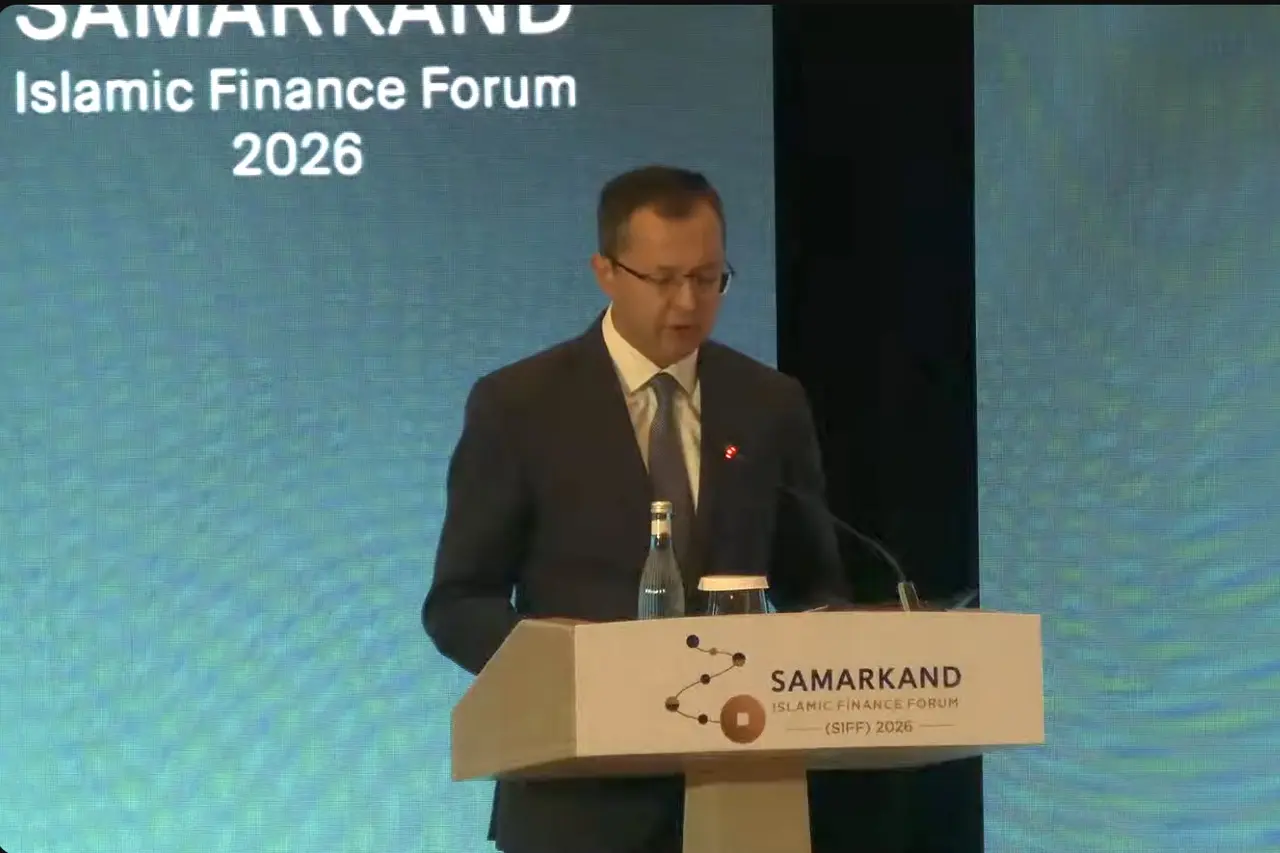
Uzbekistan’s Central Bank has declared the country’s Islamic finance sector ready to move beyond legal groundwork and into active implementation, unveiling a 2026–2030 roadmap built around five pillars and 39 specific measures. Central Bank Governor Timur Ishmetov made the announcement at the International Islamic Finance Forum in Samarkand.
The roadmap covers legislative refinement, specialist training, public financial literacy, international cooperation and the construction of dedicated infrastructure for Islamic banking. Ishmetov framed the shift as a natural progression: eleven microfinance organisations have already been offering Islamic financial products — murabaha, ijara, mudaraba and musharaka — giving regulators and market participants practical experience before full-scale banking began.
A New Legal Architecture
The legislative foundation arrived in 2026 with the passage of a law on Islamic banking activity. The law permits the establishment of standalone Islamic banks and allows conventional banks to open dedicated Islamic banking windows, creating a dual-track system. To govern it, the Central Bank has introduced a two-tier management model and constituted a five-member Islamic Finance Council charged with upholding standards, improving decision quality and strengthening risk management.
Lawmakers also built tax-neutrality mechanisms into the framework, designed to eliminate the fiscal asymmetries that arise because Islamic financial transactions are structured differently from conventional ones — a recurring obstacle in jurisdictions that have tried to graft Islamic products onto tax codes written for interest-based finance.
Sukuk and Capital Markets
The next legislative priority is a framework for Islamic securities. The government has prepared a revised draft of a Capital Market Law that includes a dedicated chapter on sukuk, the Islamic equivalent of bonds. If enacted, the law would create the legal conditions for both sovereign and corporate sukuk issuances — opening a new funding channel for the state and for private borrowers who want or need Sharia-compliant instruments.
Uzbekistan has also been building its international credentials. The Central Bank joined the Islamic Financial Services Board (IFSB) in 2025 and the Accounting and Auditing Organisation for Islamic Financial Institutions (AAOIFI) in 2026. Membership of both bodies is intended to help align domestic regulation with global standards and adapt best practices to local market conditions.
Ishmetov identified the Islamic Development Bank, the Asian Development Bank, the International Finance Corporation and AAOIFI as priority partners for training, product development and practical implementation. He stressed that timely execution of the roadmap’s measures, coordination among responsible agencies and regular monitoring of results would be the defining tests of whether the strategy succeeds.