


Listen to the article
Central Bank Chairman Timur Ishmetov has set reducing the economy’s dependence on foreign currencies as one of his institution’s defining tasks for 2027, outlining a programme that pairs tighter inflation targets with accelerated privatisation of state-owned banks — a sector that still controls nearly three-fifths of the country’s banking assets.
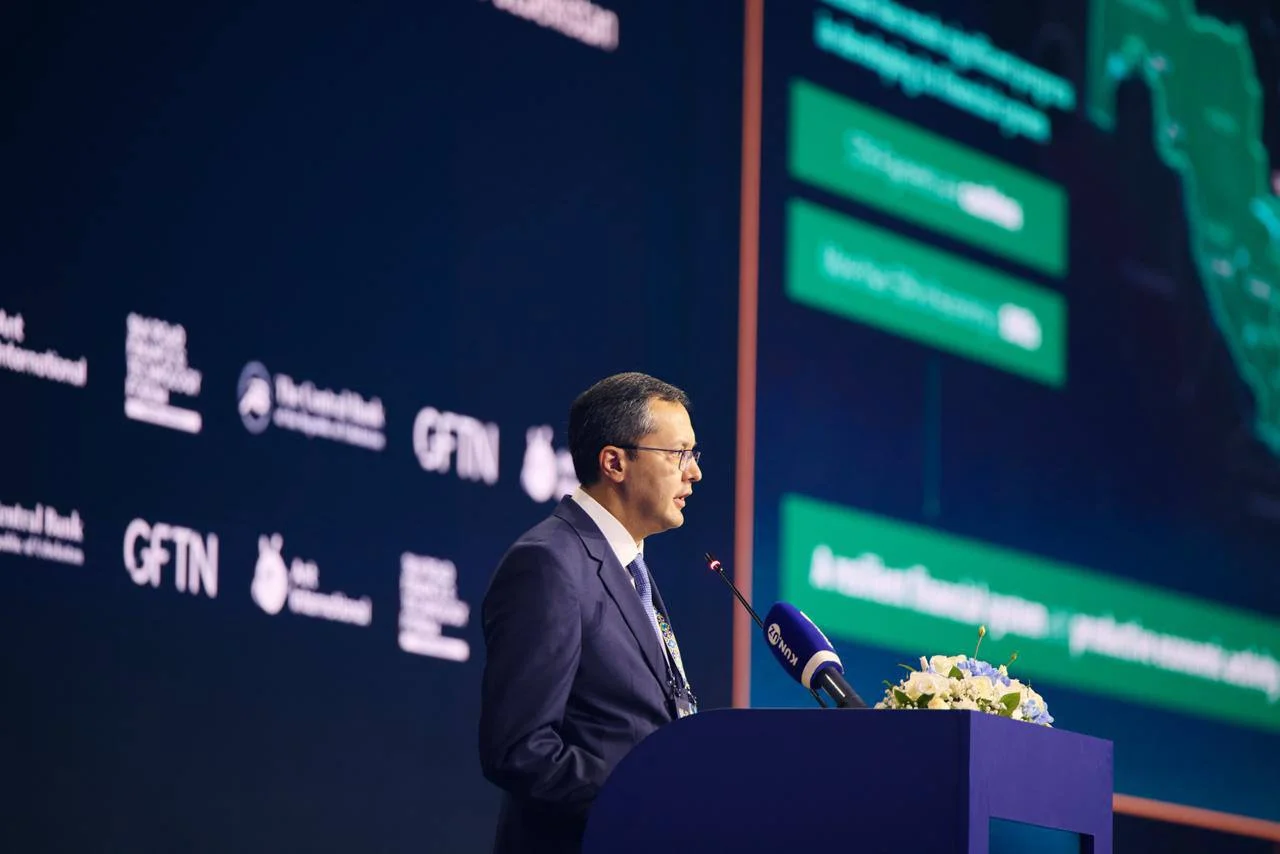
Ishmetov laid out the agenda at a 13 November meeting chaired by President Shavkat Mirziyoyev, which examined the draft state budget for 2027, macroeconomic forecasts and economic policy priorities. Speaking afterwards on Uzbekistan 24 television, he described 2027 as “an important stage in achieving the country’s long-term economic goals,” requiring stable prices, more effective monetary policy and continued banking sector reform.
The Dollarisation Problem
The core challenge Ishmetov identified is straightforward: when the soum weakens, borrowers who earn in the national currency but owe money in dollars or other foreign currencies face sharply higher repayment costs in soum terms. “By strengthening confidence in the national currency, we must expand borrowing and lending in soums, as well as increase the share of household deposits and loans denominated in soums,” he said.
Central Bank data as of 1 October 2026 illustrate the scale of the task. Of a total commercial bank loan portfolio of 659.1 trillion soums, 252.3 trillion soums — 38.3% — were denominated in foreign currencies. That share fell by just one percentage point over the preceding year, and only because the overall portfolio expanded: the actual soum value of foreign currency loans rose by 10.3%, from 228.7 trillion to 252.3 trillion soums. In other words, the stock of foreign currency lending grew even as its relative weight edged down.
Progress has been faster on the deposit side. Foreign currency deposits stood at 93.1 trillion soums out of a total 501 trillion soums as of 1 October, representing 18.6% of the total — down 3.9 percentage points over the year, though again the absolute value rose, from 83.7 trillion soums.
New Market Instruments and an Inflation Ceiling
To make monetary policy more effective, the Central Bank plans to expand its liquidity management capacity and develop domestic financial markets. Ishmetov said the regulator would introduce new instruments in both the foreign exchange and interbank markets. The bank’s draft monetary policy guidelines for 2027–2029 also foresee a review of the interest rate corridor and a stronger role for the UZONIA rate as a benchmark for the money market, alongside tools to hedge interest rate and currency risks.
The Central Bank also intends to develop a derivatives market, giving businesses and financial institutions instruments to protect themselves against adverse swings in exchange rates and interest rates — a market that is currently underdeveloped in Uzbekistan.
On inflation, the regulator was given a target of keeping price growth at no more than 6% in 2027, with a subsequent reduction to 5%. The bank’s own baseline scenario projects inflation reaching the 5% target in the second half of 2027.
State Bank Dominance and the Privatisation Imperative
Ishmetov was equally direct about the structural problem in banking ownership. As of 1 October 2026, banks with state participation held 60.8% of total banking system assets — 634.9 trillion soums out of 1.045 quadrillion soums. Their share of the total loan portfolio was 64.6% (425.8 trillion soums out of 659.1 trillion soums), their share of banking capital 57.8% (88.3 trillion soums out of 152.9 trillion soums), and their share of deposits 50.2% (251.5 trillion soums out of 501 trillion soums).
“Accelerating the transformation of state-owned banks and the privatisation of individual banks” was the second major task Ishmetov identified. “This is necessary to take economic growth to a new level over the next 10 years and improve the quality of the economy,” he said, describing modernisation of the banking system as a precondition for the economy moving to a new stage of development. An official statement following the meeting said the sector needed to attract more private capital, increase lending resources and improve financing for investment projects.
Privatisation is already under way, but the figures confirm that state-controlled institutions remain dominant across every major metric. The gap between the policy ambition and the current ownership structure defines the reform challenge the Central Bank and government face heading into 2027.