


Listen to the article
Uzbekistan’s National Social Protection Agency has reported that 2.2 million people — drawn from 530,000 registered families — were receiving support through its unified social registry as of 1 October 2026, following the merger of two previously separate databases into a single system that assesses household welfare against 85 criteria.
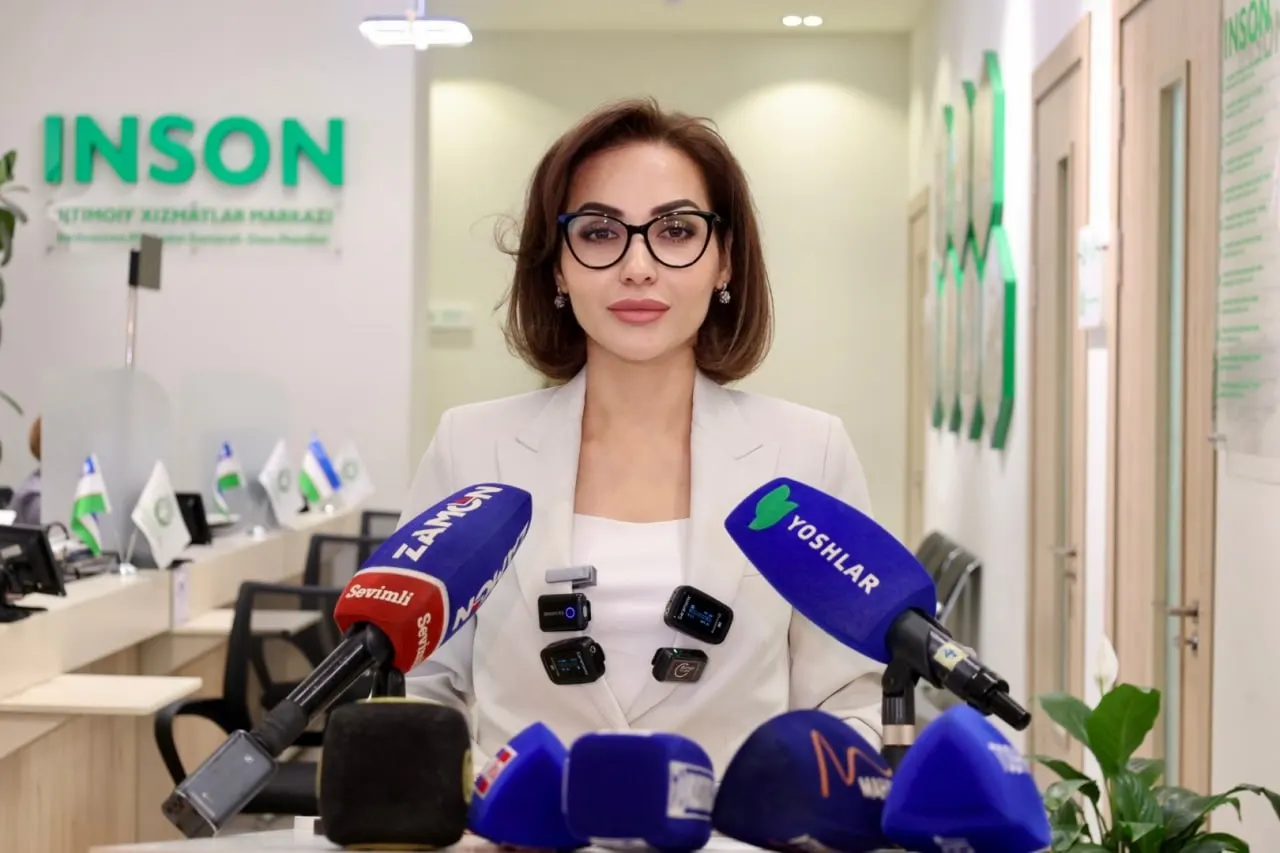
The agency delivered the figures at a briefing covering the first nine months of the year. Across 208 districts and cities, its Inson social-services centres and neighbourhood social workers together provided 140 categories of assistance. The agency said that as a direct result of those interventions, 26,500 families had seen their incomes rise by at least one-and-a-half times.
Cash, Credit and Housing for Vulnerable Families
During the reporting period, nearly 426,000 child-benefit payments were made and 563,000 electricity and gas compensation payments were disbursed. Interest-free loans totalling 318.2 billion soums were extended to 16,300 families, and tuition contracts for 3,000 young people were paid from state funds.
For children without parental care, 609 homes were purchased at a cost of 192.2 billion soums, and 527 orphans were admitted to higher-education institutions under preferential enrolment rules. Under the Yoshlarga hamrohlik (Youth Accompaniment) programme, 7,400 young people received 14.4 billion soums in social support.
Disability Reform and Inclusive Education
The agency said 1.1 million people with disabilities are registered nationally. A new unified disability-assessment standard introduced during the period replaced the previous blanket 120-day treatment requirement with differentiated periods of 30, 60, 90 or 120 days depending on the condition. Under the revised rules, 21 additional conditions now qualify for disability status and 30 conditions qualify for indefinite classification. In total, 267,300 people received disability determinations under the new standard.
Some 77,300 people with disabilities were supplied with prosthetic, orthopaedic or rehabilitation equipment, and 83,000 people with disabilities were placed in employment. For children, an early-intervention service covers those up to age three, while a daytime-care service covers ages three to eighteen; together they reached 6,700 children, with vouchers issued for a further 1,700.
On inclusive education, the agency reported that 3,774 schools across the country now run inclusive programmes, with 8,324 inclusive classes enrolling 11,700 pupils. Of 17,100 students previously receiving home schooling, 2,200 have been reintegrated into mainstream classrooms.
Care, Domestic Violence and Social Insurance
Under the Faol hayotga qadam (Step Towards Active Life) programme, 55,400 adults requiring care received five types of social service — including home-based social and domestic assistance, residential day care, medical-social rehabilitation and personal-assistant services — through vouchers worth a combined 227.2 billion soums. The agency said 28,600 of those individuals improved sufficiently to be removed from the registry. A separate register of 23,800 elderly and disabled people living alone recorded nearly 152,000 medical, social, psychological and legal service interactions.
On domestic violence, 74,300 women who sought help during the period received close to 110,000 social-service interventions. Of those, 7,200 women and their 4,500 children were placed in safe shelters. The agency identified 6,900 child victims of violence, who received nearly 10,000 social, psychological, legal and medical services. Twenty-three crisis centres operate nationally; of 280 children placed in them, 171 were subsequently returned to their families. A further 4,900 social-psychological interventions were delivered under the Mehrli oila (Loving Family) service to improve parent-child relationships.
In social insurance, a new system introduced this year automatically assigns and pays maternity and temporary-incapacity benefits without requiring a separate application from the recipient. During the nine months, 111,800 women received maternity payments totalling 1.3 trillion soums. Since 1 July, a revised procedure for temporary incapacity benefits has been in force; 123,500 cases generated payments of nearly 160 billion soums.
The agency framed the reforms as aimed not only at direct financial transfers but at expanding citizens’ capacity for independent living, employment and access to services — a shift in emphasis from passive welfare payments toward active social inclusion.