


Listen to the article
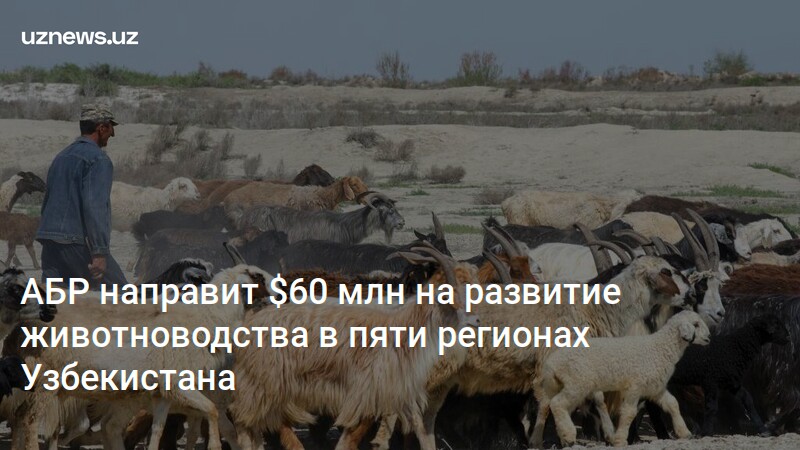
The Asian Development Bank has approved a $60 million concessional loan to strengthen Uzbekistan’s livestock sector, targeting roughly 29,000 small farming households across five regions: Bukhara, Kashkadarya, Navoiy and Samarkand oblasts, and the Republic of Karakalpakstan.
The Sustainable Livestock Development project is designed to improve food security and rural livelihoods by expanding farmers’ access to animal feed, reinforcing veterinary services and introducing more efficient management of pasture resources, according to the ADB.
Adapting to drought and water stress
A central focus of the project is climate adaptation. Uzbekistan’s livestock regions face intensifying droughts, rising temperatures and chronic water shortages, and the programme will address these pressures through several practical measures: better pasture management practices, expanded cultivation of feed crops bred to tolerate drought and soil salinity, restoration of livestock watering points, and broader availability of fodder supplies.
On the technology side, the project will introduce AI-powered pasture monitoring, a mobile application carrying farm-management recommendations and an early-warning system for climate and disease risks, and a modernised community-level veterinary support network. Digital tools will also be integrated into agricultural advisory services more broadly.
Women in livestock to receive targeted support
The project includes a dedicated component for women working in the sector. Female livestock farmers will receive specialised training and support for feed production, and the programme aims to expand their participation in livestock-related business activity and in local decision-making processes.
Additional grant financing from climate and Japanese funds
The ADB loan will be supplemented by two grants. The Green Climate Fund will contribute $5 million under its Glaciers to Farms programme, while the Japan Fund for Prosperous and Resilient Asia and the Pacific — financed by the Japanese government through the ADB — will add a further $3 million, bringing total external financing for the project to $68 million.