



Listen to the article
Nearly 1.8 kilograms of opium and heroin have been seized from a Toyota vehicle crossing into Uzbekistan from Afghanistan and from a temporary residence in the city of Termez, with both the courier and the intended recipient now in custody, Uzbekistan’s State Security Service (SSS) announced.
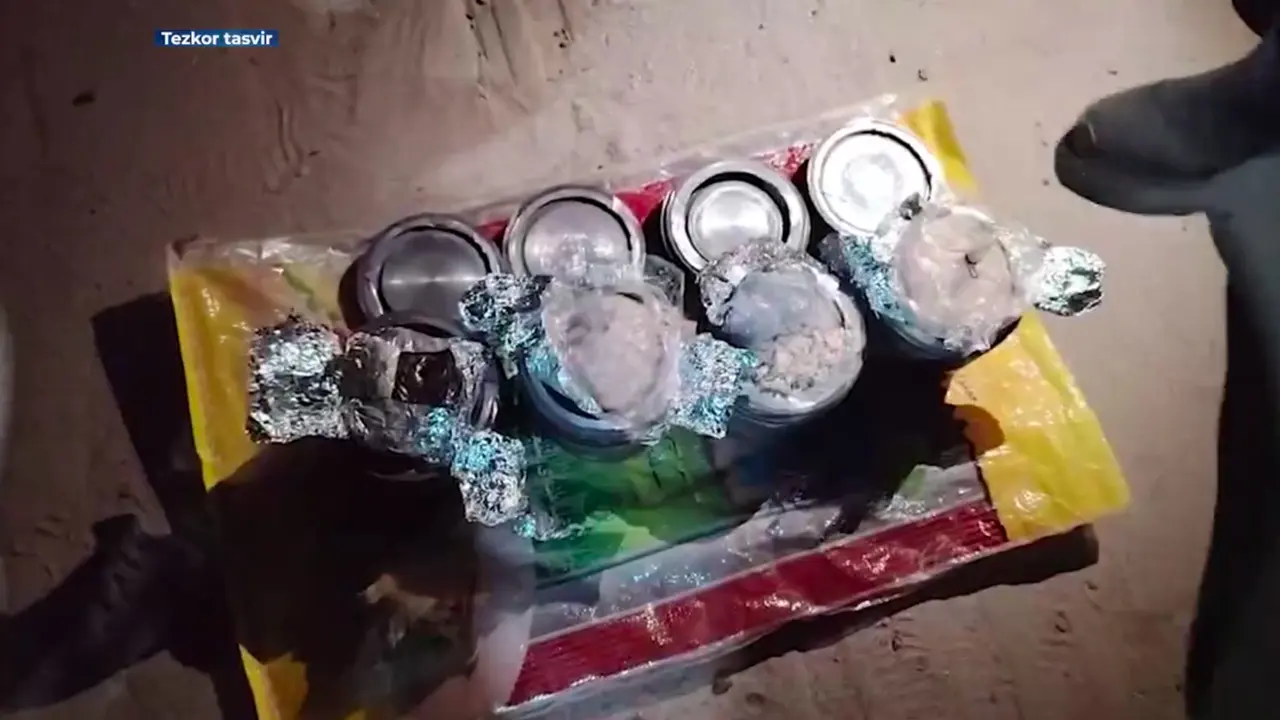
The operation began at the Ayrytom border customs post in Surxondaryo region, where officers stopped a Toyota driven by an Afghan national born in 1966. A search of the vehicle’s boot uncovered approximately 400 grams of opium concealed inside engine pistons — components chosen, investigators believe, precisely because they are dense, metal-encased and easy to overlook in a routine inspection.
Second Cache Found in Termez Flat
Investigators then searched the driver’s temporary accommodation in Termez. Inside several more car spare parts stored there, they found an additional 848 grams of opium and 551 grams of heroin, bringing the combined seizure to just under 1.8 kilograms. All findings were formally documented under procedural rules, the SSS said.
Operational activity did not stop with the courier. Investigators identified the person designated to receive the drugs inside Uzbekistan: a resident of Denov district born in 1993. He was detained in the territory of Shurchi district with material evidence in hand.
Charges and Investigation
Criminal proceedings have been opened against both individuals under Article 246, Part 2 of Uzbekistan’s Criminal Code — which covers large-scale smuggling of narcotics, psychotropic substances and their analogues — read together with Article 28, and under Article 273, Part 6, Clause (a), which addresses the unlawful preparation, processing, acquisition, storage and transfer of narcotics with intent to distribute. Investigative actions are ongoing.
The Ayrytom crossing sits on one of the main overland routes linking northern Afghanistan to southern Uzbekistan, a corridor that law-enforcement agencies in the region have long identified as a conduit for Afghan opiates moving toward Central Asian and Russian markets. The use of hollowed-out mechanical components as concealment reflects a method designed to defeat visual inspection and evade detection by less specialised equipment.