



Listen to the article
Aviation officials from China and all five Central Asian states gathered in Tashkent from 3 to 5 November for a working group session under the C5+1 format, producing concrete increases in permitted weekly flights and laying the groundwork for expanded routes. The meeting was one of several forums in early November at which Chinese and Central Asian governments and companies advanced deals spanning uranium supply, lithium mining, road construction and digital trade infrastructure.
More flights, bigger ambitions
Kazakhstan agreed at the Tashkent session to raise its permitted weekly flights to and from China from 150 to 180 and to add routes to Chengdu and Kashgar. Uzbekistan agreed to increase its weekly China flights from 100 to 114. Uzbekistan also proposed establishing new routes linking Tashkent, Almaty and Astana, and expanding service frequency between those cities.
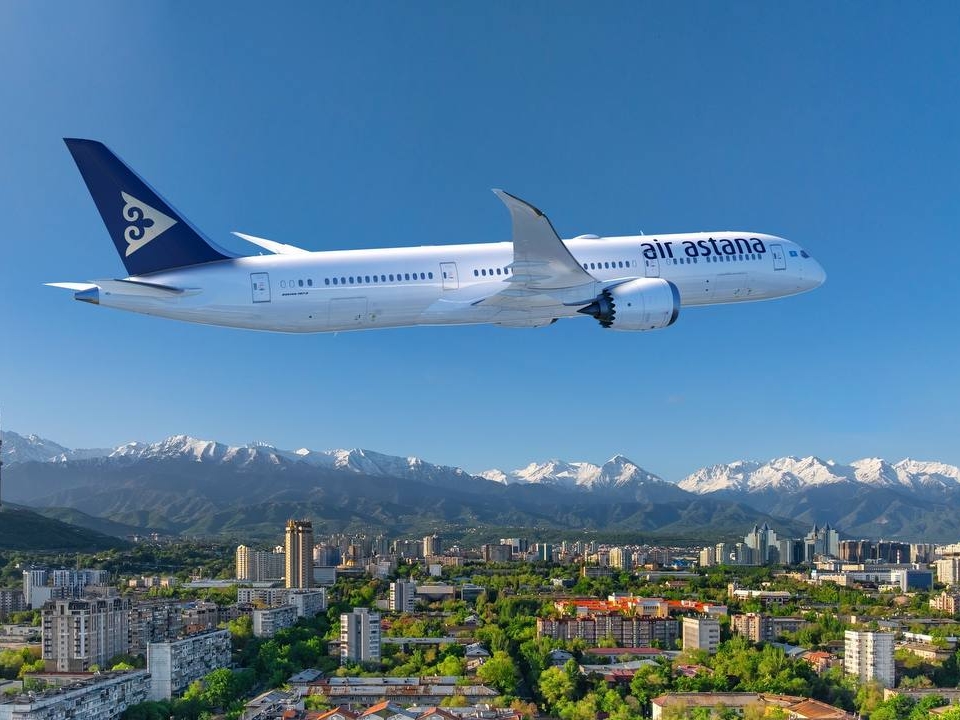
On the eve of the conference, Air Astana and China Southern Airlines signed a strategic partnership agreement. Kazakhstan’s vice minister of transport said at the signing ceremony that flights between Kazakhstan and China had grown 52 percent year-on-year.
Astana is positioning itself as Central Asia’s primary hub for Europe–China air traffic. Kazakhstan announced it is developing a 25-year civil aviation master plan with the International Civil Aviation Organization. Infrastructure work is under way to modernise airports in Almaty and Urzhar — a northern Kazakh city near the Chinese border — construct a second runway in Shymkent, and complete new regional airports in Zaisan, Katonkaragay and Kendirli.
Tajikistan and Turkmenistan are also moving to keep pace with rising traffic. Tajik President Emomali Rahmon ratified a five-year National Civil Aviation Safety Program running to 2031, covering international traffic growth, infrastructure modernisation and security preparedness. Turkmen President Serdar Berdymukhamedov endorsed separate measures to strengthen aviation safety.
Kazakhstan: uranium deals, a stalled nuclear plant and a new railway
On the sidelines of the Second Tien Shan Forum on Economic Cooperation in Central Asia, Kazakhstan and China discussed creating a bilateral direct investment fund with initial capitalisation of up to $200 million. Kazakh officials proposed consolidating existing financial mechanisms into a single project-financing and insurance window, with pilot projects to be selected to test the system. The arrangement would streamline Kazakhstan’s access to Chinese capital and expand yuan use in bilateral project finance.
At the China International Import Expo, Kazakh manufacturers signed agreements worth approximately $100 million; the parties and details were not disclosed. Kazatomprom chief executive Meirzhan Yussupov told President Kassym-Jomart Tokayev that the company had secured new natural uranium supply agreements with major utilities in both India and China, reinforcing China’s position as the primary buyer of Kazakh uranium while signalling diversification toward India.
Negotiations over Kazakhstan’s second nuclear power plant remain unresolved nearly 18 months after Astana named China’s National Nuclear Corporation as the preferred contractor. Kazakhstan’s Energy Ministry has not specified the cause of the delay. The prolonged standoff has kept open the possibility that Astana could opt instead for small modular reactors pitched by the United States, or incorporate them into its broader power mix.
In his address to the nation, President Tokayev said construction of the Bakhty-Ayagoz railway line is expected to begin in 2027. The line is projected to carry 20 million tonnes of freight annually, expanding Kazakhstan’s access to the Chinese market and attracting additional transit traffic.
Kazakhstan is also preparing to join a pilot programme for digital freight documentation between China and the Eurasian Economic Union. The first digitally documented shipments — covering coal, fertilisers and consumer goods — have begun moving through the Grodekovo–Suifenhe crossing in northeast China and Russia’s Far East. The Eurasian Economic Commission’s trade representative said documents authorising similar Kazakhstan-linked shipments could be ready for signature soon.
Kyrgyzstan: lithium MoU, bank deal and technology transfer
China’s Ganfeng Lithium Group, the world’s largest lithium producer, signed a memorandum of understanding with Kyrgyzstan’s National Investment Agency covering mining-sector cooperation. The announcement gave no details on specific deposits, investment amounts or a timetable. Lithium is classified as a critical material by the United States and other major economies.
Kyrgyzstan’s Eldik Bank and the Xinjiang branch of China’s Export-Import Bank signed a cooperation agreement at the Tian Shan Forum in Almaty, aiming to attract long-term financing for infrastructure, transport and technology projects through credit lines, leasing, trade finance and cross-border settlements. No specific loans or amounts were announced. Separately, Kyrgyzstan’s Chamber of Commerce and Industry and the China–Central Asia Technology Transfer Center signed an MoU to promote technology transfers, joint projects, specialist training and technology parks; details were not immediately disclosed.
Tajikistan: Chinese contractor to rebuild southern road
Tajikistan’s Ministry of Transport signed a construction agreement with Chinese contractor Nanjing Communication Engineering Company Ltd for the reconstruction of the 54.1-kilometre Baljuvon–Sari Khosor road in Khatlon Province. The project includes 10 bridges and 121 drainage culverts and is financed through a European Bank for Reconstruction and Development sovereign loan of up to €49.2 million. As of 5 November, preliminary work was under way at 15 locations involving 115 workers, 40 of them Chinese nationals, according to the Asia-Plus news agency. The EBRD figure covers overall project financing; the value of the Chinese contractor’s specific agreement was not disclosed.
Tajikistan and China also approved the findings of a feasibility study for a 90-kilometre stretch of the Murghab–Kulma highway. Construction is expected to begin in 2027, funded by a Chinese grant, according to Caravan Info, citing Tajikistan’s Ministry of Transport.
Uzbekistan and Turkmenistan: meetings and memoranda
Uzbekistan’s Minister of Construction met with the leadership of China State Construction International Corporation, a state-owned engineering group that has completed several major projects in Uzbekistan. The meeting focused on developing blueprints for roads and pipelines in a forthcoming batch of projects; no specific initiatives were announced. An Uzbek Chamber of Commerce and Industry delegation met in Tianjin with the local branch of the China Council for the Promotion of International Trade, agreeing to finalise a memorandum covering agriculture, seed production, textiles, machinery manufacturing, vocational education, and port and logistics operations.
In Turkmenistan, the Ministry of Industry and Construction Production signed a memorandum with China’s Sany International Development Ltd during an industry and energy conference in Ashgabat, while a Ministry of Energy representative signed a separate memorandum with TBEA Shenyang Transformer Group on energy cooperation. Neither announcement specified investment amounts or timelines. At a business forum in Shanghai on 6–7 November, the Turkmen government-linked company Ojar Aziya sought Chinese financing for a highway connecting Sarakhs, Mary and Serkhetabat and a logistics complex in Afghanistan’s Turgundi. The highway has been under discussion since 2024; Beijing has given no indication it is willing to fund either project.