



Listen to the article
Uzbekistan’s Ministry of Emergency Situations is examining Belarusian procedures for protecting civilians near nuclear power stations, with the subject forming the centrepiece of talks between the two countries’ emergency chiefs in Minsk.
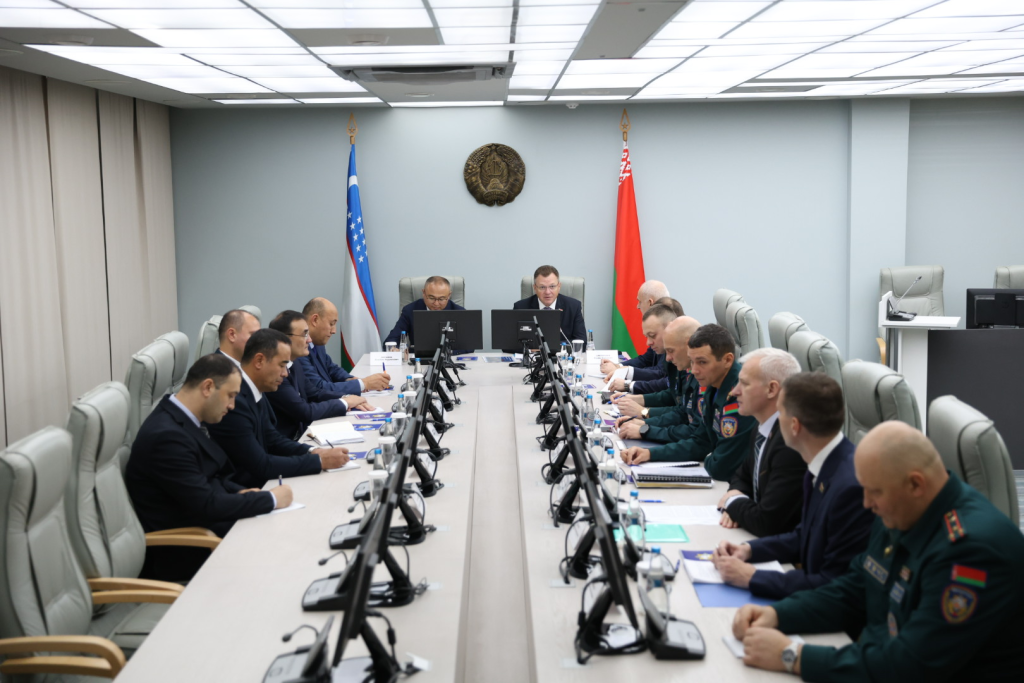
Minister Azizbek Ikramov met his Belarusian counterpart Vadim Sinyavsky to discuss civil defence arrangements at nuclear energy facilities, public warning systems, inter-agency coordination and the readiness of rescue units to respond to potential accidents. The Belarusian side has direct operational experience to share: the Ostrovets nuclear plant, built with Russian technology, has been generating electricity since 2021.
During the visit, the Uzbek delegation toured Belarus’s Republican Emergency Management and Response Centre, where specialists studied how the facility monitors developing situations, gathers real-time information and coordinates rescue services across the country. Officials said the experience was directly relevant to Uzbekistan given the ongoing construction of its first nuclear power station in Jizzakh region.
Ikramov also proposed broadening bilateral cooperation to cover scientific research, technology exchange, and the manufacture and certification of firefighting and rescue equipment. Joint specialist training and closer ties between the two countries’ professional services were also discussed.
The Minsk talks are the latest in a series of steps Tashkent has taken to build institutional capacity around its nuclear programme. Earlier, President Shavkat Mirziyoyev met Rosatom chief Alexei Likhachev to discuss construction of what officials describe as an integrated nuclear power plant, along with workforce development and the creation of a purpose-built town for nuclear industry workers, complete with residential and social infrastructure.
Mirziyoyev has since announced plans for a second and third reactor, signalling that nuclear energy is expected to play a substantial long-term role in Uzbekistan’s power mix. Emergency preparedness frameworks, including evacuation planning and public alert infrastructure, are typically required to be in place well before a plant enters service, making the Belarusian model — which covers a functioning facility — a practical reference point for Uzbek planners.