



Listen to the article
When Starlink slowed sharply in Ukraine last week — disrupting Kyiv’s ability to track and intercept Russian attacks — it did more than create a temporary communications crisis. It laid bare a structural vulnerability that European governments have long acknowledged but have yet to solve: there is no satellite network capable of replacing Elon Musk’s SpaceX constellation, and building one will take years.
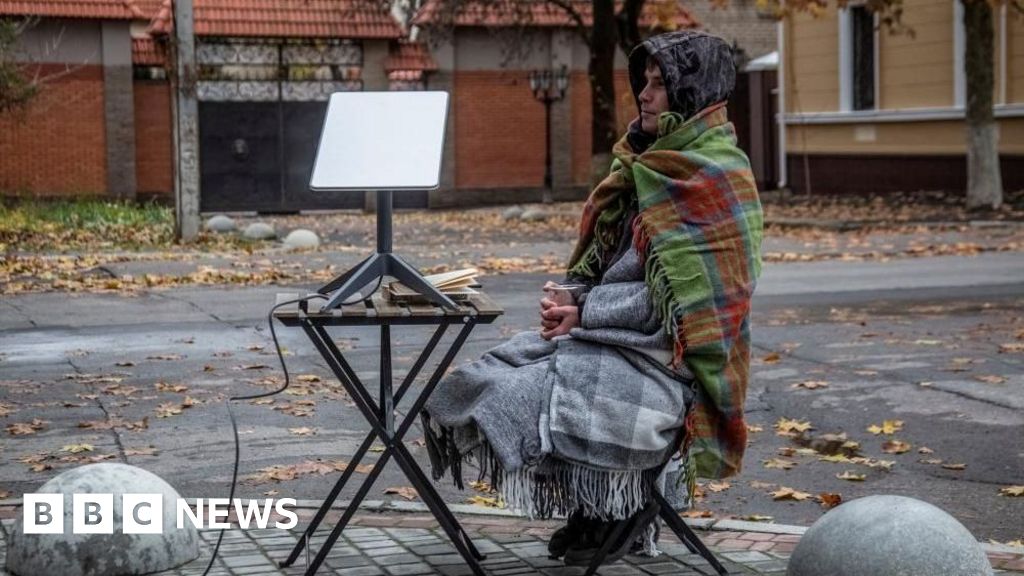
Starlink, which operates more than 10,000 active satellites in low Earth orbit, provides Ukrainian forces with the real-time connectivity needed to coordinate drone strikes, relay battlefield commands and intercept incoming fire. Its military-grade counterpart, Starshield, handles the most sensitive operations. Together, the two services have become so embedded in Ukraine’s war effort that soldiers who spoke anonymously to the BBC described the prospect of losing them in stark terms. “God forbid they shut it off completely, it would be an absolute catastrophe,” one said. “I don’t give a damn how much an alternative costs when our lives are on the line.”
The slowdown has since been restored, but who authorised the restrictions remains unclear. A blame exchange between the Pentagon, Donald Trump and Elon Musk has produced no definitive answer. French MEP Christophe Grudler wrote on social media that “Ukraine’s defence cannot depend on Trump’s or Musk’s whims,” a sentiment echoed by officials across the continent.
The gap between Starlink and everything else
France’s Eutelsat, through its OneWeb service, is the most credible European alternative currently in operation — but it runs roughly 600 active satellites, a fraction of Starlink’s fleet. Its ground terminals are also larger, limiting where they can be deployed. While they can be mounted on vehicles and tanks, they cannot be fitted to the small drones that have become central to Ukrainian tactics. They are also approximately five times more expensive than Starlink’s hardware, according to Eva Berneke, the former chief executive of Eutelsat.
Speed matters too. “Starlink gives us the upper hand when it comes to passing commands — even one or two seconds are critical when we can transfer data and orders faster, and you can really feel that advantage on the battlefield,” a Ukrainian soldier told the BBC. Vincent Tourret, a researcher at the French Institute of International Relations, put it plainly: “You can’t employ drone warfare without this kind of high-speed internet connection.”
Kari Bingen, director of the Aerospace Security Project at the Centre for Strategic and International Studies, described the core problem as one of control. “This is a critical military capability that Ukraine relies on, but doesn’t control,” she said.
Govsatcom: a partial bridge
Ukraine’s most immediate option is to join Govsatcom, the EU’s satellite-sharing network established in January, which pools existing satellites among member states. Ukraine is not yet a full member, though it is seeking to become one, and the European Commission says it is in active talks with Kyiv about access.
The network carries a significant limitation, however: it cannot currently be used for warfare operations such as piloting drones — the very function Starshield performs. The Commission hopes that will change early next year, when commercial operators including Eutelsat’s OneWeb are expected to join the programme. That would give Ukraine some, but not all, of its military connectivity needs. Berneke said she is confident Eutelsat will be able to “support quite a lot of Ukraine’s key military needs,” though she acknowledged that meeting the full breadth of communications requirements is a separate and larger challenge. No timeline has been set for when Ukraine will formally join Govsatcom.
Iris² and the longer horizon
The EU’s longer-term answer is Iris², a defence-first satellite network being developed by a consortium called SpaceRISE, comprising Eutelsat, SES and Hispasat. Ukraine has been guaranteed access from the programme’s first day of operation. The network is designed to serve governments, militaries and emergency services, and is intended to give Europe strategic autonomy in satellite communications.
Iris² will have 348 satellites across low and medium Earth orbit — far fewer than Starlink. Bingen argued that should not be read as a weakness, noting that satellites in higher orbits can cover larger portions of the Earth’s surface with fewer units. Tourret was less sanguine. “It’s no gamechanger and no great saviour, I’m afraid,” he said.
The programme will not be operational until 2029. Berneke offered a blunter assessment of the timeline constraints facing any new entrant: “Even if you gave me €8 billion right now, I don’t think I could have anything up there before 2032 or 2033.”
Other projects are in earlier stages. Finnish companies Nokia and ICEYE announced this week they would explore developing satellite communications for Ukraine’s military. A joint venture between Airbus, Leonardo and Thales — known as Project Bromo — is also being positioned as a future SpaceX competitor, though it remains in preliminary phases.
Resilience, not replacement
Experts are careful to say the goal should not be to switch off Starlink, but to ensure Ukraine is never entirely dependent on it. Bingen compared the approach to how mobile networks function: if one standard fails, users fall back to the next. “If you don’t have 5G, you go back to 4G,” Berneke said. “It’s the same idea in warfare.” The difference, she added, is that for a drone operator, a degraded connection is not merely inconvenient — it can be fatal.
The conflict has also sharpened European thinking about the vulnerability of undersea cables, through which approximately 99 percent of global communications travel. The UK government this week announced new measures to protect its cables following what it described as increased suspicious activity by Russian vessels. Satellite networks, Bingen noted, offer a harder target: “It is a lot harder to shoot down an entire satellite network. That’s not something any military can do right now.”