


Listen to the article
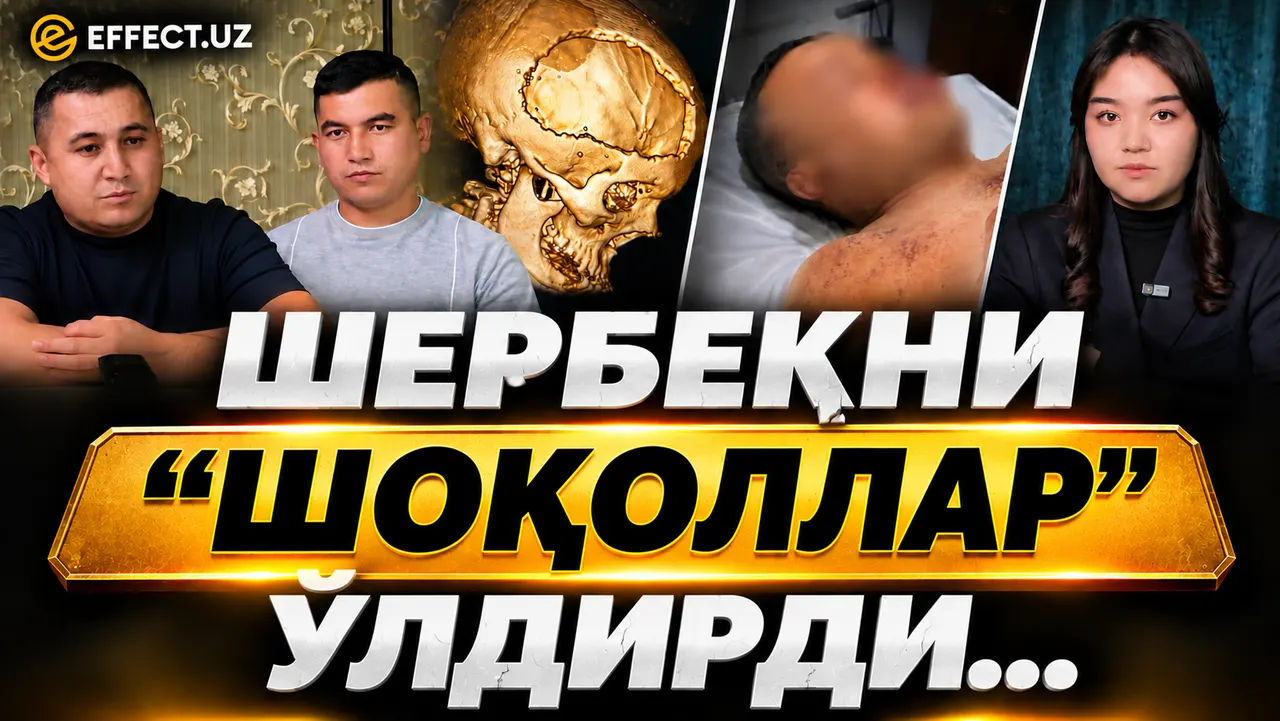
A criminal case arising from the death of Sherbek Rahmonov in Payariq district, Samarkand region, has been concluded by investigators under Article 104, Part 3(d) of Uzbekistan’s Criminal Code — the provision covering grievous bodily harm resulting in death — but the victim’s family is demanding the case be reconsidered under Article 97, which covers premeditated murder. The dispute turns on whether investigators fully examined the sequence of events before, during and after the attack, or confined their legal assessment to the severity of the injuries alone.
Rahmonov’s brother, Khurshid Rahmonov, alleges that Sherbek was struck multiple times on the head with a metal rebar, transported to a remote location and buried. When it became apparent he had survived, Khurshid claims, those responsible then attempted to strangle him with wire. If those allegations are supported by evidence, the family argues, the conduct cannot be adequately captured by a charge that focuses on the outcome of bodily harm rather than on intent to kill.
The case also involves a second named individual, Nodir Matiyev, in connection with the same attack. Effect.uz, which reviewed case documents submitted to the outlet, reported that the investigation was formally concluded on 27 October 2026, with investigators determining that the collected materials were sufficient to proceed to an indictment under the existing charge. The victim’s legal representative and defence counsel were given access to the case file at that stage, along with the right to submit objections and petitions.
The legal distinction at stake
Under Uzbek criminal law, the difference between Article 104 and Article 97 is not merely technical. Article 104 addresses acts that cause serious physical harm, with aggravated provisions where death results. Article 97 requires proof of intent to kill. Khurshid Rahmonov’s position is that the totality of the alleged conduct — the repeated blows, the transportation to an isolated site, the burial and the subsequent strangling — points to a deliberate attempt to end his brother’s life, and that this question should have been examined separately from the question of what injuries were inflicted.
He further alleges that Sherbek was followed before the attack, that multiple individuals participated, and that he has provided investigators with testimony identifying specific persons and describing events leading up to the assault. Whether those accounts were tested against physical evidence and reconciled with conflicting witness statements is among the questions the family says remain unresolved.
Surveillance footage and what it showed
Case documents reviewed by Effect.uz include a record of CCTV footage having been examined during the investigation. The outlet raised the question of whether that footage was simply viewed or whether each significant moment within it was cross-referenced with other evidence in the file — including the condition in which the victim was removed from the scene, the movements of those present and their subsequent conduct. The existence of a procedural log confirming that footage was reviewed does not, the outlet noted, establish that its contents were fully assessed for their bearing on the legal classification of the offence.
Investigation closed, questions open
Effect.uz said it has requested an official response from the Investigation Department of the Samarkand Regional Interior Ministry and from the relevant prosecutor’s office, asking them to explain the factual basis for choosing Article 104 over Article 97, and to clarify how the family’s arguments in favour of a murder charge were examined. No official response had been received at the time of publication.
The outlet stated that it would not disclose information protected by investigative secrecy and would not present unproven allegations as established fact. Khurshid Rahmonov’s claims are presented as the assertions of a bereaved relative whose account carries legal weight only if corroborated by evidence — a threshold that, the outlet noted, only the competent authorities are positioned to assess against the full case file.
The conclusion of a preliminary investigation does not foreclose further legal challenges. Under Uzbek procedure, the victim’s representative retains the right to contest the charge classification before the case reaches trial, and any substantiated objections must be addressed by the supervising prosecutor.