


Listen to the article
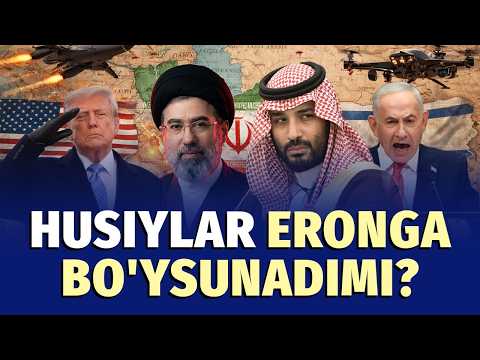
As the United States-Iran confrontation has moved into a quieter phase, Houthi attacks on Saudi Arabia have intensified, raising a question that analysts say is no longer straightforward: how much does Tehran actually control the group it helped arm?
Speaking on the Geopolitics programme, political analysts Hikmatilla Kazakbayev and Kamoliddin Rabbimov offered their assessments of the Houthi movement’s current trajectory and its relationship with Iran.
A loosening leash
Kazakbayev said he now rates Iranian influence over the Houthis lower than before. “The Houthis have begun making independent decisions and acting from their own interests,” he said. He acknowledged that the group’s military capacity remains substantially tied to Iran — drones and missiles the Houthis claim to manufacture themselves were, in his assessment, either supplied by Tehran or produced with Iranian assistance. Even so, he argued, Iran’s role is no longer the decisive factor it once was. “This does not mean that influence has disappeared entirely, but its degree may have diminished.”
The distinction matters because an increasingly autonomous Houthi movement could drag Iran into confrontations Teheran has not chosen and does not want. That dynamic, Kazakbayev suggested, is already visible in the current escalation.
The Hamas parallel
Kazakbayev drew a comparison to the Hamas attack of 7 October 2023, noting that at the time analysts observed Hamas had miscalculated its own strength and placed excessive hope in outside support. The result was that Israel used the attack to justify a large-scale military campaign that destroyed much of Gaza. He implied a similar logic could apply to the Houthis if they overestimate their position or the backing available to them.
The question of what external force or alliance the Houthis are relying on as they move against Saudi Arabia is, he said, a critical one — particularly because the attacks are occurring at a moment when Saudi Arabia, Turkey and Pakistan are reportedly discussing agreements among themselves. If what he called the “Mecca alliance” is also shaping a common position against the Houthis, their current offensive could carry far greater risk than the group appears to be pricing in.
Saudi Arabia’s calculus
Riyadh, Kazakbayev noted, has strong reasons to avoid a full-scale war. The kingdom’s economic and investment projects, its energy infrastructure and the sheer scale of territory it must defend all raise the cost of open conflict. Even states equipped with modern air-defence systems have been unable to protect energy facilities from every attack, he observed, meaning Saudi Arabia cannot fully neutralise the threat either. “It is natural that Riyadh would weigh the consequences before entering a large-scale war with the Houthis.”
That caution, however, does not make the Houthis’ gamble safer. Kazakbayev said reports of an attack on Riyadh’s airport raise serious questions precisely because the target is civilian infrastructure rather than a military installation. Such strikes, he argued, could damage the Houthis’ standing among Muslim-majority publics elsewhere. And because their actions are associated with Iran, even governments and communities sympathetic to Tehran may begin to reassess their position.
Neither analyst predicted how the escalation would resolve, but both framed the Houthis’ current campaign as a high-stakes wager whose outcome depends heavily on whether the group has correctly read the regional alignment forming around it.