


Listen to the article
IMAN Invest, the Uzbek Islamic investment company whose Sharia adviser severed ties last week over alleged financial violations, has published a detailed rebuttal of claims that it faces a $20 million shortfall — while simultaneously acknowledging that fund money was used to cover management costs, that reserve deductions far exceeded contractual limits for two months, and that a luxury car was purchased for its founder using investor-linked funds.
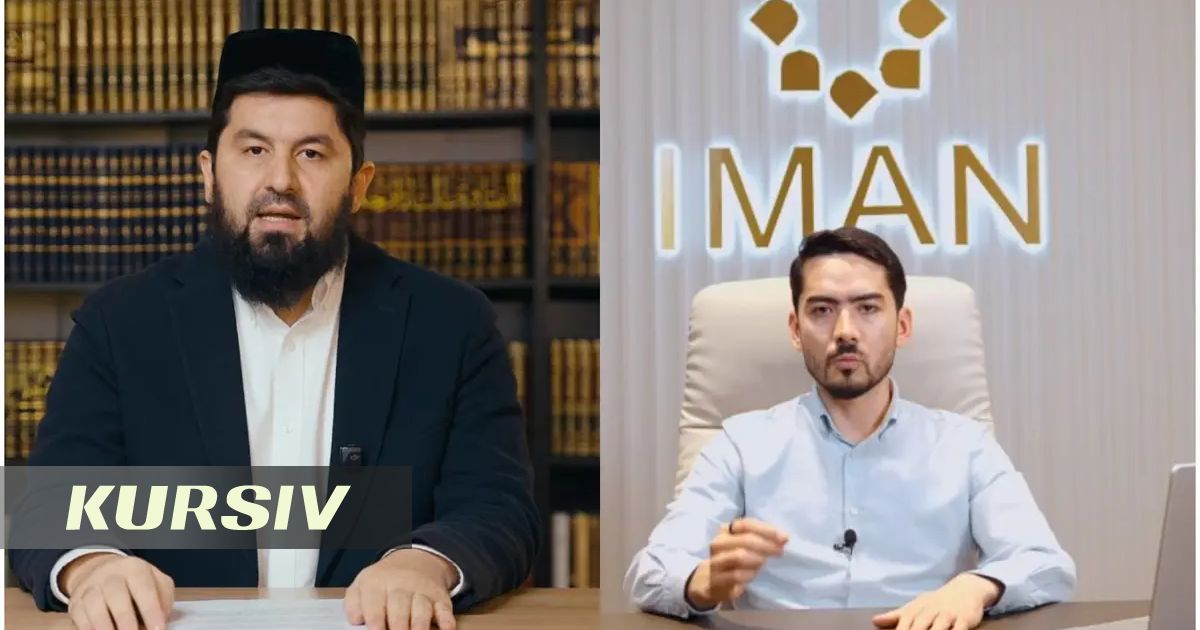
On 25 October, Mahmud Usmon, a member of the Islamic Finance Consultancy Board (IFCB) that had advised the company, announced he was ending his relationship with IMAN Invest. He said an internal review had uncovered a shortfall of roughly $20 million against an investment portfolio of approximately $70 million, and that several operations were inconsistent with Islamic finance principles. The IFCB added that it had never issued a final certificate confirming that all of IMAN Invest’s activities complied with Sharia, and recommended that investors make no new contributions until the violations were resolved.
IMAN Invest founder Rustam Rakhmatov attributed the dispute to a disagreement over Usmon’s fees and a refusal to give him an equity stake in the company. Usmon has denied demanding shares.
How the Company Contests the $20 Million Figure
In its published response, IMAN Invest argued that the $20 million figure conflates several distinct financial items that it does not regard as direct losses. The company identified three components. First, $3.5 million in problem debts: as of 1 October 2026, the company said roughly 6.5 percent of its portfolio consisted of debts it considered effectively unrecoverable, but after reserving, the uncovered risk amounted to 3.5 percent of the portfolio. Second, $2.97 million owed by the management company to the investment fund: IMAN Invest confirmed this liability existed as of 31 May 2026, explaining that the money had been used to finance the operating costs of the management entity. The practice was halted in July, and the company pledged to repay the debt within six months starting in November. Third, 140.75 billion soums representing the gap between the instalment-sales portfolio and the underlying investments: the company characterised this as expected profit from active contracts rather than a shortfall. No independent assessment has yet confirmed or refuted that characterisation.
Cars, Costs and Contractual Breaches
The review also examined two vehicle purchases. In April 2026, funds from an entity called FOUNDERS TRUST 1 were transferred to buy a Mercedes-Benz S500 worth approximately $128,000, which the review found had been acquired for Rakhmatov personally. IMAN Invest said the car was intended for business use and was to be leased back to the founder, but acknowledged after the review that the arrangement was non-compliant because Rakhmatov was simultaneously the company’s owner and an employee. The vehicle was sold on 12 August, and the company said both the sale proceeds and rental payments were returned to the fund.
A second case involved a BYD Champion that Rakhmatov purchased on an instalment plan in December 2023. Payments reportedly stopped after May 2025, and the outstanding balance had exceeded 366.9 million soums by the time of the review. The company said Rakhmatov settled the entire remaining debt early on 31 July, with the money paid directly into the fund’s account.
Beyond the vehicle transactions, IMAN Invest admitted that in May and June 2026 it channelled far more money into its risk reserve than investor contracts permitted. The contractual ceiling was 5 percent; actual deductions reached roughly 23 percent in May and approximately 50 percent in June. The company attributed the breach to an employee error and said deductions returned to the contractual limit from August. The review also questioned how costs including salaries, marketing, software development and events had been allocated between the investment fund and the management company. IMAN Invest said it had stopped covering management expenses from fund assets and was revising its cost-allocation framework.
Governance Overhaul Promised
Alongside its admissions, the company announced several structural changes. Rakhmatov said he intends to hand day-to-day management to experienced professionals while retaining a seat on the supervisory board. IMAN Invest plans to establish its own three-scholar Islamic finance council; until that body is operational, the launch of new products and changes to existing ones have been suspended. The company also said it had commissioned an independent Sharia-compliance audit from international firm Usmani’s and promised to publish the results, while separately planning to engage independent financial auditors.
Whether those commitments satisfy the IFCB’s concerns — or the investors who were advised to pause contributions — will depend on findings that have not yet been made public.