


Listen to the article
The head of Russia’s state nuclear corporation Rosatom said on 23 October in Tashkent that up to 40 percent of the competencies involved in building Uzbekistan’s first nuclear power plant could be localised, arguing that greater participation by Uzbek contractors would improve both the project’s economics and its long-term staffing resilience.
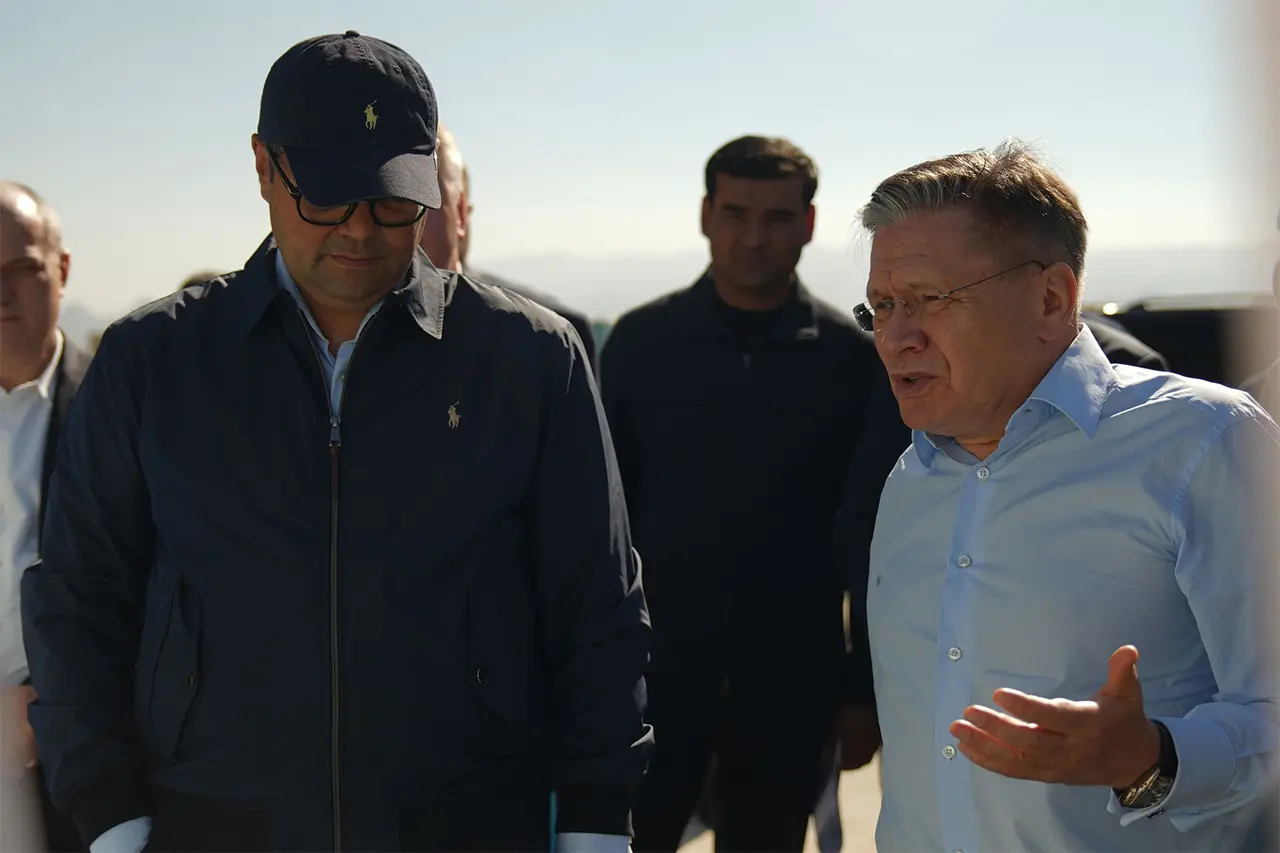
“We strongly support this localisation. The more work local contractors do, the more efficient the economic model will be,” Rosatom director-general Alexei Likhachev told journalists, according to the Russian state news agency TASS.
Likhachev described the plant, under construction in the Jizzakh region, as technically unprecedented. The site will host two VVER-1000 gigawatt-class power units alongside two small modular reactors based on the RITM-200 design, each rated at 55 megawatts. He said no other site on the planet is simultaneously building two gigawatt-scale reactors and two small-capacity units, calling the combination economically significant and without parallel anywhere in current global planning.
Finance and Scale
Likhachev also highlighted what he called a unique financing structure: beyond the customer and the technology supplier, international financial institutions are participating in funding the project. He noted that Uzbekistan’s authorities have paid particular attention to the social dimension of the construction, including plans to build a dedicated nuclear workers’ city adjacent to the plant.
Full-scale construction of the gigawatt units is scheduled to begin in 2027. Once at full capacity, the station is projected to generate 17.2 billion kilowatt-hours of electricity annually. Work is currently concentrated on the first small-capacity power unit, and Likhachev, who spent the previous day on site, said the plant is visibly transforming from a flat plot into an active construction project.
Competition and Expansion
Asked about Uzbekistan’s right to choose its own partners, Likhachev acknowledged that right without reservation but said Rosatom was unafraid of competition, pointing to serial production as a factor that raises quality and lowers the cost of electricity generated. He also left open the possibility that Uzbekistan would not stop at four reactors. “There will be movement forward. We warmly welcome that and are ready to take an active part,” he said.
Likhachev made the remarks at a youth dialogue event titled “Central Asia — Atom 2050” held at the Tashkent branch of the Moscow Engineering Physics Institute. He told the audience that nuclear specialists must do more than acquire technical skills — they must share a common understanding of where nuclear technology is heading, comparing work at nuclear facilities to public service in the cause of energy security and technological sovereignty.
Later the same day, President Shavkat Mirziyoyev received Likhachev. The two discussed the progress of construction, workforce training and the development of the planned nuclear workers’ city near the plant.