


Listen to the article
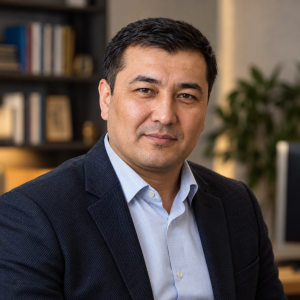
Russian direct investment in Uzbekistan’s information technology sector has tripled over two years, reaching $320 million, while the number of Russian IT companies with registered offices in the country has grown to 47. The figures were provided by Kirill Petrov, director-general of the National Institute for Strategic Analysis and Economic Development, in comments to UzDaily.
Trade in digital solutions and artificial intelligence technologies between the two countries reached $210 million in 2025, a 64 percent increase in a single year, according to Petrov. He attributed the growth to rising demand from Uzbekistan’s expanding industrial base.
AI at the Almalyk Mining Complex
Petrov cited the Almalyk Mining and Metallurgical Combine as a concrete example of the trend. The combine’s Digital Control Centre runs an AI-based system that monitors operations across three copper-processing plants and analyses data from more than 20,000 pieces of equipment. Under the company’s Digital AGMK–2030 strategy, more than 70 projects have already been completed.
One of those projects, a system called Digital Mine, has extended the tyre life of open-pit dump trucks by 14 percent, Petrov said. The system also independently calculates optimal excavation routes.
Petrov argued that Russian engineers are well-positioned to offer similar solutions to other Uzbek industrial enterprises and to the country’s energy sector. He estimated that Uzbekistan plans to invest more than $4 billion in energy infrastructure over the next five years, which he described as creating additional openings for cooperation in digitalisation and AI.
Broader Trade and Investment Ties
The technology figures sit within a wider expansion of bilateral economic relations. Russia remains Uzbekistan’s second-largest trading partner, accounting for 16.6 percent of the country’s total foreign trade turnover. More than 3,000 joint Russian-Uzbek enterprises operate in Uzbekistan, alongside roughly 100 Russian companies; approximately 600 enterprises with Uzbek capital are registered in Russia.
Overall bilateral trade grew 12.4 percent in 2025, with Uzbek exports to Russia rising 14 percent and Russian exports to Uzbekistan up 11.6 percent. In the first seven months of 2026, trade expanded a further 20 percent year-on-year, according to Petrov’s data.
Russian commodity exports to Uzbekistan also grew in 2025: mineral shipments rose 7.8 percent and metals 13.7 percent, with positive trends recorded as well in pharmaceuticals, chemicals, plastics, and timber.
Infrastructure Projects and Regional Hubs
Several joint infrastructure initiatives are under way. In Russia’s Novosibirsk region, the Asia-Siberia project has attracted 3.4 billion roubles in investment. In the Omsk region, a trade house representing Uzbekistan’s Fergana region has begun operations. In Bashkortostan, a joint agro-industrial complex covering more than 20 hectares is under construction, with investment exceeding 2 billion roubles.
Petrov linked the overall trajectory of the relationship to the Declaration on Comprehensive Strategic Partnership signed by presidents Shavkat Mirziyoyev and Vladimir Putin in 2022, which he described as the framework underpinning current economic cooperation.