



Listen to the article
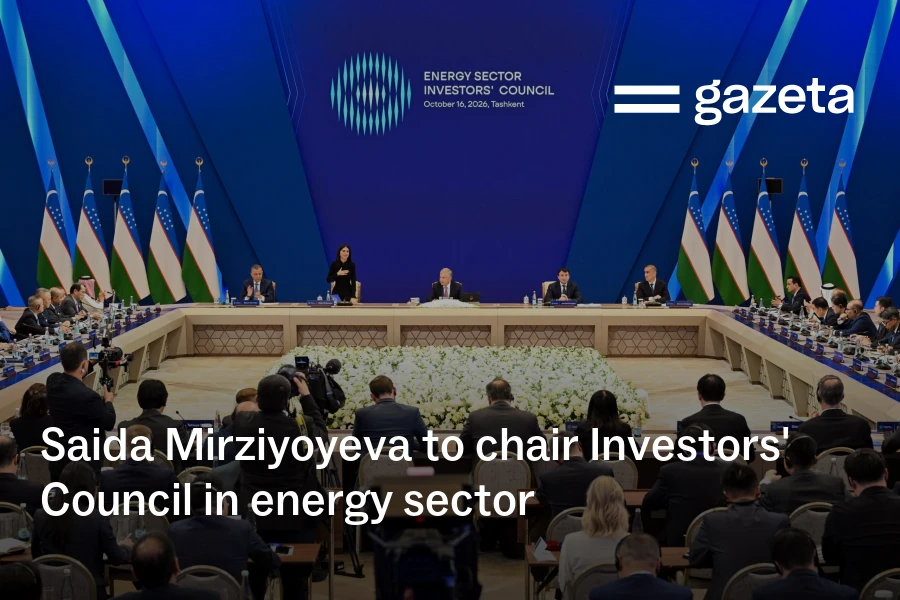
President Shavkat Mirziyoyev has ordered the creation of an Investors’ Council for Uzbekistan’s fuel and energy sector, placing it under the direct chairmanship of his daughter and head of the Presidential Administration, Saida Mirziyoyeva — a move he framed explicitly as a response to bureaucratic obstruction and corruption slowing capital projects in the country’s most strategically sensitive industry.
The announcement came on 16 October during an open dialogue with energy investors, where companies including ACWA Power, Vision Invest, DataVolt, Voltalia and EDF had raised concerns about delays at critical junctures: land allocation, grid connection and the issuance of technical specifications. Each bottleneck, the president acknowledged, can derail an entire project.
Mirziyoyev was unusually direct in explaining his reasoning. “If I say we have a lot of problems, shortcomings, bureaucracy and corruption, that would also be true,” he told the assembled investors. “To prevent all of this, I was forced to make this decision.” He described the council’s core purpose as closing the gap between investors and the presidency, with Saida Mirziyoyeva chairing proceedings while he maintains what he called constant oversight.
A high-level fix for a structural problem
The new body is intended to intervene at every stage of project implementation, from initial land allocation through to the commissioning of completed energy facilities. By placing the council under the Presidential Administration rather than a line ministry, Mirziyoyev is signalling that investor grievances will be handled at the apex of executive power rather than routed through the agencies most associated with the delays he described.
The specific powers, composition and operating procedures of the council had not been announced by the time of the president’s remarks, leaving the practical scope of its authority undefined for now.
Mirziyoyev used the occasion to articulate a broader philosophy of energy investment, telling company representatives that Uzbekistan regards the sector not as one branch of the economy among many but as “a solid foundation for our future and prosperity.” He tied the promise of returns directly to developmental impact: the greater an investment’s contribution to the country, he said, the greater the opportunities Uzbekistan’s growth would create in return. Every new energy project, he added, should produce tangible improvements in regional living standards and employment.
The appointment of Saida Mirziyoyeva — already one of the most powerful figures in the presidential apparatus — to chair the council concentrates oversight of a sector drawing some of the world’s largest energy developers into a single office with direct access to the head of state.