


Listen to the article
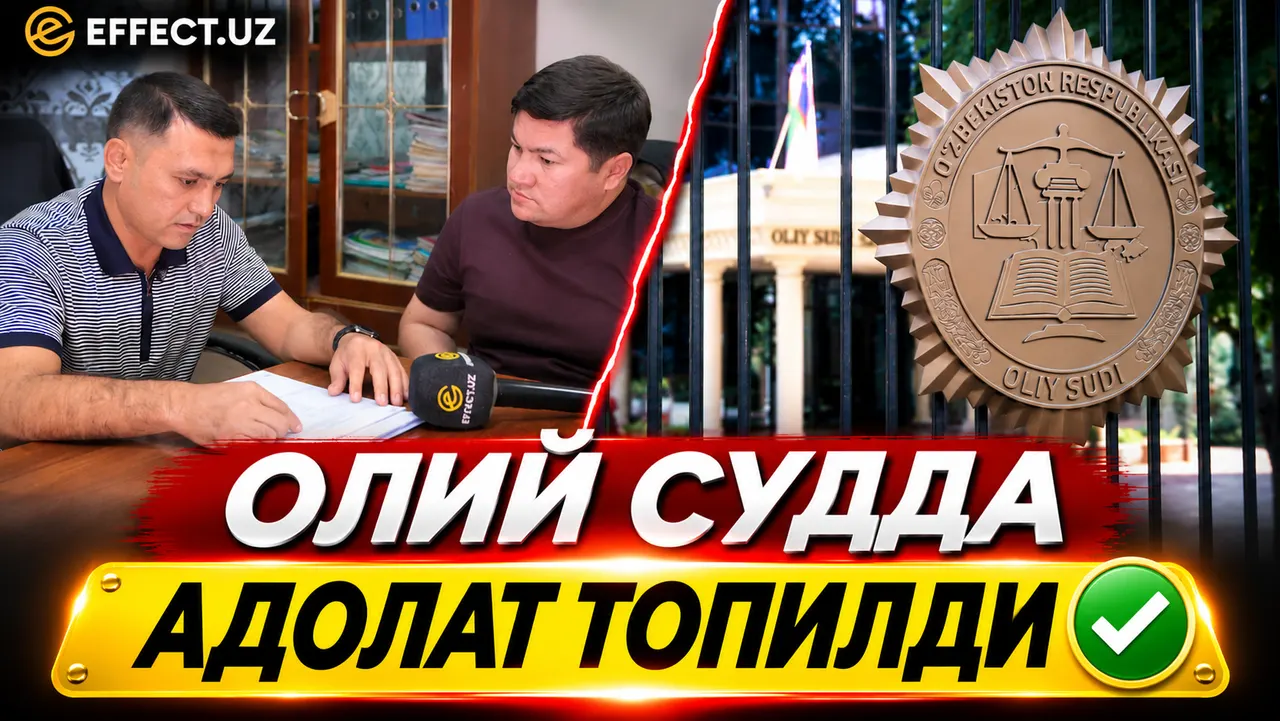
Uzbekistan’s Supreme Court has thrown out a claim by the state-owned joint-stock company Hududiy Elektr Tarmoqlari (Regional Electricity Networks) against a small Khorezm business, reducing a debt that lower courts had set at more than 222 million soums to zero — and in doing so overturning a chain of rulings that had repeatedly shifted the sum owed.
The dispute centres on Xorazm Shoxabbos LLC, whose owner says the ordeal cost him not only money but two months of pre-trial detention. A criminal case opened after an inspection on 19 June 2024 found alleged irregularities in the firm’s electricity metering. The entrepreneur was jailed while the case was investigated; a criminal court later acquitted him. Hududiy Elektr Tarmoqlari then pursued the same underlying claim through the commercial courts, seeking 222,017,400 soums for electricity it said had gone unrecorded.
A Claim That Shrank at Every Stage — Then Disappeared
The Shovot inter-district economic court ruled in the company’s favour in full on 2 June 2025. The Khorezm regional court’s appellate chamber upheld that decision on 24 July 2025. A supervisory panel of the Bukhara regional court then cut the figure to 135,626,817 soums on 23 April 2026 — reducing the original claim by roughly 86.4 million soums but leaving a substantial liability intact.
Xorazm Shoxabbos appealed to the Supreme Court. During those proceedings the court called for additional evidence and required the involvement of a specialist from the Inspectorate for the Supervision of Energy, Petroleum Products and Gas Use, delaying the hearing until 29 September 2026. On 27 October 2026 the Supreme Court’s supervisory chamber granted the firm’s complaint, annulled all earlier rulings and rejected Hududiy Elektr Tarmoqlari’s claim in its entirety.
Questions the Shifting Verdicts Leave Behind
The case is notable less for its final outcome than for the path it took to get there. Three separate court levels reached three materially different conclusions on the same set of facts, calculations and circumstances. The entrepreneur describes the process as a fight for truth and says the Supreme Court is where he finally found it. The sharp reversals at each stage raise pointed questions about how thoroughly the underlying metering evidence and financial calculations were examined before lower courts imposed — and then reduced — a nine-figure liability on a business whose owner had already been acquitted of the criminal charge that triggered the whole dispute.