



Listen to the article
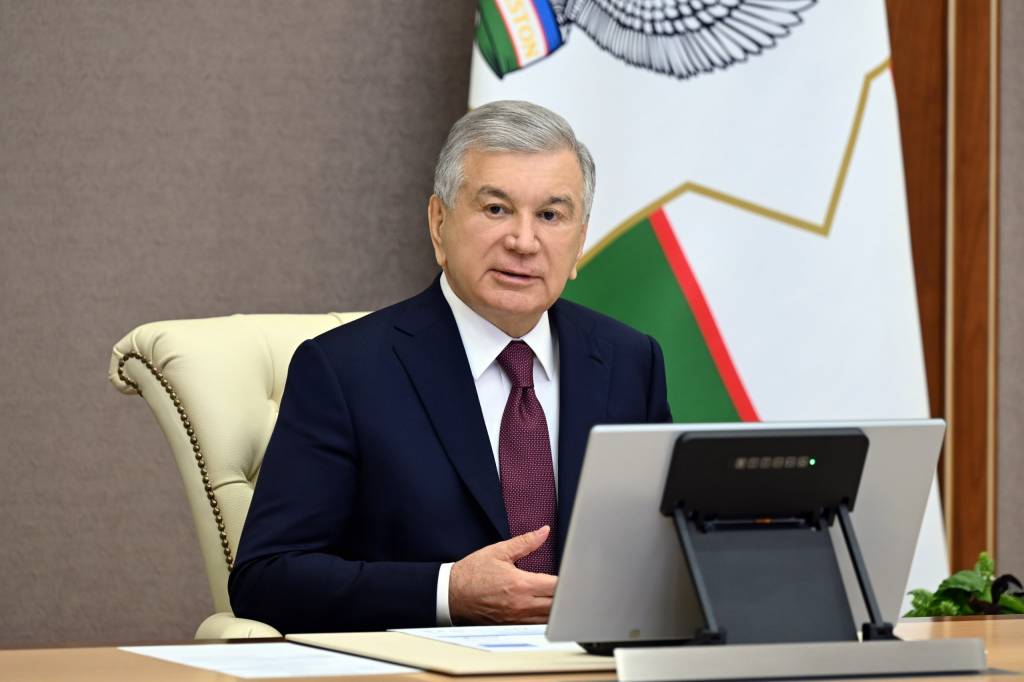
President Shavkat Mirziyoyev has reviewed a package of 133 projects worth $3.3 billion that Uzbekistan intends to advance during its chairmanship of the International Fund for Saving the Aral Sea, which runs from 2027 to 2029. The presentation covered both the project pipeline and the broader priorities Uzbekistan plans to set for the fund over that three-year period.
The International Fund for Saving the Aral Sea was established by the five Central Asian states in 1993 to coordinate water resource management across the basin. Uzbekistan’s upcoming chairmanship comes as climate change and rising water consumption are intensifying pressure on the region’s water supplies, increasing the fund’s operational significance.
What the projects cover
The 133 projects span water resources, environmental protection and socio-economic development. Among the specific measures outlined are the modernisation and reconstruction of water management infrastructure, the introduction of automated systems for water distribution and monitoring, and the creation of a regional digital platform to track hydrometeorological data, forecast floods and droughts, and issue early warnings. Improving public access to drinking water and sanitation services is also included.
Financing is planned with support from the World Bank, the Asian Development Bank, the European Bank for Reconstruction and Development, the Green Climate Fund, the Global Environment Facility and other international organisations. No breakdown of contributions by institution was provided at the presentation.
Mirziyoyev instructed officials to approve a month-by-month roadmap for 2027 and ensure its implementation, stressing that projects must be delivered on time. He also called for the involvement of international experts, professors and researchers, including Uzbek nationals living abroad.
Structural and diplomatic priorities
Beyond the project list, the presentation addressed Uzbekistan’s broader chairmanship agenda. Particular emphasis was placed on improving the fund’s internal structure and legal framework, clarifying the powers of its governing bodies, and strengthening cooperation with Afghanistan — a non-member riparian state whose water use affects the broader basin. The chairmanship agenda is also intended to be aligned with decisions taken at the Consultative Meetings of the Heads of State of Central Asia.
A university as scientific backbone
Tashkent Institute of Irrigation and Agricultural Mechanization Engineers National Research University is designated as the scientific and analytical platform for the chairmanship’s initiatives. The presentation envisaged a transformation of the university’s activities: accelerating the integration of artificial intelligence into education and research, expanding work on ecological restoration and water conservation, and launching bachelor’s and master’s degree programmes in water management open to students from across Central Asia and Afghanistan.
Specific research outputs planned include a unified database for the Amudarya and Syrdarya river basins and jointly developed projects to combat desertification, with scientists from across the region expected to participate.
Mirziyoyev closed the session by instructing responsible officials to ensure full and timely implementation of all planned measures, including through relevant ministries and agencies, the participation of regional governors, and the advancement of water diplomacy through joint educational and research programmes.