



Listen to the article
Pharmacies across Tashkent are routinely dispensing prescription-only medications without requiring a doctor’s authorisation, an investigation by Kun.uz has found, despite regulations that carry fines of up to 100 times the base calculation unit for the most serious violations.
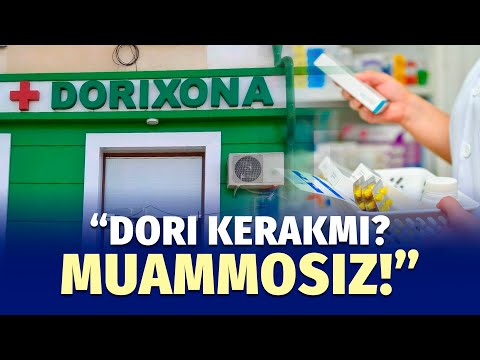
A reporter visited approximately 15 pharmacies in the Chilanzar and Uchtepa districts and requested drugs that are legally classified as prescription-only. In the overwhelming majority of cases, staff handed over the medicines without asking for documentation. Drugs dispensed without a prescription during the investigation included Normodipin, Mezaton, Yantasol, Feksonik, Omeprazol and Pentoksim. When the reporter asked for medications to treat kidney and heart pain, some pharmacists proactively suggested prescription-only products; others pointed to over-the-counter alternatives. In neither scenario was a prescription demanded.
Only two pharmacy workers out of those visited refused to sell restricted medicines without the required paperwork. At one outlet on Qatortol Street in Chilanzar, a staff member declined to dispense a kidney medication, explaining that legal obligations prevented the sale without a prescription. A second pharmacist stated that recommending medicines for heart and kidney pain or high blood pressure without a prescription was not permissible.
Scale of the problem
The gap between regulation and practice is wide. As of December 2024, Uzbekistan had 1,491 over-the-counter drugs and 7,121 prescription-only medications on the national register. Yet, as the investigation illustrates, the prescription requirement for the latter category is largely ignored in practice, with customers and pharmacy staff alike having grown accustomed to bypassing it.
According to the Center for Pharmaceutical Products Safety under the Ministry of Health, pharmacies that violate dispensing rules face fines of between five and ten times the base calculation unit. Where the drugs involved contain potent substances, that penalty rises sharply, to between 50 and 100 times the base calculation unit. The investigation did not report on how frequently those fines are actually imposed.
Enforcement described as difficult
Abdulla Azizov, Chairman of the Pharmaceutical Industry Development Agency, acknowledged the problem, telling Kun.uz that combating the sale of prescription drugs without a prescription is not a straightforward task. He did not elaborate on specific enforcement measures in the portion of his remarks cited by the outlet.
The findings place Uzbekistan at odds with practice in many developed countries, where purchasing prescription medication without a valid doctor’s authorisation is, as the investigation notes, nearly impossible. The contrast points to a structural challenge: a large registered pharmacy network, a well-established culture of self-medication, and penalties that — at least on the evidence gathered — have not yet changed behaviour at the counter.