



Listen to the article
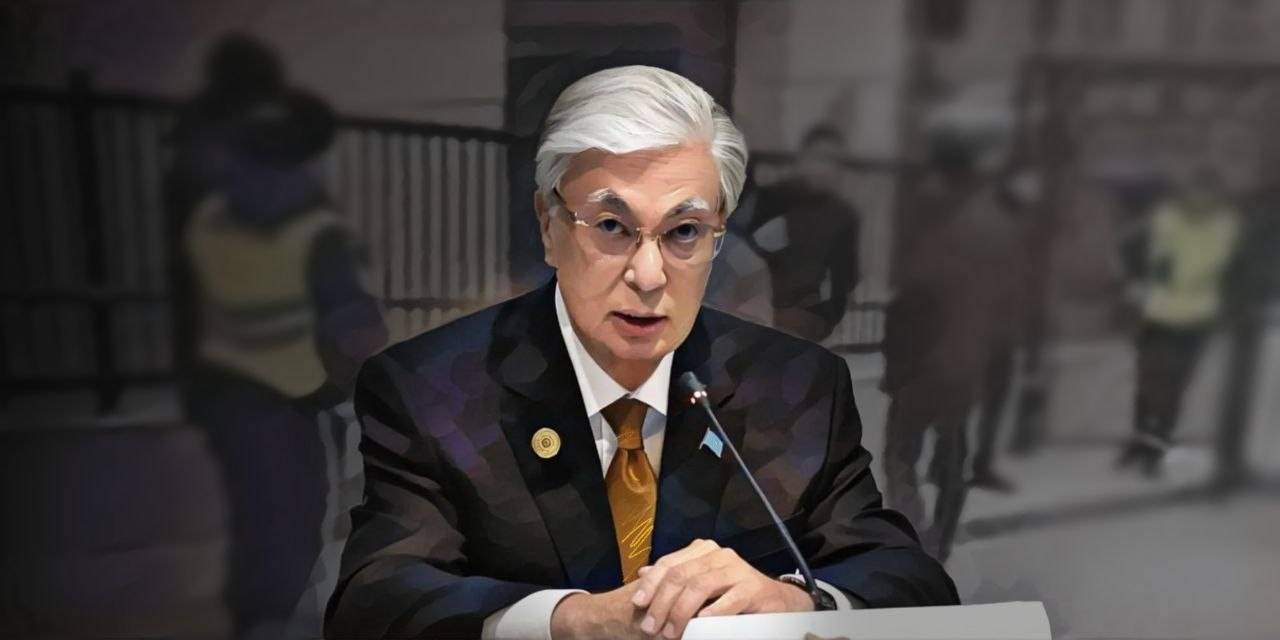
Kazakh President Kassym-Jomart Tokayev has publicly framed the detention of the heads of the country’s sovereign wealth fund and national railway company as evidence of deep-rooted corruption inside state enterprises, warning that such cases endanger Kazakhstan’s standing with foreign investors and creditors.
Speaking at a Security Council meeting on 13 November, Tokayev called the affair “an extremely serious signal of large-scale corruption in state-owned companies” and said the inquiry had only just begun, making it premature to disclose details. He ordered the government and oversight bodies to submit proposals by 24 November to reduce corruption at state companies, while insisting the probe must not interrupt their operations.
The Arrests
On 11 November, the Anti-Corruption Service of Kazakhstan’s National Security Committee (KNB) detained Nurlan Zhakupov, chief executive of the Samruk-Kazyna sovereign wealth fund, and Yelzhas Otynshiyev, head of the national railway operator Kazakhstan Temir Zholy (KTZ), along with several other individuals, on suspicion of a corruption-related offence. The KNB confirmed both men were in custody the following day but cited pretrial disclosure restrictions in declining to elaborate. Neither executive has been convicted.
Zhakupov had led Samruk-Kazyna since April 2023. Otynshiyev had headed KTZ since July 2026, having previously held senior roles at the fund itself — meaning the case involves the leaders of both a company and its sole shareholder. A video circulating on 12 November, published by the outlet Kursiv, showed bags and loose banknotes strewn across a pavement outside an Astana apartment building identified by Tengrinews reporters as the Atlant residential complex on Kunaev Street. The authorities have not confirmed any connection between the cash and the arrests.
The detentions are not without precedent in Kazakhstan’s recent anti-corruption record. Then-transport vice minister Satzhan Ablaliyev was detained on suspicion of bribery in August 2025, and former Justice Minister Marat Beketayev was arrested in October 2023 and sentenced to nine years in 2025 for fraud, embezzlement and illegal business activities.
Strategic Stakes
The timing is acutely sensitive. Samruk-Kazyna manages Kazakhstan’s largest state assets — including KazMunayGas, Kazatomprom, Kazakhtelecom and KTZ — across oil and gas, energy, transport and telecoms. KTZ, which handles a substantial share of Kazakhstan’s freight traffic including transit along the Trans-Caspian International Transport Route between China and Europe, was in the final stages of preparing an initial public offering on exchanges in Kazakhstan, London and Hong Kong, with proceeds earmarked to repay debt and fund investment including the 303-kilometre Bakhty–Ayagoz railway.
Hong Kong’s stock exchange published KTZ’s post-hearing information pack on the same day as the arrests, moving the listing process forward, though the share offer has not launched. The company carried 3.78 trillion tenge ($8.5 billion) in borrowings as of 30 September, up from 3.19 trillion tenge at the end of 2025, and lenders had waived a borrowing-covenant breach only until 30 November. KTZ has not announced a postponement of the share sale, but financial experts cited by Kursiv warned that the absence of senior management could complicate corporate decision-making and delay the offering.
Tokayev placed particular weight on the fund’s international obligations. “Behind every such agreement and partnership lie extensive negotiations conducted over many years, Kazakhstan’s commitments, and the international community’s trust in our country,” he said. Samruk-Kazyna issued a statement saying the fund and its subsidiaries were continuing normal operations and would honour obligations to investors, creditors and business partners.
The president described the investigation as the first major corruption case involving state companies since Kazakhstan’s new Constitution — which enshrines the principle of “Law and Order” — was adopted in a referendum on 15 March 2026 and entered into force on 1 July. In early November, Prime Minister Olzhas Bektenov had separately criticised Samruk-Kazyna’s management over delays in investment projects, though the KNB has not linked those remarks to the current case.
“When it comes to the state’s reputation, public trust in national institutions, and Kazakhstan’s international standing, all of us entrusted with public authority must take a principled stand in defending the national interest,” Tokayev said. “This is our civic and political duty.”