



Listen to the article
Two men have been detained in Tashkent and charged with creating and distributing malicious software after investigators found they had used fake versions of well-known Uzbek brands to steal bank-card data and seize Telegram accounts from potentially thousands of citizens.
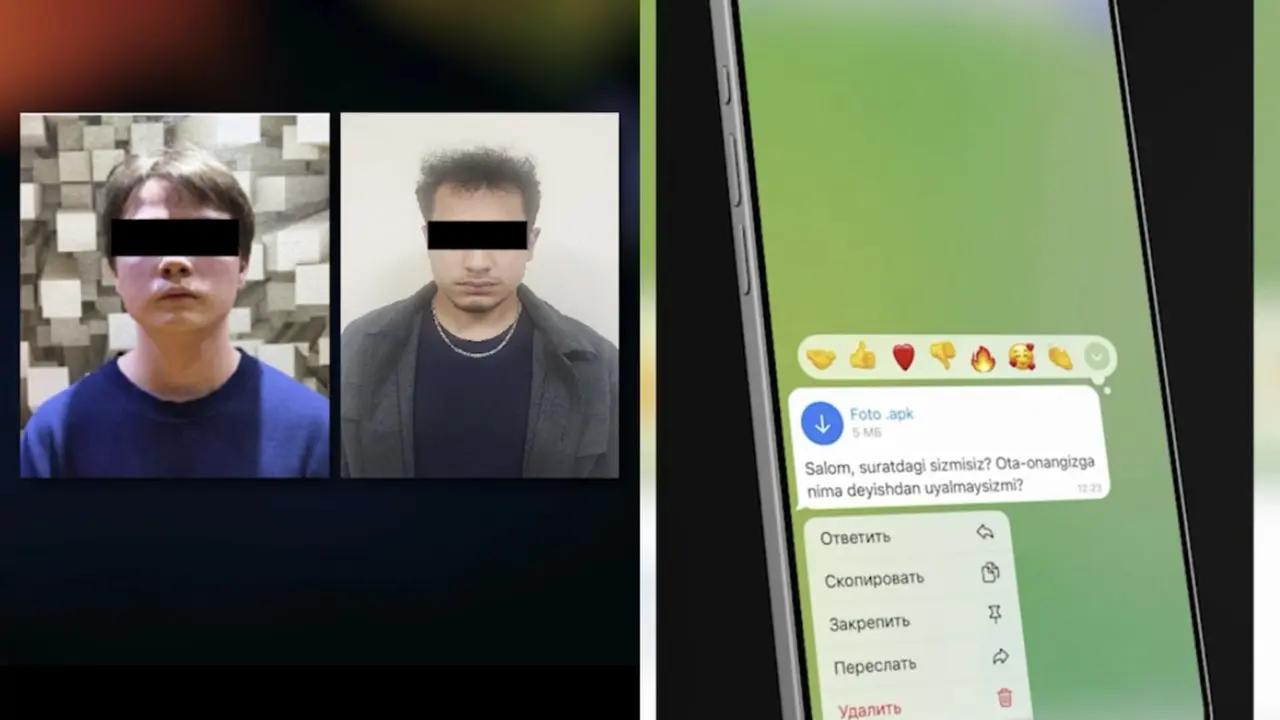
Officers from the Tashkent City Internal Affairs Department’s Cybercrime Division, working alongside State Security Service personnel under the nationwide Xavfsiz va Sog’lom Yurt (Safe and Healthy Homeland) preventive campaign, searched the home of the first suspect and examined his computer and mobile devices. They found he had been sending malicious APK files and phishing links to Telegram users, harvesting personal data, phone numbers and bank-card credentials. He had also distributed phishing links bearing the logos of the popular entertainment programme Omad Show and the tax authority — brands chosen, investigators say, to lend the messages an air of legitimacy and trick recipients into surrendering their Telegram account credentials. Analysis of his transactions showed he had received a total of 2,795.13 USDT — equivalent to roughly 33.4 million soums — in cryptocurrency, subsequently transferring the funds to other bank cards.
A second suspect’s iPhone 15 Pro Max was also examined during the operation. Investigators say he had been manufacturing malicious APK files through hidden internet sites. Digital forensics recorded twelve transactions on the device with a combined turnover of 4,202 USDT, or approximately 50.2 million soums.
Scale of Alleged Harm
Preliminary assessments suggest the two men’s activities may have affected thousands of people across Uzbekistan, though the exact number of victims has not been confirmed. Investigators say the arrests prevented further harm to an unspecified number of additional potential victims. All devices and digital records were formally documented in the presence of independent witnesses in accordance with procedural requirements.
Both suspects have been charged under Part 2 of Article 278-6 of the Criminal Code, which covers the creation, distribution or use of malicious software. A remand in custody has been applied to each of them. The investigation is continuing.