



Listen to the article
Uzbekistan is on the verge of adopting a formal roadmap to implement recommendations from the country’s first-ever Financial Sector Assessment Programme (FSAP), a comprehensive diagnostic of the national financial system jointly conducted by the World Bank and the International Monetary Fund in 2025.
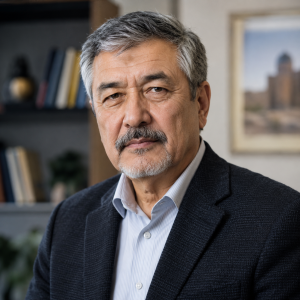
Koba Gvenetadze, the IMF’s resident representative in Uzbekistan, disclosed the pending approval at a presentation of the fund’s Regional Economic Outlook for the Caucasus and Central Asia, held at the Central Bank in Tashkent. He described the FSAP as a tool that provides a comprehensive picture of a financial sector’s current state — mapping progress made, challenges that remain and structural gaps that require attention — and said the two institutions had prepared a set of recommendations on the basis of their findings.
“We hope that the FSAP roadmap will be adopted very soon,” Gvenetadze said. “This would also send a positive signal to investors looking to invest in Uzbekistan, showing how the country intends to continue reforms in the financial sector.”
A First for Uzbekistan
The significance of the exercise lies partly in its novelty: no FSAP had previously been carried out for Uzbekistan, meaning the 2025 assessment represents the first systematic, internationally benchmarked review of the country’s financial architecture. For a banking sector that has undergone substantial state-ownership restructuring over the past several years, the programme offers an external baseline against which future progress can be measured.
Gvenetadze also used the occasion to outline the breadth of technical assistance the IMF currently provides to Uzbekistan beyond its lending function — a distinction he was careful to draw. “People often hear about the IMF and think it is simply an organisation that provides loans with very strict conditions,” he said. “But the fund also provides substantial technical assistance.”
That assistance spans tax administration and policy, public financial management, monetary and macroprudential policy, central bank operations, national accounts and price statistics, and financial supervision and regulation. The Regional Technical Assistance Centre for the Caucasus and Central Asia, known as CCAMTAC, supports this work by deploying experts directly in member countries or hosting government officials for consultations and training.
Why the Roadmap Matters
The pending document carries weight beyond its technical contents. A formally adopted FSAP roadmap would commit Uzbekistan’s authorities to a sequenced programme of financial-sector reforms in a publicly verifiable form, giving both domestic regulators and foreign investors a clearer picture of the reform trajectory. Gvenetadze’s framing of approval as an investor-signalling event underscores that the IMF views the roadmap as a credibility instrument as much as a policy guide.
No timeline for adoption was given, and the specific recommendations contained in the FSAP have not been made public. Gvenetadze said only that approval was expected soon.