



Listen to the article
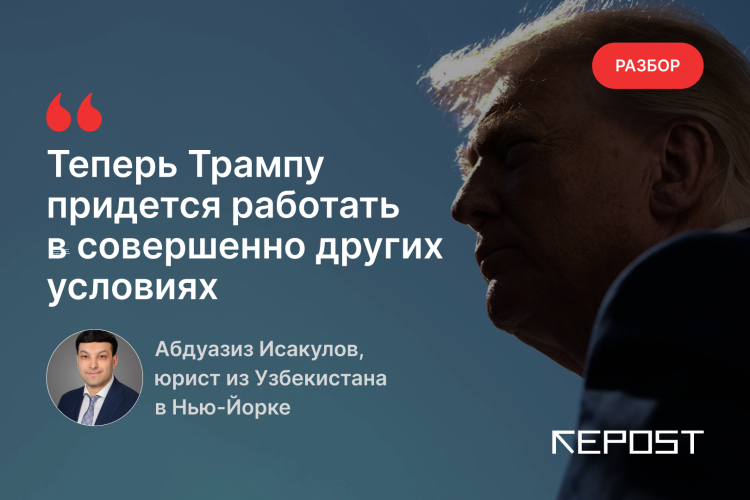
The Democratic Party’s capture of both chambers of Congress in the 3 November midterm elections will complicate Donald Trump’s legislative agenda but is unlikely to produce sharp reversals in Washington’s relationship with Tashkent, according to Abdulaziz Isakulov, an Uzbekistan-born lawyer and founder of Isakulov Law Group P.C. in New York.
Democrats won roughly 250 seats in the 435-member House of Representatives and secured a Senate majority by flipping several seats in states that had traditionally backed Republicans, according to Repost, which interviewed Isakulov on the results. Trump remains president until January 2029 and retains full control of the executive branch, but he now faces a Congress controlled by political opponents who can block legislation, shape the federal budget, reject his nominees and launch committee investigations into his administration.
What divided government means in practice
Isakulov explained that the U.S. constitutional system distributes power across three branches. The president directs foreign policy and can issue executive orders without congressional approval, but most major domestic legislation requires both chambers to agree before a bill reaches the White House. With Democrats in the majority, Trump’s signature initiatives — tax cuts, deregulation, stricter immigration enforcement — face a much harder path through Congress. Democrats can also use their committee chairmanships to subpoena documents and summon administration officials to hearings.
Trump retains the presidential veto, meaning any legislation he opposes can be blocked unless two-thirds of both chambers vote to override it. Isakulov described the next two years as likely to be a period of difficult negotiations, political confrontations and forced compromises, with neither side able to advance its full agenda unimpeded.
Cabinet secretaries, ambassadors and federal judges — including Supreme Court justices — require Senate confirmation. A Democratic Senate majority will be positioned to reject nominees it finds objectionable, a constraint that could slow the administration’s ability to staff key posts.
The Uzbekistan dimension
On bilateral relations, Isakulov said Uzbekistan should not expect significant negative changes. He attributed this to two factors: cooperation with Tashkent has historically drawn support from both parties, and much of the practical work in the relationship — trade facilitation, investment promotion, economic cooperation — runs through the executive branch rather than through Congress.
He noted, however, that one legislative matter directly affects Uzbekistan: the Jackson-Vanik amendment, a 1974 U.S. law that imposed trade restrictions on certain countries and continues to shape the legal framework governing U.S.–Uzbekistan commerce. Fully removing its application to Uzbekistan requires a congressional vote. Isakulov said initiatives on this question have attracted support from members of both parties, and the new Congress could continue working toward a resolution.
A separate consideration involves the policy priorities Democrats tend to emphasise. Isakulov said a Democrat-led Congress is likely to pay closer attention to human rights conditions, press freedom, labour rights and transparency in large international agreements. For Uzbek companies working with American partners, he said, this makes legal transparency and compliance with international standards more important to manage carefully.
Immigration: no immediate change for Uzbek nationals
For Uzbek citizens planning to study, work or relocate to the United States, Isakulov cautioned against expecting rapid shifts in either direction. The new Congress does not take office until 3 January 2027, and existing rules and procedures remain in force until new legislation is enacted and signed into law.
He noted that many of the immigration changes introduced in recent years were implemented through presidential directives and federal agency decisions rather than through Congress, meaning Democrats cannot reverse them with a single vote. Congress can investigate, propose legislative changes and influence agency funding, but new laws must complete the full legislative process before taking effect.
Isakulov advised Uzbek nationals with U.S. plans to follow official announcements from American agencies and consult qualified legal counsel rather than assume the midterm outcome will automatically ease or tighten entry requirements.
Global stakes of a divided Washington
Isakulov also addressed why the midterms drew international attention. The United States remains the world’s largest economy, and the dollar’s central role in global finance means American policy decisions ripple into trade flows, investment conditions, borrowing costs and import prices worldwide. Trade policy is particularly consequential: decisions on tariffs affect exporters and consumers across many countries, and disputes between the president and Congress over who holds tariff authority add further uncertainty.
Washington’s choices on military assistance, international sanctions and diplomatic recognition also carry global weight, and Congress controls a substantial share of the spending that funds defence programmes and foreign aid. Isakulov said the international community will be watching closely to see whether the president and the new Congress can reach workable agreements on these questions, or whether prolonged deadlock delays critical decisions.
For Uzbekistan, his overall assessment was that the principal shift is analytical rather than immediately practical: observers in Tashkent should now track congressional signals as carefully as White House statements, because many issues affecting international cooperation, trade and migration will be shaped as much on Capitol Hill as in the executive branch.